


 English
  中文简体
中文简体
Content
What Hot Melt Adhesive Film Is and How It Works
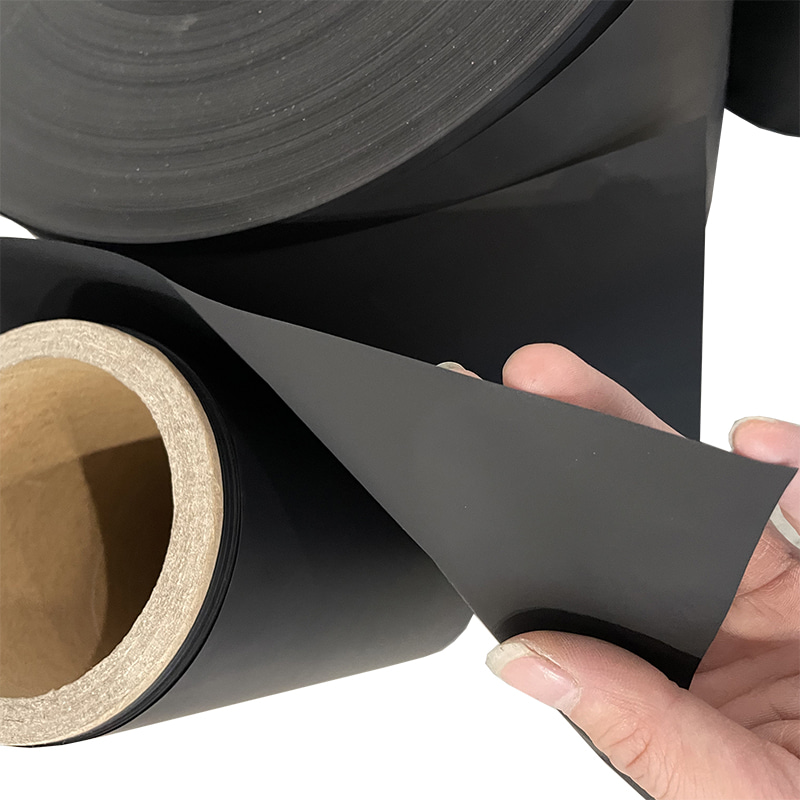
Hot melt adhesive film is a thermoplastic bonding material supplied in thin sheet or roll form that activates under heat and pressure, then solidifies into a permanent bond on cooling. Unlike liquid adhesives, it contains no solvent and no water—activation is purely thermal. This means there is no drying time, no off-gassing during cure, and no dimensional change in the substrate caused by moisture absorption.
The film is typically manufactured by extrusion or calendering, producing a uniform thickness that ranges from as thin as 0.01 mm for fine fabric bonding to over 0.5 mm for structural lamination applications. A release liner is usually included to prevent blocking during storage and handling. When placed between two substrates and passed through a heat press or laminating machine, the film melts, flows into the surface texture of both materials, and forms an interfacial bond that—once cooled—resists peel, shear, and environmental stress according to the resin chemistry used.
The key advantage over liquid hot melt adhesives is process cleanliness and dimensional precision. Film format delivers consistent adhesive weight per unit area, eliminates the variability of spray or roller coating, and allows bonding at defined film thicknesses—critical in applications where bond line thickness affects the final product's performance or appearance.
Major Resin Types and Their Performance Profiles
The base polymer determines nearly every performance characteristic of a hot melt adhesive film—activation temperature, flexibility, chemical resistance, washability, and bond strength. Five resin families account for the majority of commercial applications.
Polyurethane (PU)
PU hot melt film dominates the textile and apparel sector. It activates at relatively low temperatures (typically 110–130°C), produces a soft, flexible bond line, and offers outstanding wash durability—most apparel-grade PU films are rated to 50 or more domestic wash cycles at 40°C without delamination. It bonds well to woven fabrics, knits, leather, and synthetic membranes. Its limitation is moderate resistance to dry-cleaning solvents and relatively lower heat resistance above 80°C in continuous use.
Polyamide (PA)
Polyamide films provide higher thermal resistance than PU, typically maintaining bond integrity up to 120–150°C depending on grade. They are harder and stiffer at room temperature, making them well-suited for footwear stiffeners, automotive interior trim, and filter lamination where dimensional stability under heat matters. PA films also demonstrate excellent resistance to oils and many organic solvents. Activation requires slightly higher temperatures (130–160°C), which limits use with heat-sensitive substrates.
Polyester (PES)
Polyester hot melt films offer a balance of flexibility and chemical resistance, with good adhesion to polar substrates including metals, glass, and engineering plastics. They are commonly used in electronics assembly for bonding flexible circuits, in medical device lamination, and in technical textile applications where PU's softness is not required. PES films typically activate between 120–160°C and provide better long-term creep resistance than PU under sustained load.
Ethylene Vinyl Acetate (EVA)
EVA is the lowest-cost option and activates at the lowest temperatures (80–110°C), making it appropriate for heat-sensitive materials such as expanded foams, corrugated paper, and certain nonwovens. Bond strength and heat resistance are comparatively low—continuous service above 50–60°C causes creep in most EVA formulations. It is widely used in packaging lamination, crafts, and disposable nonwoven products where long-term durability is not a requirement.
Reactive Polyurethane (PUR)
PUR film undergoes a post-application moisture-cure reaction that creates crosslinks unavailable in standard thermoplastic films. Once fully cured (typically 24–72 hours after bonding), PUR bonds cannot be thermally reactivated—this makes them suitable for applications requiring permanent, high-strength bonds resistant to heat, chemicals, and repeated stress. They are used in structural wood lamination, high-performance sportswear, and industrial composites. The trade-off is the requirement for controlled humidity during cure and a shorter open time during processing.
| Resin Type | Activation Temp. | Flexibility | Wash Resistance | Heat Resistance | Typical Applications |
|---|---|---|---|---|---|
| PU | 110–130°C | High | Excellent | Moderate (≤80°C) | Apparel, sportswear, technical textiles |
| PA | 130–160°C | Low–Medium | Good | High (≤150°C) | Footwear, automotive trim, filters |
| PES | 120–160°C | Medium | Good | Medium–High | Electronics, medical devices, metal bonding |
| EVA | 80–110°C | High | Low | Low (≤60°C) | Packaging, foam bonding, disposable products |
| PUR | 100–130°C | Medium–High | Excellent | Very High (crosslinked) | Structural laminates, wood, high-performance gear |
Key Specifications to Evaluate When Sourcing
Beyond resin type, several technical parameters determine whether a film will perform reliably in a given process and end-use environment.
Film Thickness and Basis Weight
Thickness is usually specified in microns (µm) or millimeters; basis weight in g/m². For textile lamination, films in the 15–50 g/m² range are typical—lighter weights preserve fabric hand-feel while heavier weights provide more adhesive for porous or textured surfaces. For rigid substrate bonding, heavier films (80–200 g/m²) are standard. Uniformity of thickness across the roll width is as important as the nominal value—variation above ±10% causes inconsistent bond strength and visible defects in surface-critical applications.
Melt Flow Index (MFI)
MFI, measured in g/10 min under standardized conditions, indicates how freely the adhesive flows when melted. A higher MFI means greater flow and better penetration into porous substrates at a given temperature and pressure—useful for open-weave fabrics or rough surfaces. A lower MFI means less flow, which reduces bleed-through on fine fabrics or nonwovens. Matching MFI to substrate porosity is one of the more frequently overlooked variables in process troubleshooting.
Open Time and Pot Life
Open time is the window after the film reaches activation temperature during which bonding pressure must be applied for full adhesion. For standard thermoplastic films, open time is very short—typically 3–15 seconds—requiring precise process control. Films formulated with extended open time additives allow manual repositioning and are preferred for low-volume or hand-assembly operations. PUR films, once activated, have a similar short open time but then continue to cure over hours to days.
Release Liner Compatibility
The release liner must release cleanly without depositing silicone or other contamination on the adhesive surface, and must survive storage conditions without causing blocking (adhesive migrating into the liner). Silicone-coated glassine and PE-coated paper are most common. For applications where silicone contamination is prohibited—such as certain electronics assemblies or subsequent painting operations—silicone-free liner options are available but at higher cost.
Compliance and Certification
Depending on the end application, relevant certifications may include OEKO-TEX STANDARD 100 for skin-contact textiles, REACH compliance for substances of very high concern (SVHCs), FDA 21 CFR for food-contact or medical applications, and UL 94 flame ratings for electronics. Requesting compliance documentation upfront avoids qualification delays after sample approval.
Application Processes and Equipment Considerations
Hot melt adhesive film is processed through several equipment formats, each suited to different production volumes and substrate types.
- Flat-bed heat press: The most common format for garment and technical textile lamination. Provides uniform temperature and pressure across the full bonding area. Cycle times range from 10 to 30 seconds depending on film grade and substrate stack. Suitable for batch production and irregular shapes.
- Continuous belt laminator: Used in roll-to-roll production for large-area laminates such as membrane-fabric composites, automotive headliner materials, and medical nonwovens. Offers high throughput (typically 5–20 m/min) with precise temperature zone control. Requires film supplied in continuous roll format.
- Calendar lamination: Heated rolls apply temperature and pressure simultaneously, suitable for very thin films and substrates where precise nip pressure control is needed. Common in flexible packaging and electronic substrate lamination.
- Vacuum lamination: Used for complex 3D shapes, particularly in automotive interior trim and composite part production. The film is placed over a formed substrate in a heated vacuum bag; atmospheric pressure provides the bonding force as the film melts. Eliminates the need for matched tooling.
Temperature uniformity across the bonding area is the most critical process variable. A ±5°C variation in platen temperature can create visible bond inconsistency in surface-critical applications. Regular calibration of heating elements and thermocouples—at minimum once per shift in continuous production—is standard practice in quality-controlled operations.
Selecting the Right Hot Melt Adhesive Film for Your Application
A systematic selection process reduces trial-and-error in qualification. Start by defining the substrate pair and the bond performance requirements—peel strength, wash cycles, service temperature, chemical exposure—before considering resin type. Then narrow by process constraints: what temperatures can your substrates tolerate, what equipment is available, and what throughput do you need.
For soft goods and apparel, PU film covers the majority of cases; switch to PUR where wash performance above 60°C or dry-cleaning resistance is required. For hard substrate bonding—metal, rigid plastic, glass—PES or PA are the primary candidates. EVA is appropriate only where cost is the dominant driver and long-term durability is not critical.
Request film samples in the target thickness and run bonding trials before committing to large-volume qualification. Variables such as substrate surface energy, moisture content, and press calibration interact with film performance in ways that cannot be fully predicted from data sheets alone. Most reputable suppliers provide technical support for trial optimization, including recommendations on temperature-pressure-time parameters for specific substrate combinations.
Storage conditions also affect shelf life significantly. Most hot melt adhesive films should be stored at 15–25°C in low-humidity environments (below 60% RH), away from direct sunlight. PUR films are especially sensitive—exposure to ambient moisture before processing initiates the cure reaction prematurely. Opened rolls should be resealed in moisture-barrier packaging and used within the supplier's recommended window, typically 3–6 months for PUR grades versus 12–24 months for standard thermoplastic films.