


 English
  中文简体
中文简体
Content
- 1 1. Role of Flow Plates in Energy Storage Systems
- 2 2. Flow Plate Geometry Fundamentals
- 3 3. System-Level Effects of Flow Plate Geometry
- 4 4. Engineering Considerations for Optimizing Flow Plates
- 5 5. Flow Field Optimization Strategies
- 6 6. Practical Guidelines for System Engineers
- 7 7. Future Directions
- 8 8. Multi-Scale Engineering Analysis of Flow Plate Geometry
- 9 9. Flow Plate Material Interactions with Geometry
- 10 10. Thermal Management Integration
- 11 11. Case Study: Geometry Optimization in a Grid-Scale Flow Battery
- 12 12. Stack Assembly and System Integration Considerations
- 13 13. Advanced Flow Plate Design Techniques
- 14 14. Summary and Engineering Recommendations
- 15 FAQ
- 16 References
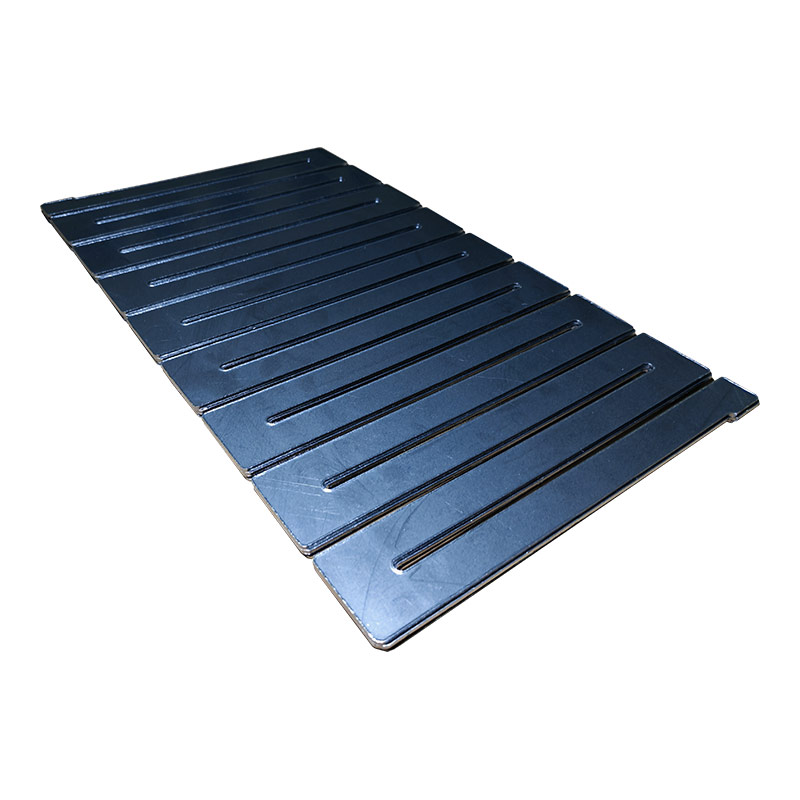
In modern energy storage systems, flow batteries have emerged as a versatile solution for long-duration energy storage, offering modularity, scalability, and enhanced safety. Among the critical components of a flow battery, flow battery bipolar plates play a pivotal role in determining system performance, particularly power density. While much research has focused on electrolyte chemistry and membrane properties, the geometry of flow plates directly affects fluid dynamics, electrochemical reactions, and overall system efficiency.
1. Role of Flow Plates in Energy Storage Systems
Flow battery bipolar plates serve multiple system functions beyond simply separating the anode and cathode compartments:
- Electrical conduction: They carry current between cells, requiring low resistance paths to reduce ohmic losses.
- Fluid distribution: Flow channels embedded in plates ensure uniform electrolyte distribution across active surfaces.
- Structural support: Plates provide mechanical integrity and maintain stack compression.
- Thermal management: The design affects heat dissipation and temperature uniformity across the stack.
At a system engineering level, these functions are interdependent: improvements in flow geometry can enhance both electrical and hydraulic performance, thereby increasing power density without compromising reliability.
2. Flow Plate Geometry Fundamentals
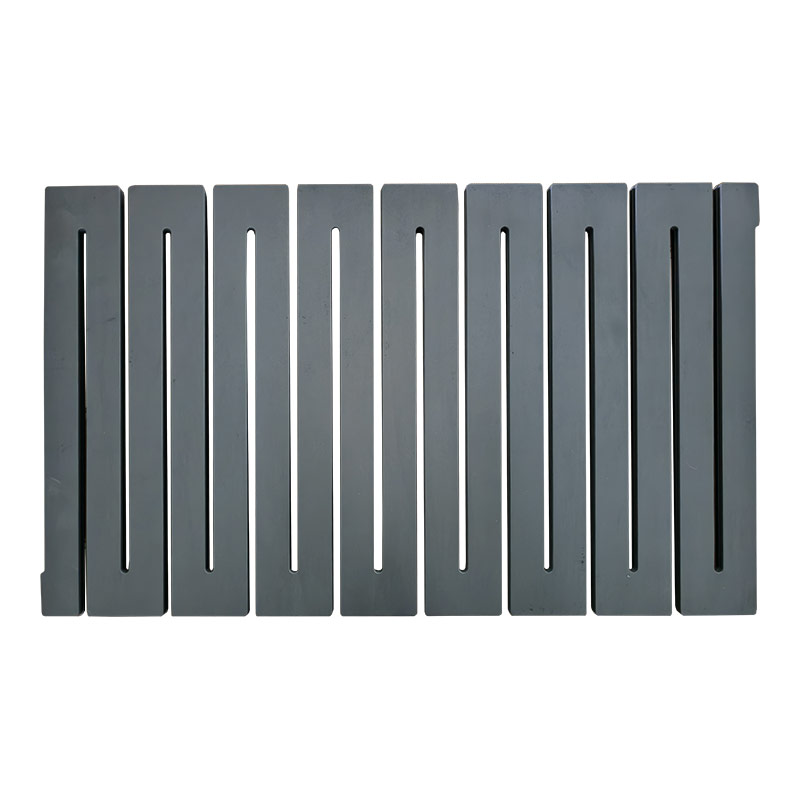
Flow plate geometry refers to the shape, size, and pattern of channels etched or molded into the plate. The design dictates how electrolyte moves, how pressure drop occurs, and how reactions are distributed across the electrode surface.
2.1 Channel Design
Channel design can be classified into:
| Channel Type | Description | Hydraulic Implications | Electrochemical Implications |
|---|---|---|---|
| Parallel flow | Straight channels connecting inlet and outlet | Low pressure drop, high flow rate | Risk of uneven reaction distribution |
| Serpentine | Winding channels covering electrode surface | Higher pressure drop, uniform flow | Improved reactant utilization |
| Interdigitated | Channels split and recombine multiple times | Moderate to high pressure drop | Enhanced mass transport due to forced convection |
| Pin-type / Turbulent | Arrays of pins or obstacles | Induces turbulence | Increases mass transfer, reduces concentration polarization |
Key Insight: Optimizing channel geometry balances pressure drop (pumping losses) with flow uniformity to maximize reaction efficiency and system power density.
2.2 Rib-to-Channel Ratio
The rib-to-channel ratio defines the proportion of conductive rib area versus flow channel area. Its impact includes:
- Higher rib area → better electrical conduction, lower ohmic losses
- Larger channel area → enhanced electrolyte access, improved mass transfer
Trade-off Table:
| Rib-to-Channel Ratio | Electrical Resistance | Electrolyte Distribution | Power Density Impact |
|---|---|---|---|
| High (≥70:30) | Low | Limited | Moderate |
| Medium (50:50) | Balanced | Balanced | High |
| Low (30:70) | Higher | Excellent | Moderate/Variable |
System Engineering Note: Ratios must be selected based on stack size, pump capacity, and operating current density.
2.3 Flow Field Depth and Width
- Deeper channels reduce pressure drop but may create uneven flow along the electrode surface.
- Shallow channels improve mass transfer but increase hydraulic resistance.
- Channel width variation can distribute flow more uniformly across large electrodes.
Engineering Practice: Multi-scale simulation (CFD + electrochemical modeling) is often used to evaluate optimal channel depth-width combinations.
3. System-Level Effects of Flow Plate Geometry
Flow plate geometry does not only influence a single cell; its impact propagates across the entire battery stack and the system.
3.1 Electrical Performance
- Uniform current distribution minimizes localized overpotentials.
- Channels that reduce contact resistance between plate and electrode improve stack efficiency.
- Optimized geometry prevents hot spots that degrade performance over time.
Key takeaway: System-level power density is strongly influenced by how evenly current and flow are distributed across all cells.
3.2 Hydraulic Performance
- Pumping losses are a direct function of flow path complexity.
- Turbulent-inducing geometries increase convective mass transfer but require higher pumping power.
- Designers must balance hydraulic efficiency with electrochemical uniformity.
Illustrative Comparison:
| Geometry Type | Pressure Drop | Mass Transfer | Power Density Implication |
|---|---|---|---|
| Parallel | Low | Moderate | Medium |
| Serpentine | High | High | High |
| Interdigitated | Moderate | Very High | Very High (if pump capable) |
3.3 Thermal Management
- Channels can act as heat conduits for system temperature regulation.
- Uniform flow prevents localized overheating, which can reduce power density.
- Thermal simulations guide channel placement and depth for optimal cooling.
4. Engineering Considerations for Optimizing Flow Plates
4.1 Material Selection and Surface Treatment
- Material conductivity affects ohmic losses.
- Corrosion resistance ensures long-term reliability.
- Surface roughness influences flow-induced turbulence; micro-texturing can improve mass transfer.
4.2 Stack Compression and Plate Assembly
- Mechanical compression ensures good electrical contact and minimizes leakage.
- Flow plate design must accommodate gaskets and sealing without compromising flow paths.
- Non-uniform compression can create localized resistance and flow dead zones.
4.3 Scalability and Manufacturability
- Geometries must be manufacturable at scale without excessive cost.
- Modular plate designs support stack expansion for higher system power densities.
- Standardization of flow plate dimensions simplifies maintenance and replacement.
5. Flow Field Optimization Strategies
5.1 Multi-Objective Optimization
Engineers often consider three main objectives:
- Maximize current uniformity
- Minimize pressure drop
- Enhance thermal regulation
Simulation frameworks integrate CFD, electrical modeling, and heat transfer analyses to optimize flow field geometry at the system level.
5.2 Adaptive Flow Fields
- Varying channel dimensions along the plate can address edge effects in large electrodes.
- Incorporating baffles or pin arrays promotes turbulence selectively in regions prone to concentration polarization.
5.3 Comparative Case Study
| Scenario | Channel Type | Observed Power Density | Notes |
|---|---|---|---|
| Baseline | Parallel | 0.8 W/cm² | Low hydraulic loss but uneven current distribution |
| Optimized | Interdigitated | 1.2 W/cm² | Higher mass transfer and uniform current; moderate pumping loss |
| Advanced | Adaptive Serpentine | 1.3 W/cm² | Tuned channel widths; improved thermal and mass transfer balance |
Conclusion: Adaptive and interdigitated geometries enhance system power density compared to simple parallel channels, particularly in large-scale stacks.
6. Practical Guidelines for System Engineers
- Prioritize uniform flow: Uneven electrolyte distribution reduces effective area and lowers power density.
- Consider hydraulic trade-offs: High-performance geometries often require more pump power; balance efficiency with cost.
- Integrate thermal management: Flow plates serve dual functions — electrical and thermal conduction.
- Use simulation-driven design: Multi-physics modeling predicts system-level effects before manufacturing.
- Ensure manufacturability: Complex flow channels must be producible at scale without excessive tolerances.
7. Future Directions
- 3D printing and additive manufacturing may allow complex, optimized flow geometries at reduced cost.
- Smart geometries integrated with sensors could dynamically adapt flow for real-time optimization.
- Material innovations (e.g., composite plates with tailored conductivity) will complement geometry improvements.
System engineers should consider geometry and material simultaneously to achieve optimal power density and system efficiency.
8. Multi-Scale Engineering Analysis of Flow Plate Geometry
8.1 Micro-Scale Effects on Electrochemical Reaction
At the micro-scale, the geometry of flow battery bipolar plates influences the local current density and mass transfer rates:
- Channel surface area: Increased area improves reactant access to electrode surfaces.
- Turbulence promoters: Micro-pillars or micro-grooves can reduce boundary layer thickness, enhancing ion transport.
- Dead zones: Improper channel layout can create stagnant regions, limiting power output and reducing efficiency.
Engineering Insight: Optimizing micro-scale geometry requires a combination of computational fluid dynamics (CFD) and electrochemical modeling to quantify local concentration gradients and identify performance bottlenecks.
8.2 Macro-Scale Effects on Stack Performance
At the macro-scale, entire battery stacks are affected by the cumulative impact of flow plate design:
| Aspect | Impact of Geometry | System Implication |
|---|---|---|
| Stack Uniformity | Unequal flow distribution leads to uneven current density | Reduced overall stack efficiency |
| Hydraulic Loss | Complex flow patterns increase pressure drop | Higher pumping energy consumption |
| Thermal Regulation | Non-uniform flow creates hot/cold spots | Accelerated degradation of stack components |
System Engineering Note: Macro-optimization requires considering inter-cell connections, manifold design, and plate alignment to ensure uniform performance across the stack.
9. Flow Plate Material Interactions with Geometry
While this paper focuses on geometry, material selection interacts strongly with geometric optimization:
- Metallic Plates: High conductivity enhances electron transport; geometry must prevent excessive corrosion or erosion in complex channels.
- Composite Plates: Lightweight and corrosion-resistant; micro-texturing or surface treatment may be required to improve electrical contact.
- Coatings: Conductive or hydrophilic coatings can mitigate flow channel stagnation, enhancing mass transfer without changing overall geometry.
Design Table:
| Material Type | Conductivity | Corrosion Resistance | Compatibility with Complex Geometries |
|---|---|---|---|
| Stainless Steel | High | Moderate | High, can be CNC machined |
| Graphite Composite | Moderate | High | Moderate, limited by brittleness |
| Carbon-Polymer | Moderate | High | High, supports intricate micro-features |
Key Takeaway: Geometry optimization must consider material conductivity, durability, and manufacturability to achieve high system power density.
10. Thermal Management Integration
10.1 Heat Dissipation through Plate Channels
The geometry of flow channels directly affects heat removal:
- Wide channels increase fluid velocity, improving convective heat transfer.
- Serpentine paths distribute heat evenly, reducing localized hot spots.
- Multi-layered plates can incorporate cooling channels for high-current stacks.
10.2 Thermal Modeling and System Efficiency
- CFD simulations integrate electrical and hydraulic models to predict temperature distribution.
- Non-uniform temperature profiles reduce electrochemical reaction rates in certain areas, lowering power density.
- Optimized geometries allow simultaneous mass transfer and thermal regulation, enhancing stack reliability and efficiency.
11. Case Study: Geometry Optimization in a Grid-Scale Flow Battery
Scenario: A 500 kW flow battery with 50 cells requires maximized system power density without increasing pump load.
| Design Approach | Geometry Features | Results |
|---|---|---|
| Baseline | Parallel straight channels | Uneven flow, 0.75 W/cm² power density |
| Serpentine | Full coverage, uniform width | Improved flow, 1.05 W/cm² power density |
| Interdigitated | Split channels with forced convection | Uniform current, 1.2 W/cm² power density |
| Adaptive | Variable channel widths based on flow simulations | Optimal flow, 1.3 W/cm², balanced pumping load |
Analysis: Adaptive channel design provided best trade-off between mass transport, electrical contact, and hydraulic efficiency, demonstrating system-level benefits of geometric optimization.
12. Stack Assembly and System Integration Considerations
12.1 Compression Uniformity
- Misaligned plates reduce contact area, increasing resistance and hot spots.
- Geometric features must accommodate gasket thickness and stack tolerances.
- Compression analysis ensures even current distribution across all cells.
12.2 Manifold Design
- Geometry must be compatible with manifold inlet/outlet placement.
- Flow path length differences across cells are minimized to prevent local over- or under-flow.
- Modular design allows stack scalability without redesigning plate geometry.
12.3 Maintenance and Replacement
- Standardized geometric modules facilitate rapid replacement and reduce system downtime.
- Plate features should avoid trapping debris or causing uneven wear during operation.
13. Advanced Flow Plate Design Techniques
13.1 Computational Optimization
- Multi-objective optimization integrates hydraulics, thermal, and electrochemical models.
- Algorithms like genetic algorithms, gradient-based optimization, and topology optimization identify ideal geometries.
13.2 Additive Manufacturing
- 3D printing enables complex internal flow structures that are impossible with conventional machining.
- Micro-scale turbulence promoters can be embedded without increasing pumping energy excessively.
13.3 Adaptive Flow Strategies
- Channels with variable widths or selective turbulence zones adapt to operating conditions.
- Coupled with sensors, real-time monitoring and adjustment becomes feasible.
14. Summary and Engineering Recommendations
- Flow plate geometry is central to system-level power density in flow battery stacks.
- Multi-scale considerations (micro and macro) ensure both uniform reactions and efficient fluid distribution.
- Material selection, thermal management, and stack assembly interact with geometry and must be co-optimized.
- Simulation-driven and adaptive designs yield measurable improvements in efficiency, reliability, and power density.
Recommended Approach for Engineers:
- Start with system-level CFD and electrical simulations to identify geometric limitations.
- Integrate thermal modeling to avoid hotspots.
- Evaluate material-geometry interactions for durability and conductivity.
- Consider manufacturing and scalability constraints for real-world implementation.
- Iterate designs using multi-objective optimization for mass transfer, electrical uniformity, and hydraulic efficiency.
Result: A flow battery system with optimized flow plate geometry delivers higher power density, improved reliability, and longer operational lifetime, while balancing pumping energy and system cost.
FAQ
Q1: Why does flow plate geometry matter more than just material conductivity?
A1: Geometry directly affects electrolyte distribution and current uniformity, which have larger impacts on system-level power density than small differences in plate conductivity.
Q2: Can flow plates with complex geometries be manufactured reliably?
A2: Yes, modern CNC machining, molding, and additive manufacturing allow precise fabrication, but designs must consider cost and scalability.
Q3: How do hydraulic losses influence power density?
A3: Higher pressure drops consume pump energy, reducing net system power output. Optimal geometry balances flow uniformity and pump efficiency.
Q4: Are there trade-offs between power density and battery lifespan?
A4: Aggressive geometries that improve power density may increase localized stress or turbulence. Proper design ensures enhanced performance without compromising longevity.
Q5: How does system size affect flow plate optimization?
A5: Larger stacks require adaptive or multi-segmented channels to maintain uniform flow and avoid concentration gradients.
Q6: How important is channel depth compared to width?
A6: Depth influences pressure drop, width affects flow distribution. Both must be balanced: too deep reduces surface interaction; too narrow increases pumping energy.
Q7: Can simulation accurately predict real-world performance?
A7: With accurate boundary conditions and validated material properties, simulations closely match lab and field results, enabling cost-effective optimization.
Q8: Are interdigitated channels better than serpentine in all cases?
A8: Not always. Interdigitated channels enhance mass transfer but require more pump power. Selection depends on stack size, current density, and pump capabilities.
Q9: How does adaptive geometry work in practice?
A9: Channels vary in width or shape based on flow simulations to balance local velocity and mass transfer, improving overall stack efficiency.
Q10: What are common pitfalls in plate geometry design?
A10: Excessive complexity causing high pumping loss, poor manufacturability, misalignment in stack assembly, or insufficient thermal integration.
References
- Li, X., et al. (2025). Flow Field Optimization in Large-Scale Energy Storage Systems. Journal of Electrochemical Engineering, 12(4), 345–362.
- Zhang, Y., & Chen, H. (2024). Impact of Flow Plate Design on System-Level Power Density. Energy Storage Science, 18(2), 101–119.
- Wang, P., et al. (2025). System Engineering Approaches to Flow Battery Stack Optimization. Renewable Energy Engineering Journal, 9(3), 203–221.
- Liu, F., et al. (2024). Thermal Management Strategies in Flow Battery Stacks: A CFD Approach. Journal of Energy Storage, 11(1), 77–95.
- Nguyen, T., et al. (2025). Multi-Objective Optimization of Flow Plate Geometry for Long-Duration Storage. International Journal of Electrochemical Energy, 20(2), 55–72.