


 English
  中文简体
中文简体
Content
- 1 Define the Electrochemical Application First
- 2 Evaluate the Electrode Substrate and Current Collector Material
- 3 Carbon Felt vs. Graphite Felt: Morphology and Performance
- 4 Carbon Fiber Electrode Advantages and the Role of Conductive Carbon Additives
- 5 Match Pore Structure and Surface Chemistry to the Electrolyte and Reaction
- 6 Consider Long-Term Durability and Cost of Ownership
Selecting the right electrode material is the pivotal decision in designing any electrochemical device, from flow batteries and water electrolyzers to supercapacitors and fuel cells. The material must simultaneously provide high electrical conductivity, chemical stability in the operating electrolyte, a large electrochemically active surface area, and, increasingly, a low total cost of ownership. There is no single best electrode material; the choice hinges on the specific electrochemical reaction, the current density required, and the operating environment. This electrode material selection guide outlines the critical factors—substrate type, carbon morphology, conductivity, porosity, and durability—that determine how well an electrode performs in real-world conditions. By systematically evaluating these properties against the application's demands, you can move from a generic carbon material to a specified electrode that delivers reliable, long-term performance in your energy storage or conversion system.
Define the Electrochemical Application First
How to choose electrode materials begins with the electrochemistry, not the material catalog. A material that excels in a vanadium redox flow battery may fail within hours in a PEM water electrolyzer. The electrode's function is to provide a surface for a specific charge-transfer reaction while conducting electrons to the current collector and allowing ions to move through the electrolyte. Start by documenting the target reaction, the electrolyte composition and pH, the operating potential range, the expected current density, and the design lifetime. For electrode materials for flow batteries, the primary requirement is high reversibility for the redox couple—vanadium ions on carbon—so the electrode must have abundant oxygen functional groups that catalyze the reaction, along with high porosity and permeability to allow the liquid electrolyte to flow through with minimal pressure drop. For electrode materials for water electrolysis, the anode material must withstand highly oxidizing conditions without corroding, which immediately limits the choice to noble metal oxides, certain nickel alloys, or specifically treated stainless steels for alkaline systems. The cathode in a PEM electrolyzer operates under reducing conditions and can use carbon-supported platinum, but the same carbon support would rapidly oxidize if used on the anode side. Matching the material's stability window to the electrode's operating potential is a non-negotiable first filter.
Evaluate the Electrode Substrate and Current Collector Material
The electrode substrate material selection defines the mechanical backbone and the primary current path. In many electrochemical cells, the substrate is a metal mesh, foam, or felt that doubles as the current collector. The choice of substrate metal depends on the electrolyte and the potential. Titanium is the standard substrate for the anode side of PEM electrolyzers because it forms a stable passivating oxide layer that resists corrosion in acidic, oxidizing environments. On the cathode side, where the potential is lower, carbon paper or carbon cloth can be used. In alkaline electrolyzers, stainless steel or nickel mesh is common because these materials resist alkaline corrosion. For flow batteries, the substrate is often a bipolar plate made from graphite composite or coated metal, and the electrode material itself—a carbon felt or paper—is pressed against it. The substrate must make low-resistance ohmic contact with the electrode, and the contact resistance, typically measured in mΩ·cm², should be stable over time. A mismatch between the substrate metal and the electrolyte leads to corrosion that poisons the electrode or increases contact resistance until the cell fails.
Carbon Felt vs. Graphite Felt: Morphology and Performance
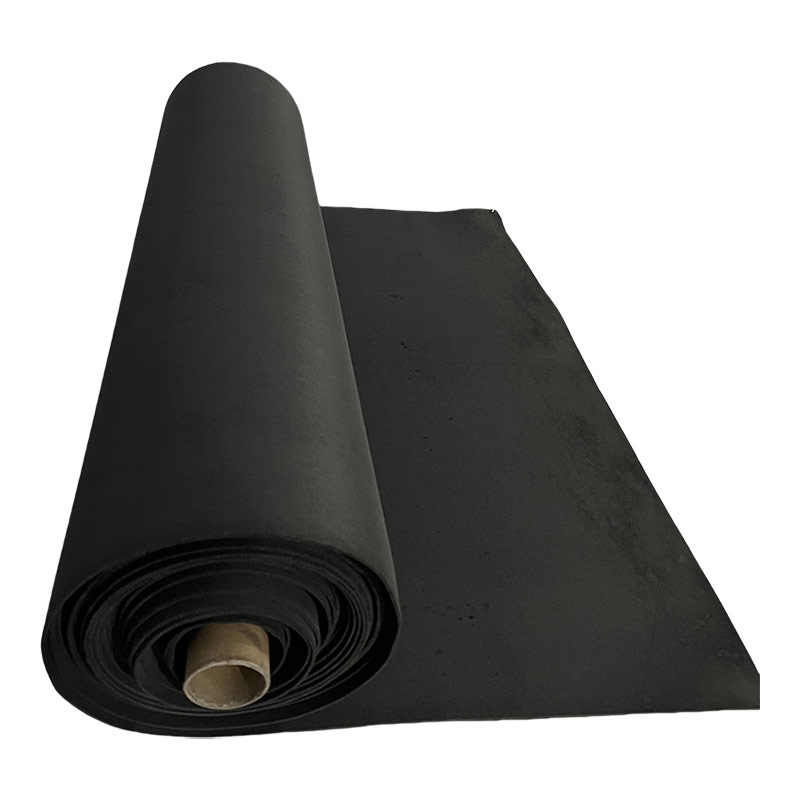
The carbon felt vs graphite felt decision is central to flow battery and many industrial electrochemical cell designs. Both are porous, high-surface-area carbon materials made from polyacrylonitrile (PAN) or rayon precursors, but the key difference is the heat-treatment temperature. Carbon felt is carbonized at 1,000–1,500°C and retains a turbostratic carbon structure with moderate electrical conductivity. Graphite felt is further heat-treated at 2,000–2,800°C, which graphitizes the carbon and significantly increases the electrical conductivity—often by a factor of two or more. However, graphitization also reduces the number of edge-plane sites and oxygen functional groups that catalyze many redox reactions, so the electrochemical activity of graphite felt can be lower without subsequent activation treatments such as acid etching, thermal oxidation, or plasma treatment.
For vanadium redox flow batteries, carbon felt is typically preferred over graphite felt because its higher density of surface oxygen groups provides better catalytic activity for the vanadium redox reactions. The lower conductivity of carbon felt compared to graphite felt is offset by the fact that the felt is compressed against a conductive bipolar plate, and the current path through the felt thickness is short—typically 3–6 mm. In applications where the electrode itself must carry current over longer distances without a separate current collector, such as in some electrochemical sensors, graphite felt's higher conductivity may be decisive. The properties of carbon electrode materials like these are also influenced by the fiber diameter and porosity. Carbon felt typically has a porosity of 80–95%, with fiber diameters of 5–20 µm. A higher porosity reduces the pressure drop for flowing electrolyte but also reduces the volumetric surface area, so the choice balances the system's pumping capacity against the required reaction rate.
Carbon Fiber Electrode Advantages and the Role of Conductive Carbon Additives
Carbon fiber electrode advantages stem from the combination of high aspect ratio, electrical conductivity, and mechanical flexibility. Carbon fibers provide long, continuous conductive pathways through an electrode composite, which is especially valuable in thick electrodes where point contacts between carbon black particles become resistive. In a composite electrode for energy storage, chopped carbon fibers act as bridges between active material particles and the current collector, reducing the overall percolation threshold and allowing a higher active material loading. For composite electrode materials for energy storage such as lithium-ion batteries, a small fraction of vapor-grown carbon fibers (VGCF) can reduce the required amount of inactive conductive additive, improving energy density without sacrificing rate capability.
Conductive carbon materials for electrodes also include carbon black, carbon nanotubes, and graphene. Carbon black, with its nanoscale primary particles and chain-like aggregate structure, is the most widely used because it is cost-effective and provides excellent short-range conductivity. Carbon nanotubes offer extremely high conductivity and a high aspect ratio, but they are more expensive and challenging to disperse uniformly. In practice, a blend of carbon black for short-range contacts and carbon fibers or nanotubes for long-range conductivity often yields the best overall electrode performance. The selection of the conductive additive and its loading—typically 2–10 wt%—is a core element of the electrode material selection guide, directly impacting the electrode's internal resistance and its rate capability.
Match Pore Structure and Surface Chemistry to the Electrolyte and Reaction
The electrode's internal pore structure determines how effectively the liquid electrolyte penetrates and wets the entire surface. For electrode materials for flow batteries, the pore size must be large enough—typically 10–100 µm—to allow convective flow through the felt with acceptable pressure drop. For electrodes in batteries and supercapacitors, the pore size distribution spans from macropores down to micropores, and the electrolyte's ionic conductivity and ion size determine which pores are accessible. An electrode designed for an aqueous electrolyte with small ions can utilize smaller pores than one designed for an organic electrolyte with large solvated ions. The specific surface area, measured by BET nitrogen adsorption, should be maximized without creating so many micropores that the electrolyte cannot access them. A specific surface area of 200–500 m²/g is typical for activated carbon electrodes in supercapacitors.
Surface chemistry is equally important. The introduction of oxygen functional groups—such as carboxyl, hydroxyl, and quinone groups—can dramatically increase the electrode's activity for certain redox reactions. In vanadium flow batteries, thermal activation of carbon felt in air at 400–500°C can increase the concentration of surface oxygen groups and improve the cell's voltage efficiency. However, these same groups can catalyze undesirable side reactions or degrade over time. Balancing the initial activity against long-term stability is a key factors affecting electrode performance.
Consider Long-Term Durability and Cost of Ownership
An electrode that performs well initially but degrades quickly is a poor investment. The factors affecting electrode performance over time include mechanical erosion from flowing electrolyte, chemical oxidation of the carbon surface, and fouling by impurities. In a flow battery, the carbon felt is subjected to continuous pumping of acidic electrolyte, and fiber shedding or compaction can increase the pressure drop and reduce the active area. Choosing a felt with a binder or a needled construction improves mechanical stability. In water electrolysis, the electrode can degrade due to dissolution of the catalyst or corrosion of the support, so accelerated durability testing at elevated current densities and temperatures should be part of the selection process. The true cost of an electrode includes not only the material price per square meter but also the cost of any pre-treatment, the frequency of replacement, and the value of lost production during downtime. A lower-cost electrode that must be replaced annually may be more expensive over a five-year plant life than a higher-cost electrode with a proven five-year service life. This total-cost-of-ownership analysis, combined with the technical selection criteria described above, forms the basis of a sound electrode material selection guide for industrial electrochemical systems.