


 English
  中文简体
中文简体
Content
- 1 What an Electrode Conductivity Materials Manufacturer Actually Controls
- 2 Material Types: Matching Conductivity to Application
- 3 Precursor and Processing Variables That Shift Conductivity
- 4 Sourcing Checklist for an Electrode Conductivity Materials Manufacturer
- 5 From Material Conductivity to Cell Performance
- 6 Frequently Asked Questions About Electrode Conductivity Materials
An RFQ landed on your desk with a single line: need conductive carbon felt for flow battery electrodes, 5 mm thick. Two quotes arrived within 10 percent of each other on price but 30 percent apart on through-plane resistivity. That gap is the difference between a stack that holds 2.5 W/cm2 and one that derates to 1.8 W/cm2. Material-level decisions begin with the electrode conductivity materials manufacturer, not with the cell assembler. A manufacturer that controls fiber precursor, heat-treatment temperature, felt density, and thickness tolerance delivers a predictable conductive substrate before coating, stacking, or compression even starts.
What an Electrode Conductivity Materials Manufacturer Actually Controls
An electrode conductivity materials manufacturer determines the electrical performance of an electrode before the slurry formulation, coating, or stack assembly begins.
Definition
Electrode conductivity materials are carbon-based substrates, powders, or composite plates that create the electrical pathway between the active material and the current collector in an electrochemical cell.
The most common purchasing mistake is treating conductivity as a single number on a datasheet. The same felt can vary in through-plane resistivity, in-plane resistivity, surface roughness, and compression response depending on how the fiber mat was needled, carbonized, and finished. A responsible manufacturer measures these variables on production lots and can tell you which one matters for your cell architecture.
- Precursor selection: PAN or viscose fiber determines graphitic structure and purity.
- Heat-treatment profile: carbonization at 1,000-1,500 C versus graphitization above 2,000 C shifts resistivity by an order of magnitude.
- Areal weight and thickness: uniform mass loading keeps local current density stable.
- Porosity and pore size: controls electrolyte flow and active material loading.
- Surface treatment: oxidation or activation changes surface functional groups and wetting behavior.
Engineering note
A change of 0.10 ohm-cm in electrode bulk resistivity can raise stack contact loss by several percent at common compression pressures. Request per-batch resistivity certificates instead of a single marketing figure.
Material Types: Matching Conductivity to Application
Carbon felt, graphite felt, electrode cloth, and composite bipolar plates cover almost every conductivity requirement in a flow battery or fuel cell electrode stack.
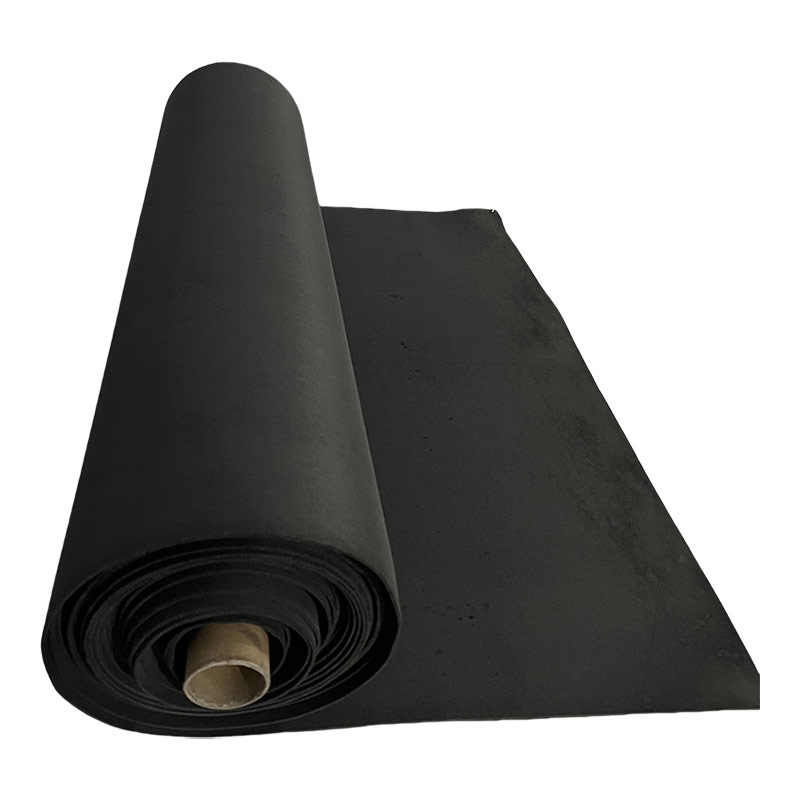
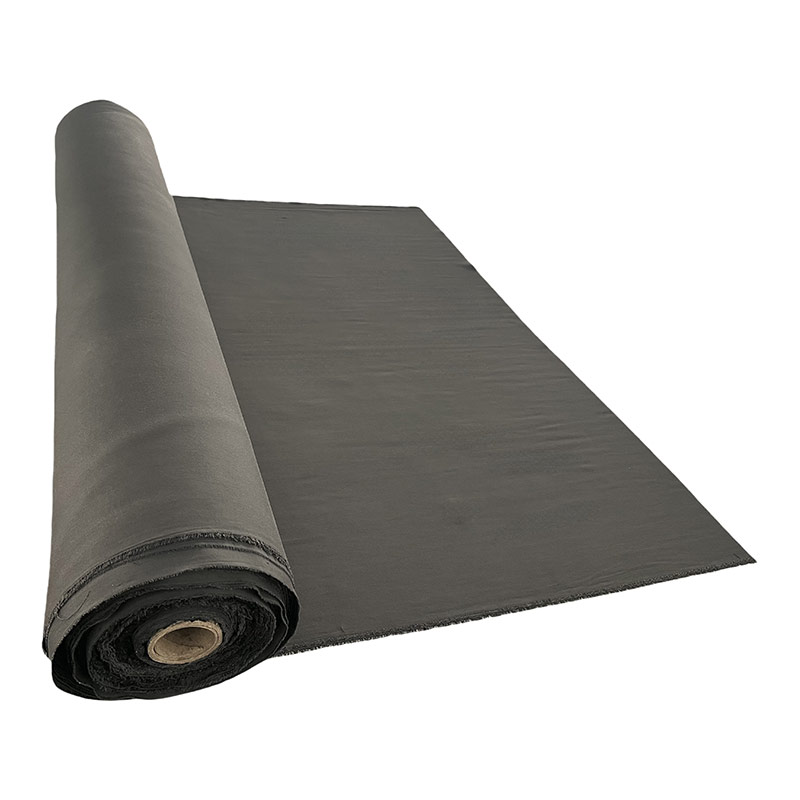
The material family determines the resistivity range you can design around. PAN-based carbon felt typically sits in the 0.4-0.8 ohm-cm range as processed; graphitized PAN felt drops to 0.1-0.3 ohm-cm; viscose-based graphite felt offers similar conductivity with a different fiber cross-section and lower metal impurity profile. Electrode cloth uses a woven structure that raises tensile strength at the cost of lower void volume.
| Material | Structure | Indicative resistivity | Typical use |
| PAN-based carbon felt | Needled 3D fiber mat | 0.4-0.8 ohm-cm | Zinc-bromine electrodes |
| PAN-based graphite felt | Needled 3D fiber mat, graphitized | 0.1-0.3 ohm-cm | Vanadium redox flow battery |
| Viscose-based graphite felt | 3D fiber mat, low metal impurity | 0.1-0.3 ohm-cm | High-purity VRFB systems |
| Electrode cloth | Woven 2D fabric | 0.3-0.6 ohm-cm | Thin cells, coated electrodes |
| Composite graphite bipolar plate | Dense composite plate | 0.01-0.03 ohm-cm | Flow field plates |
Flow battery builders usually start with the electrode felt family because the 3D fiber structure balances electrolyte storage, reaction surface area, and bulk conductivity. Thickness, resistivity, and needling density can all be adjusted before production.
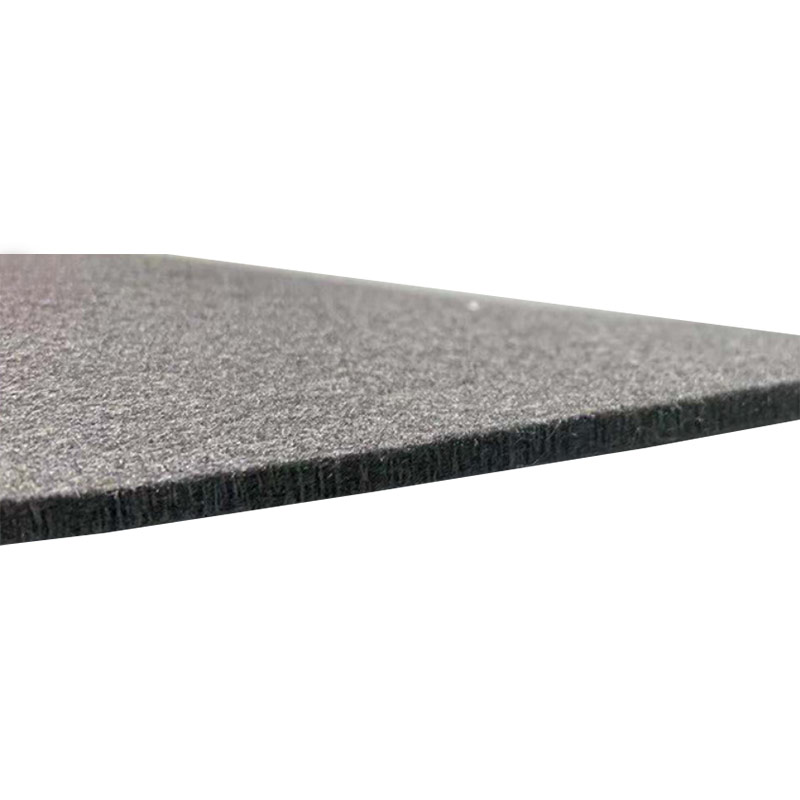 CVD-Treated Electrode Felt for Flow Battery ElectrodesThis felt family offers high specific surface area and permanent hydrophilicity via grown carbon nanotubes, with options for hydrophobic variants. Its structure suits flow battery stacks where fiber conductivity and side-reaction control matter.View Product →
Five-criteria performance profile of three electrode conductivity material families.
Precursor and Processing Variables That Shift Conductivity
The precursor fiber and the heat-treatment curve determine the conductivity of a felt or cloth more than any downstream coating step does.
PAN fibers carbonize into a turbostratic carbon structure; graphitization above 2,000 C rearranges the layers into a more ordered graphitic lattice and raises conductivity by up to a factor of three. Viscose fibers follow a different decomposition path and produce a softer, higher-purity graphite felt that is preferred when metal-ion contamination is a concern. Felt density and fiber diameter also matter because conduction in a fibrous mat depends on the number of fiber-to-fiber contact points.
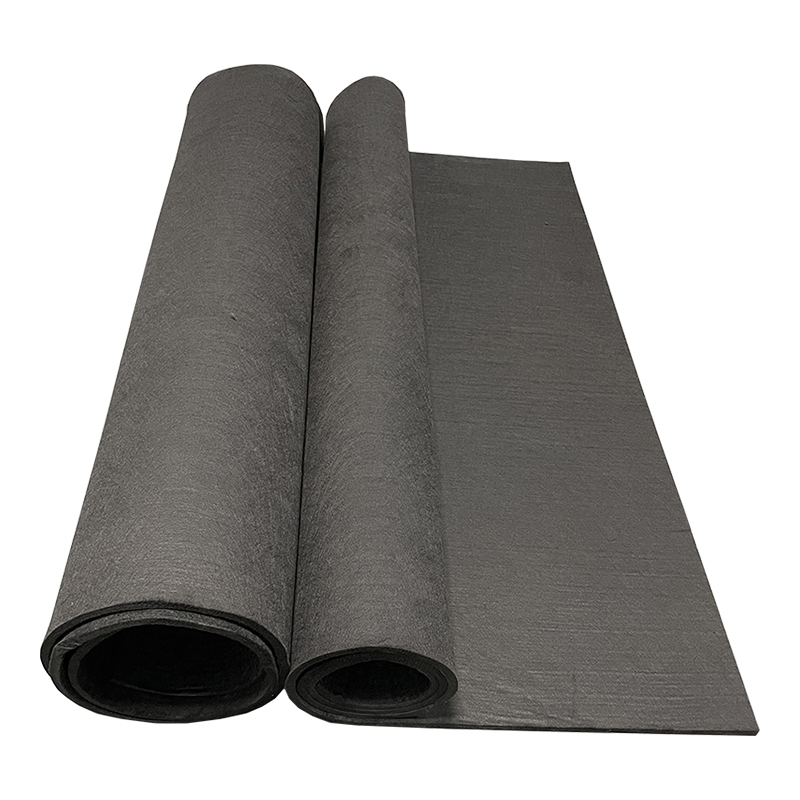 PAN-Based Carbon Felt for High-Temperature ConductivityCarbonized at 1200°C from polyacrylonitrile precursor, this felt combines chemical inertness, thermal resistance up to 1500°C, and low thermal expansion, making it a strong candidate when ordered graphitic structure and purity are priorities.View Product →
Carbonized felt Heat-treated at 1,000-1,500 C. Higher resistivity, higher surface reactivity, lower processing cost. Good for lower-current-density systems.
Graphitized felt Heat-treated above 2,000 C. Lower resistivity, higher purity, better corrosion resistance. The usual choice for VRFB electrodes.
Four variables dominate the final conductivity reading:
- Heating rate and residence time at peak temperature.
- Mechanical needling depth and punch density.
- Final roll compaction and thickness calibration.
- Surface activation step, when specified.
Verification practice
Ask for the heat-treatment record. A felt sold as graphite felt that never exceeded 1,800 C will perform measurably worse in a vanadium electrolyte than one graphitized above 2,000 C.
Sourcing Checklist for an Electrode Conductivity Materials Manufacturer
Evaluate an electrode conductivity materials manufacturer on thickness tolerance, resistivity uniformity, batch documentation, and custom processing capability, not on unit price alone.
Jiaxing Naco New Material Co., Ltd., a custom conductive carbon products factory based in Zhejiang, structures production around lot customization rather than off-the-shelf rolls. Its product lines run from PAN-based carbon felt and graphite felt to electrode cloth, flow channel plates, and conductive agents, which means one supplier can cover the entire conductive path from electrode substrate to slurry additive.
Request the resistivity range per lot, not a single datasheet value.
Verify thickness tolerance against your stack compression budget.
Confirm areal weight consistency across the full roll length.
Ask for porosity, grammage, and impurity certificates.
Check custom widths, cutting, and edge treatment options.
Run a prototype batch before committing to serial production.
+/- 0.3 mmWorkable thickness tolerance for a 5 mm electrode felt used in stack compression design.
0.1-0.3 ohm-cmTarget graphite felt resistivity range for vanadium redox flow battery electrodes.
72 hoursElectrolyte soak test window used to verify wetting behavior before qualification.
Conductivity is not limited to the substrate. Slurry-based electrodes rely on conductive agents such as carbon black, carbon nanotube powder, and aqueous or oil-based conductive agents to build a percolation network between active particles. A manufacturer that controls both the dry powder and the dispersion formulation gives battery plants one accountable interface for conductivity behavior.
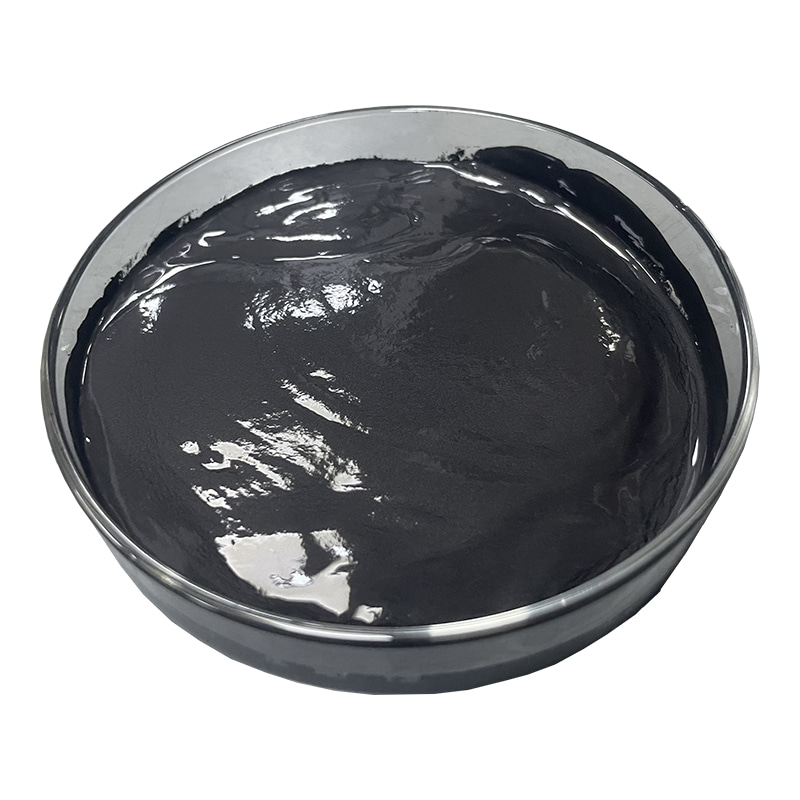 Water-Based Conductive Agent with Dispersible NanotubesThis aqueous dispersion uses carbon nanotubes and graphene in water, offering stable suspension and conductivity for slurry electrodes. It provides a single interface for dispersion quality, relevant when building percolation networks between active particles.View Product →
Selection principle
Choose one supplier that can guarantee resistivity, porosity, and slurry compatibility together. Splitting electrode substrate and conductive agent across vendors creates a long and hard-to-debug approval chain.
From Material Conductivity to Cell Performance
Cell-level metrics such as power density, voltage efficiency, and overpotential are where electrode conductivity data becomes meaningful.
In vanadium redox flow batteries, electrode surface chemistry and felt structure directly affect power density; a graphitized felt with low bulk resistivity still needs enough surface functional groups to catalyze the vanadium reactions. In zinc-bromine flow batteries, electrode felt quality determines how uniformly zinc deposits across the electrode area. The practical takeaway: you cannot separate conductivity from surface chemistry, porosity, and compression during material selection.
The flow-field geometry on the bipolar plate distributes electrolyte across the electrode. High plate conductivity reduces ohmic loss, while the channel pattern controls pressure drop and flow distribution. This is why electrode felt, bipolar plates, and conductive slurry should be designed as one system rather than sourced separately.
Key definition
Contact resistance is the resistance at the interface between the electrode and the bipolar plate. At normal stack compression it can exceed the bulk resistance of the electrode by an order of magnitude, so surface flatness and compressibility matter as much as the datasheet resistivity value.
Frequently Asked Questions About Electrode Conductivity Materials
What is an electrode conductivity material?
An electrode conductivity material is a carbon-based substrate, powder, or composite that carries electrical current between the active material and the current collector. Common forms are carbon felt, graphite felt, electrode cloth, carbon black, carbon nanotube powder, and conductive slurry agents.
How do you measure electrode conductivity?
Conductivity is normally measured as bulk resistivity on a sample of known dimensions using a four-point probe or a through-plane resistance fixture. For fibrous materials, through-plane resistivity matters more than in-plane resistivity because current crosses the felt thickness inside a stack. Always measure at the same compression pressure the cell will use.
What is the difference between carbon felt and graphite felt?
Carbon felt is produced by carbonizing a fiber precursor at roughly 1,000-1,500 C. Graphite felt is heat-treated above 2,000 C, forming a more ordered graphitic structure with lower resistivity and higher purity. VRFB electrodes normally use graphite felt, while zinc-bromine or lower-cost systems may run on carbon felt.
What specifications should I provide when ordering electrode conductivity materials?
Provide target thickness and tolerance, resistivity range, porosity or grammage, compression pressure, electrolyte chemistry, and required width or roll length. These parameters let a custom conductive carbon factory set the precursor, needling density, heat-treatment profile, and surface treatment before the first trial run.