


 English
  中文简体
中文简体
Content
- 1 Introduction
- 2 1. Overview of Zinc‑Bromine Flow Battery Systems
- 3 2. Electrode Felt Quality Factors
- 4 3. Electrochemical Impacts of Felt Quality
- 5 4. System Engineering Considerations
- 6 5. Application-Specific Impacts
- 7 6. Optimization Strategies
- 8 7. Summary
- 9 Frequently Asked Questions (FAQ)
- 10 References
Introduction
Zinc‑bromine flow batteries (ZBFBs) are increasingly utilized for grid-scale, commercial, and industrial energy storage applications due to their scalability, safety, and long-duration energy storage capability. A critical component in these systems is the zinc‑bromine flow battery electrode felt, which directly influences the electrochemical performance, cycle life, and operational reliability of the battery.
1. Overview of Zinc‑Bromine Flow Battery Systems
1.1 System Architecture
ZBFBs are a type of redox flow battery, where zinc and bromine redox couples are separated into an anolyte and catholyte, circulated through a bipolar flow cell stack. Key components include:
- Electrode felts (anode and cathode side)
- Electrolyte solutions (aqueous zinc bromide)
- Membrane/separator
- Flow plates and stack hardware
- Pumps, sensors, and balance-of-plant controls
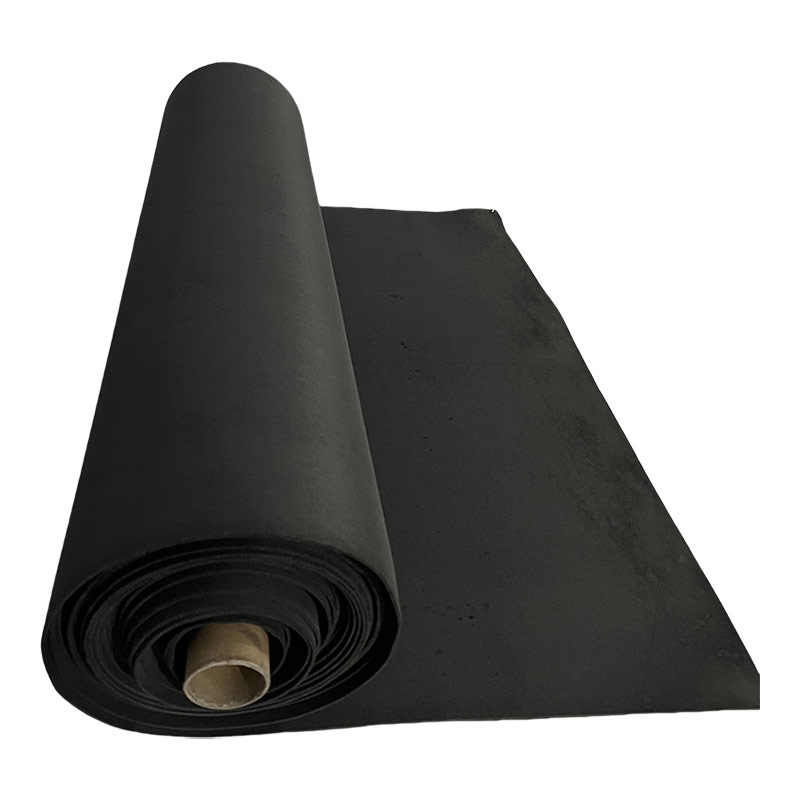
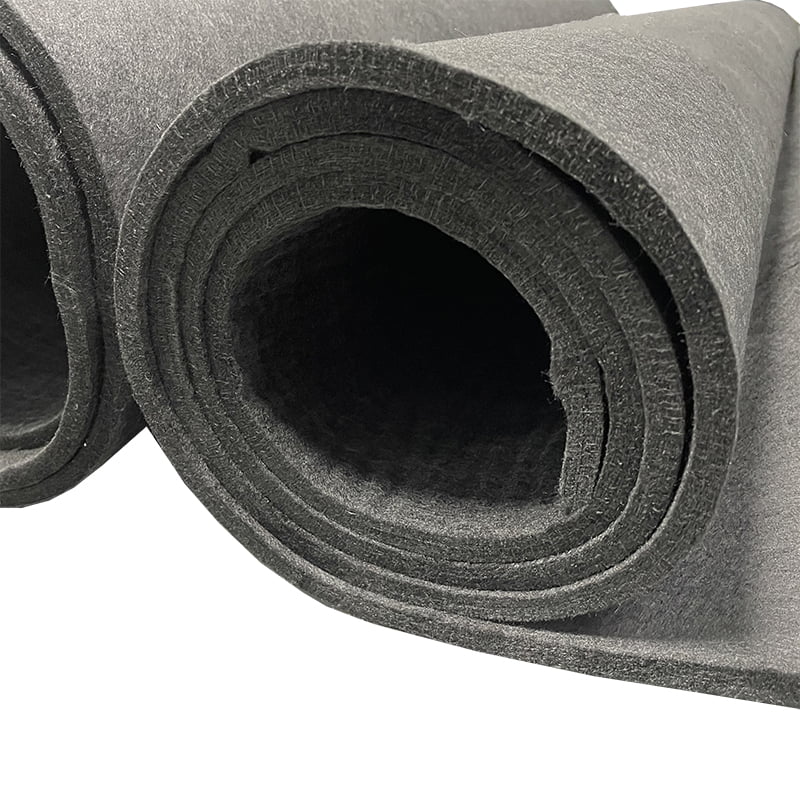
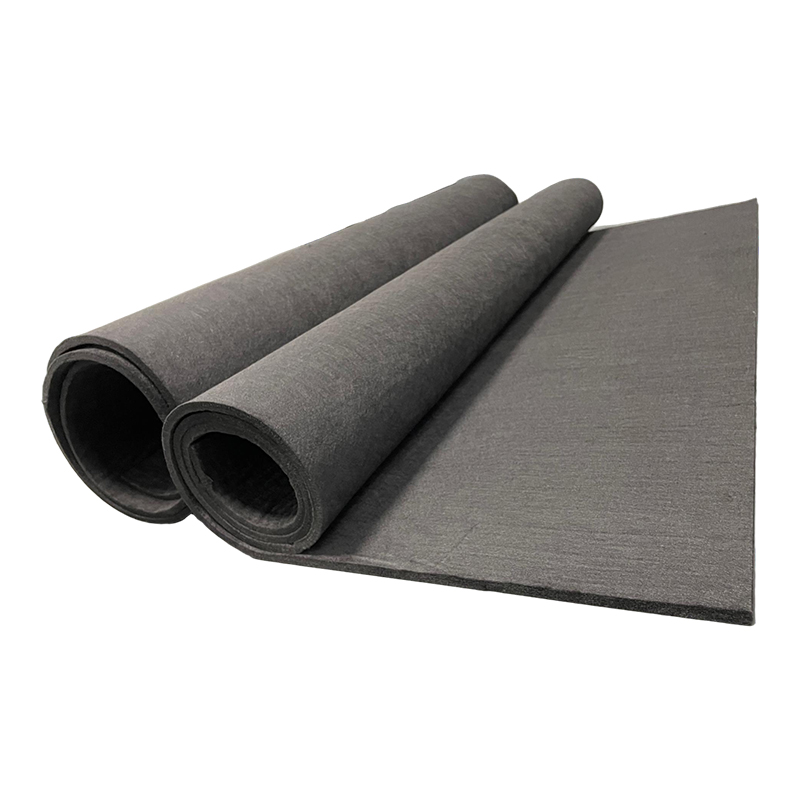
The electrode felt provides a conductive, porous medium for electrochemical reactions and influences mass transport, zinc deposition, and bromine evolution kinetics.
Table 1: Key Functional Roles of Electrode Felt in ZBFBs
| Function | Description | Impact on Cycle Life |
|---|---|---|
| Electron Conduction | Facilitates charge transfer from current collectors to electrolyte | Poor conductivity increases internal resistance, accelerating degradation |
| Surface Area | Provides active sites for zinc deposition and bromine reduction | Insufficient surface area leads to uneven plating, dendrite formation |
| Porosity & Flow | Ensures uniform electrolyte flow | Blockages or low permeability reduce reaction uniformity, increasing cycle loss |
| Chemical Stability | Resists corrosion in bromine-rich environment | Degraded felts accelerate side reactions, limiting cycles |
| Mechanical Strength | Maintains structural integrity during compression | Collapse or fiber shedding affects contact and causes capacity fade |
2. Electrode Felt Quality Factors
The quality of electrode felt is determined by multiple material and manufacturing characteristics that collectively influence cycle life, efficiency, and reliability.
2.1 Material Composition
- Carbon fiber content: High-purity carbon fibers improve electrical conductivity and chemical resistance.
- Binder material: Polymeric binders (e.g., PTFE-based) maintain fiber cohesion but must be chemically stable.
- Fiber morphology: Fiber diameter, length, and surface roughness control active surface area and wettability.
Impact on cycle life: Low-quality or heterogeneous fiber composition can create localized high-current areas, causing dendrite growth, zinc spalling, or premature electrode degradation.
2.2 Porosity and Pore Structure
- Macropores: Enable electrolyte flow for mass transport.
- Micropores: Provide high surface area for electrochemical reactions.
- Tortuosity: Affects ionic transport paths.
Engineering insight: An optimized balance between high porosity and structural integrity allows uniform zinc deposition and minimizes internal resistance. Excessive compaction or uneven pore distribution leads to hot spots and capacity fade.
2.3 Mechanical Properties
- Compression resilience: Electrode felts are often compressed within flow cells.
- Tensile strength: Determines durability during assembly and operation.
- Dimensional stability: Ensures constant contact with flow plates.
Cycle life implications: Felts that lose shape or compress excessively may form channeling, where electrolyte bypasses certain regions, causing uneven plating and accelerated degradation.
2.4 Surface Treatment and Coatings
- Surface treatments improve wettability, chemical resistance, and electrochemical activity.
- Carbonization or oxygen functionalization can enhance zinc nucleation.
- Protective coatings reduce fiber corrosion in bromine-rich environments.
Observation: Electrode felts without surface optimization can degrade rapidly, particularly under high current densities or prolonged cycling.
3. Electrochemical Impacts of Felt Quality
3.1 Zinc Plating and Dendrite Formation
Uneven deposition of zinc is the primary failure mechanism in ZBFBs. High-quality electrode felts with uniform fiber density and optimized surface area:
- Promote homogeneous nucleation sites
- Reduce dendrite formation
- Increase effective cycle count before capacity fade
3.2 Bromine Evolution and Self-Discharge
Bromine crossover and electrode corrosion are closely linked to felt material quality. Low-quality felts may:
- Absorb bromine excessively, accelerating side reactions
- Promote electrolyte stagnation, reducing reaction efficiency
- Contribute to higher self-discharge rates, reducing usable cycles
3.3 Internal Resistance and Efficiency
- Electrical conductivity of felt directly affects ohmic losses.
- Inadequate contact or poor conductivity increases cell voltage drop.
- Resulting higher overpotentials accelerate side reactions and material degradation, shortening cycle life.
Table 2: Typical Performance Variation by Felt Quality
| Felt Type | Porosity (%) | Conductivity (S/cm) | Cycle Life (Number of Cycles) | Observed Issues |
|---|---|---|---|---|
| Standard carbon felt | 85 | 100 | 400–500 | Uneven zinc plating, early degradation |
| Optimized carbon felt | 90 | 150 | 700–800 | Uniform deposition, low self-discharge |
| Surface treated felt | 88 | 140 | 800+ | Enhanced chemical stability, minimal dendrites |
4. System Engineering Considerations
A systems-level perspective is necessary when evaluating electrode felt performance:
4.1 Integration with Electrolyte Management
- Proper felt selection must account for electrolyte flow rate, viscosity, and bromine concentration.
- Low-permeability felts require higher pump energy, affecting overall system efficiency.
4.2 Thermal and Mechanical Management
- Temperature fluctuations and compression cycles affect felt dimensional stability.
- Engineering designs must match felt resilience to stack compression and thermal expansion.
4.3 Maintenance and Replacement Strategy
- High-quality felts extend maintenance intervals and reduce downtime.
- Poor-quality felts require frequent inspection, replacement, and electrolyte rebalancing.
Insight: Optimizing felt characteristics in conjunction with system design is critical to maximizing total lifecycle performance.
5. Application-Specific Impacts
5.1 Grid-Scale Storage
- Cycle life is paramount due to long-duration operation and high energy throughput.
- Electrode felts with enhanced chemical stability reduce capacity fade over thousands of cycles.
5.2 Commercial Microgrids
- Frequent partial cycles demand fast charge/discharge compatibility.
- Felts that support rapid ion transport and uniform plating ensure high reliability and consistent power output.
5.3 Industrial Backup Systems
- Peak shaving and intermittent operation expose felts to variable current densities.
- Mechanical and chemical resilience are essential to maintain long-term performance under stress.
Table 3: Felt Requirements by Application
| Application | Critical Felt Characteristics | Design Focus |
|---|---|---|
| Grid-Scale | Chemical stability, long-term durability | Minimize capacity fade over 10+ years |
| Commercial | High conductivity, rapid ion transport | Optimize charge/discharge efficiency |
| Industrial | Mechanical resilience, uniform deposition | Withstand variable current loads |
6. Optimization Strategies
- Material selection: Use high-purity carbon fibers and chemically resistant binders.
- Porosity engineering: Balance flow rate with surface area.
- Surface treatment: Enhance wettability and zinc nucleation uniformity.
- Compression control: Maintain dimensional integrity under stack pressure.
- Integrated system design: Match felt properties with flow rates, electrolyte chemistry, and thermal management.
Engineering note: Electrode felt optimization is not a single-product solution but a systemic engineering challenge impacting battery stack design, maintenance scheduling, and lifecycle cost.
7. Summary
The zinc‑bromine flow battery electrode felt is a critical determinant of cycle life, efficiency, and operational reliability. Key takeaways:
- Material composition, porosity, mechanical properties, and surface treatment dictate electrochemical performance.
- Uneven zinc deposition and bromine-induced degradation are common failure mechanisms linked to felt quality.
- System-level integration, including electrolyte flow and stack compression, is essential for maximizing cycle life.
- Application-specific requirements must guide felt selection: grid-scale, commercial, or industrial.
- Optimized electrode felts can significantly reduce maintenance frequency, improve reliability, and extend lifecycle.
Frequently Asked Questions (FAQ)
Q1: Why is electrode felt quality critical for ZBFB cycle life?
A: High-quality felts ensure uniform zinc deposition, minimal self-discharge, and low internal resistance, directly extending the number of cycles a battery can achieve.
Q2: What material properties should engineers prioritize?
A: Focus on fiber purity, porosity, conductivity, mechanical resilience, and chemical stability.
Q3: How does felt porosity affect battery efficiency?
A: Proper porosity ensures uniform electrolyte flow, minimizing hot spots and dendrites, which preserves cycle life and improves efficiency.
Q4: Are surface treatments necessary for electrode felts?
A: Yes. Surface treatments enhance wettability, nucleation uniformity, and chemical resistance, reducing degradation during repeated cycling.
Q5: How often should felts be replaced in commercial ZBFBs?
A: Replacement depends on application and cycling frequency, but high-quality felts can last thousands of cycles with minimal performance loss.
Q6: Can electrode felt optimization reduce system maintenance costs?
A: Absolutely. Durable and chemically stable felts extend maintenance intervals, reduce downtime, and improve total lifecycle efficiency.
References
- Skyllas-Kazacos, M., & Kazacos, M. (2022). Flow Batteries: Principles and Applications. Elsevier.
- Weber, A. Z., Mench, M. M., Meyers, J. P., Ross, P. N., Gostick, J. T., & Liu, Q. (2011). Redox Flow Batteries: A Review. Journal of Applied Electrochemistry, 41(10), 1137–1164.
- Li, X., Zhang, H., Mai, Z., & Zhang, C. (2025). Electrode Materials for Zinc-Bromine Flow Batteries: Recent Advances. Energy Storage Materials, 50, 232–249.