


 English
  中文简体
中文简体
Content
- 1 What Is Carbon Fiber?
- 2 What Is Carbon Fiber Made From?
- 3 Where Does Carbon Fiber Come From?
- 4 Types of Carbon Fiber: Grades and Classifications
- 5 Material Properties of Carbon Fiber: How Hard and Strong Is It?
- 6 Is Carbon Fiber a Composite? What Material Is Carbon Fiber, Exactly?
- 7 What Is Made of Carbon Fiber? Key Application Areas
What Is Carbon Fiber?
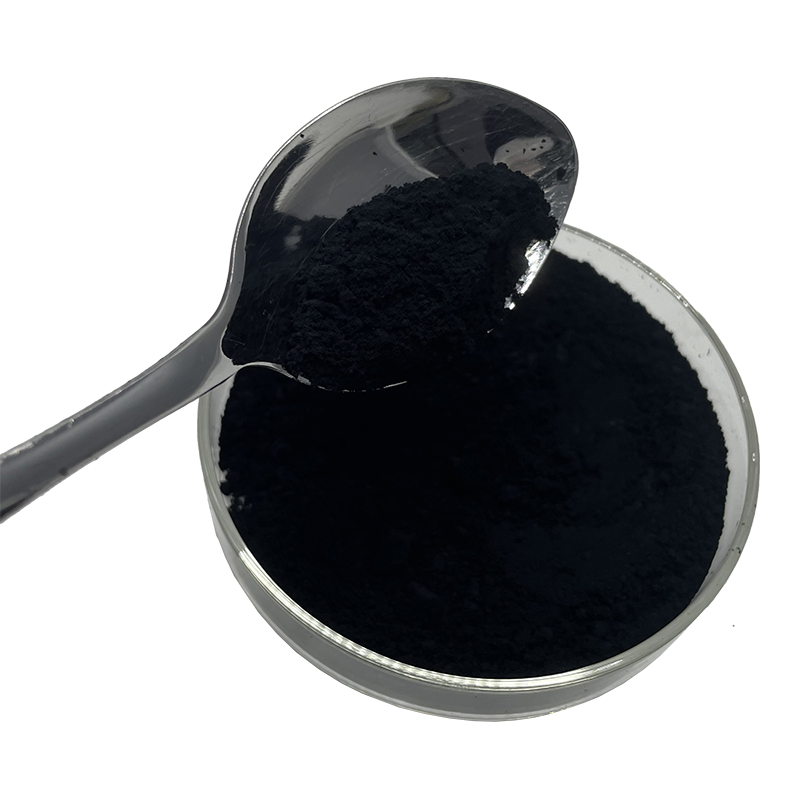
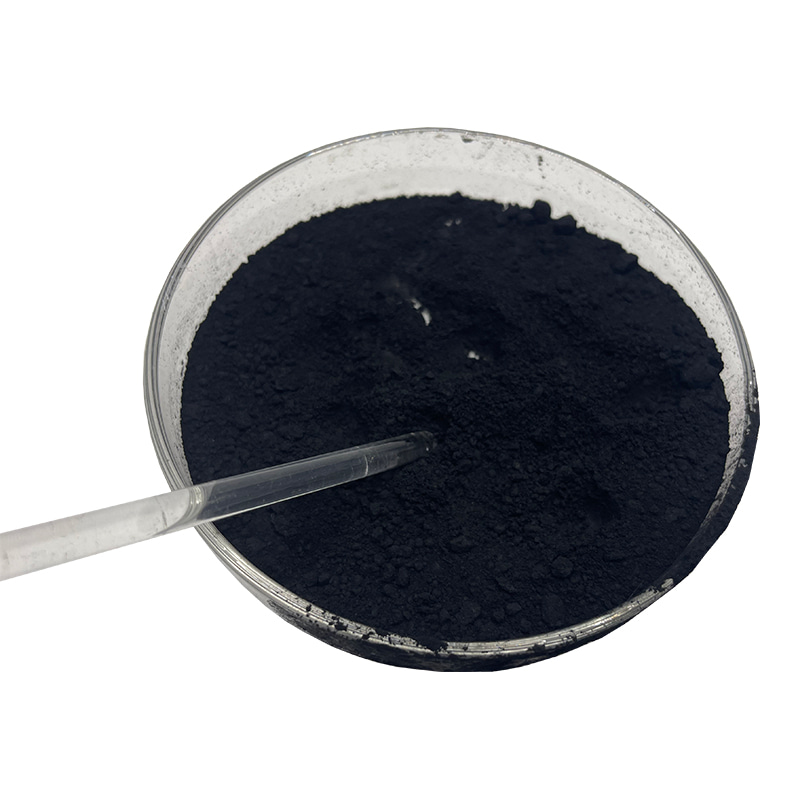
Carbon fiber is a high-performance material made up of long, thin filaments of carbon atoms — each strand roughly five to ten micrometers in diameter, thinner than a human hair. These filaments are bonded together in a crystalline structure aligned along the fiber's axis, which is exactly what gives carbon fiber its remarkable strength-to-weight ratio. The material is not a metal, not a plastic, and not a ceramic. It belongs to a category of advanced engineering materials defined by its elemental composition: more than 90% carbon by weight.
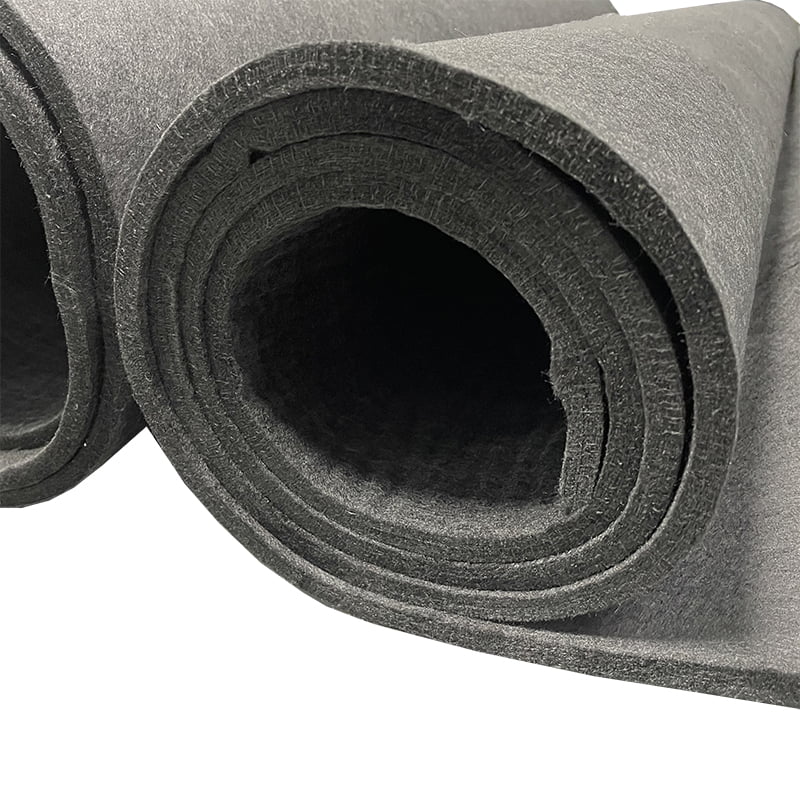
Carbon fiber is almost always used as a reinforcement within a matrix material — most commonly an epoxy resin — to form what is called a carbon fiber composite. On its own, a single strand of carbon fiber is brittle and difficult to handle. But when thousands of filaments are woven into a fabric or laid in parallel and then embedded in a binding resin, the resulting composite panel or structure becomes one of the strongest, stiffest, and lightest engineering materials available today.
The terms carbon fiber and carbon fibre refer to the same material — the spelling difference is simply American English versus British English. Similarly, "carbon fiber composite" and "carbon fiber reinforced polymer" (CFRP) are often used interchangeably in engineering and manufacturing contexts.
What Is Carbon Fiber Made From?
The raw material used to produce carbon fiber is called a precursor. The dominant precursor in commercial production is polyacrylonitrile (PAN), a synthetic polymer that accounts for roughly 90–95% of all carbon fiber manufactured globally. The remainder is produced from pitch (a petroleum or coal tar derivative) or, in specialty applications, rayon.
The production process converts the precursor into carbon fiber through a tightly controlled sequence of steps:
- Stabilization — PAN fiber is heated in air at 200–300°C to oxidize and stabilize its structure, preventing it from melting in the next stage.
- Carbonization — The stabilized fiber is heated to 1,000–1,500°C in an inert (oxygen-free) atmosphere, driving off most non-carbon atoms and leaving behind a fiber that is over 90% carbon.
- Graphitization (optional) — For ultra-high-modulus grades, fibers are heated further to 2,500–3,000°C to increase crystallinity and stiffness at the cost of some tensile strength.
- Surface treatment and sizing — The fibers receive a surface treatment to improve bonding with matrix resins, then a thin protective coating (sizing) before being wound onto spools for shipping.
This energy-intensive manufacturing process is one reason carbon fiber raw materials carry a significant cost premium over traditional metals. The carbon fiber raw materials chain — from acrylonitrile monomer through PAN fiber to finished carbon fiber tow — involves multiple chemical processing stages before the fiber ever reaches a composite fabricator.
Where Does Carbon Fiber Come From?
Global carbon fiber production is concentrated among a small number of major manufacturers. Japan has historically dominated the industry, with Toray Industries being the world's largest producer, alongside Teijin and Mitsubishi Chemical. Significant capacity also exists in the United States (Hexcel, Solvay) and Germany (SGL Carbon). Chinese domestic production has expanded rapidly since the mid-2010s, with producers such as Zhongfu Shenying and Guangwei Composites emerging as major global suppliers.
The feedstock chemistry traces back further: acrylonitrile — the monomer used to make PAN — is derived from propylene, which comes from petroleum refining or natural gas processing. So while carbon fiber is itself a high-tech advanced material, its origins lie in conventional hydrocarbon chemistry. Pitch-based carbon fiber draws directly from petroleum refinery byproducts or coal tar, making it a downstream product of fossil fuel processing.
Bio-based precursors (such as lignin-derived PAN alternatives) are an active area of research, but as of the mid-2020s, petroleum-derived PAN remains the commercial standard by a wide margin.
Types of Carbon Fiber: Grades and Classifications
Not all carbon fiber is alike. There are several ways to classify the different kinds of carbon fiber, the most common being by mechanical grade and by precursor type.
Classification by Mechanical Grade
| Grade | Tensile Modulus | Tensile Strength | Typical Applications |
|---|---|---|---|
| Standard Modulus (SM) | 220–240 GPa | 3,500–4,000 MPa | Sporting goods, automotive, general industrial |
| Intermediate Modulus (IM) | 270–320 GPa | 5,000–7,000 MPa | Aerospace structural components, defense |
| High Modulus (HM) | 350–450 GPa | 2,500–3,500 MPa | Satellite structures, precision instruments |
| Ultra-High Modulus (UHM) | >450 GPa | 1,800–2,500 MPa | Space, telescope mirrors, stiffness-critical structures |
Classification by Precursor Type
- PAN-based carbon fiber — The industry standard; best balance of tensile strength and modulus. Used in aerospace, automotive, sporting goods, and wind energy.
- Pitch-based carbon fiber — Produced from petroleum or coal-tar pitch; more easily reaches ultra-high modulus values and offers superior thermal and electrical conductivity. Favored in space and thermal management applications.
- Rayon-based carbon fiber — An early production method now largely obsolete for structural applications; still used in some specialized ablative and insulation contexts.
Beyond these core types, carbon fibers are also categorized by their fiber format: continuous tow (bundles of thousands of parallel filaments, designated as 1K, 3K, 6K, 12K, 24K, or 48K depending on filament count), woven fabric (plain weave, twill, satin), and chopped or milled fiber for use in injection-molded composites.
Material Properties of Carbon Fiber: How Hard and Strong Is It?
The question "how hard is carbon fiber" requires a distinction between hardness and stiffness — two properties that are often confused. Hardness refers to resistance to surface scratching or indentation; stiffness (modulus) refers to resistance to deformation under load. Carbon fiber scores high on stiffness but is not particularly hard in the conventional sense — the resin surface of a CFRP composite can be scratched relatively easily compared to hardened steel or ceramic.
The defining material properties of carbon fibre that make it so valuable are:
- Extremely high specific stiffness — Standard-modulus carbon fiber has a tensile modulus of ~230 GPa. Structural steel sits at ~200 GPa. Carbon fiber achieves this with a density of only ~1.8 g/cm³ versus steel's 7.85 g/cm³, giving it a stiffness-to-weight ratio roughly four times higher than steel.
- Very high tensile strength — Carbon fiber filaments can reach tensile strengths of 3,500–7,000 MPa depending on grade, compared to around 400–550 MPa for structural steel.
- Low density — At 1.6–1.9 g/cm³, carbon fiber composite structures are roughly 70–75% lighter than equivalent steel parts.
- Near-zero thermal expansion — Carbon fiber has a very low coefficient of thermal expansion (CTE), making it dimensionally stable across wide temperature ranges — critical for aerospace and precision optics.
- Electrical conductivity — Unlike glass fiber, carbon fiber is electrically conductive, which is both an advantage (EMI shielding, lightning strike protection) and a design consideration (galvanic corrosion with metals).
- Chemical resistance — Carbon fiber composites resist most acids, solvents, and environmental degradation, though UV exposure can degrade the resin matrix over time without protective coatings.
The main limitation is brittleness under impact loading. Carbon fiber does not deform plastically before failure the way metals do — it fractures suddenly, which has implications for crash structure design and damage tolerance in engineering applications.
Is Carbon Fiber a Composite? What Material Is Carbon Fiber, Exactly?
Yes — carbon fiber reinforced polymer (CFRP) is a composite material. Technically, the term "carbon fiber" refers to the fiber itself (the reinforcement phase), while the material most people mean when they say "carbon fiber" in an industrial or consumer context is the composite formed by combining that fiber with a matrix resin. This is an important distinction:
- Carbon fiber = the pure fiber filament, a form of carbon
- Carbon fiber composite = carbon fiber + matrix (usually epoxy, polyester, or PEEK) formed into a laminate or molded part
A composite material, by definition, combines two or more constituent materials with significantly different physical or chemical properties. In carbon fiber composites, the fiber provides tensile strength and stiffness, while the resin matrix binds the fibers, distributes loads between them, and protects them from environmental damage. Neither component alone would achieve the same combination of properties as the composite.
The most common matrix materials in carbon fiber composite materials are:
- Epoxy resin — The standard for aerospace and high-performance structural applications; excellent adhesion, low void content, good mechanical properties.
- Polyester and vinylester — Lower cost, used in marine, construction, and consumer products where absolute mechanical performance is less critical.
- Thermoplastic matrices (PEEK, PPS, nylon) — Increasingly used in automotive and aerospace for improved impact resistance, recyclability, and faster processing times.
- Ceramic matrix composites (CMC) — Carbon fibers in a ceramic matrix for extreme temperature environments, such as jet engine hot sections and hypersonic vehicles.
What Is Made of Carbon Fiber? Key Application Areas
The range of products made from carbon fiber has expanded dramatically from its early aerospace origins. Today, carbon fiber composites appear across industries wherever designers need to reduce weight without sacrificing structural performance:
- Aerospace — Fuselage panels, wing skins, bulkheads, and interior structures in commercial aircraft (Boeing 787 and Airbus A350 are both roughly 50% CFRP by weight).
- Automotive — Body panels, chassis components, drive shafts, crash structures, and seat frames in performance, luxury, and increasingly mainstream vehicles.
- Wind energy — Spar caps in wind turbine blades, where the combination of stiffness and light weight directly improves energy capture efficiency.
- Sporting goods — Bicycle frames, tennis rackets, golf club shafts, hockey sticks, rowing oars, and fishing rods — the consumer sector that first made carbon fiber widely familiar.
- Medical — Prosthetics, orthopedic bracing, surgical instruments, and radiation therapy equipment (carbon fiber is radiolucent, meaning X-rays pass through it).
- Civil infrastructure — Bridge decks, column wrapping for seismic retrofit, and concrete reinforcement (carbon fiber rebar does not corrode).
- Electronics and pressure vessels — Laptop and phone chassis components for high-end devices; compressed gas and hydrogen storage cylinders for fuel cell vehicles.
The global carbon fiber market was valued at approximately USD 5.5 billion in 2023 and is projected to grow at a compound annual rate of 9–11% through 2030, driven primarily by wind energy expansion and automotive lightweighting requirements tied to emissions regulations.