


 English
  中文简体
中文简体
Content
- 1 What CNT Modification Actually Changes in Electrode Felt
- 2 Three Specifications That Separate Good from Bad CNT Electrode Felt
- 3 Batch Consistency: The Metric That Separates Factories from Resellers
- 4 How to Qualify a CNT-Modified Electrode Felt Manufacturer in Five Steps
- 5 CNT-Modified Electrode Felt Manufacturer FAQ
A stack integrator in Zhejiang rejected an entire CNT-modified electrode felt lot when salt-spray testing revealed visible flaking of the carbon nanotube layer on 12% of the cut pieces. The supplier's pre-production sample had passed two months of cyclic testing, but the production batch showed adhesion variance across the roll width. This separation between sample-grade performance and production-grade consistency is why CNT-modified electrode felt sourcing has become a technical qualification exercise rather than a routine procurement step.
CNT-modified electrode felt sits at the intersection of two established material families: the structural reliability of PAN-based carbon and graphite felts, and the electrochemical advantages of carbon nanotubes, including high specific surface area, fast electron transfer and catalytic activity toward vanadium and bromine redox couples. Every manufacturer implements the modification differently, and those implementation choices appear in measurable parameters: CNT loading density, dispersion quality, adhesion strength and batch-to-batch variance.
This article gives procurement and R&D engineers a practical checklist for evaluating CNT-modified electrode felt manufacturers, covering the specifications that matter, the tests that expose weaknesses and the documentation a reliable supplier should provide with every batch.
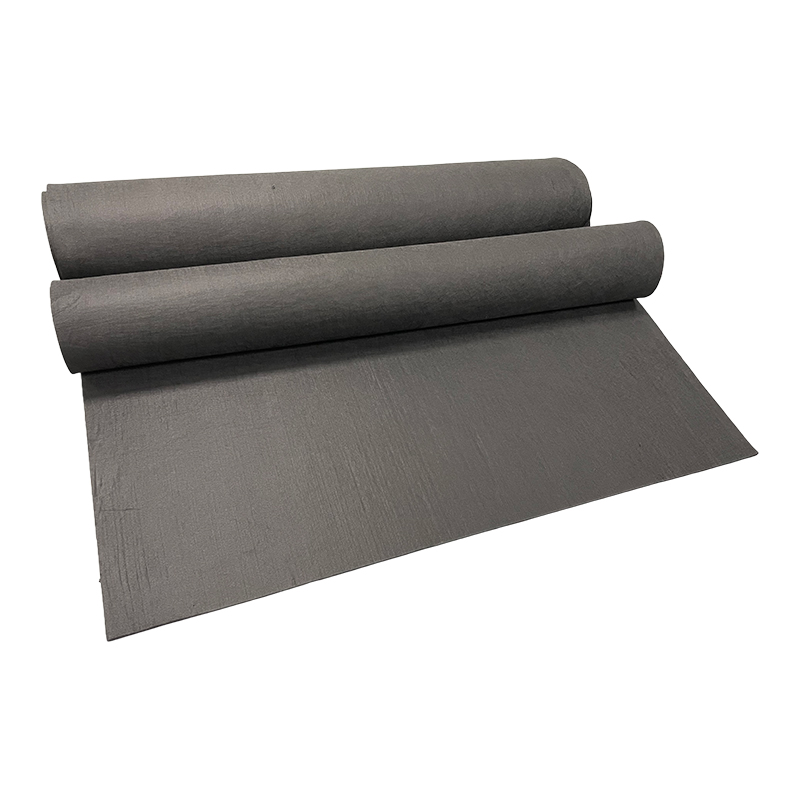
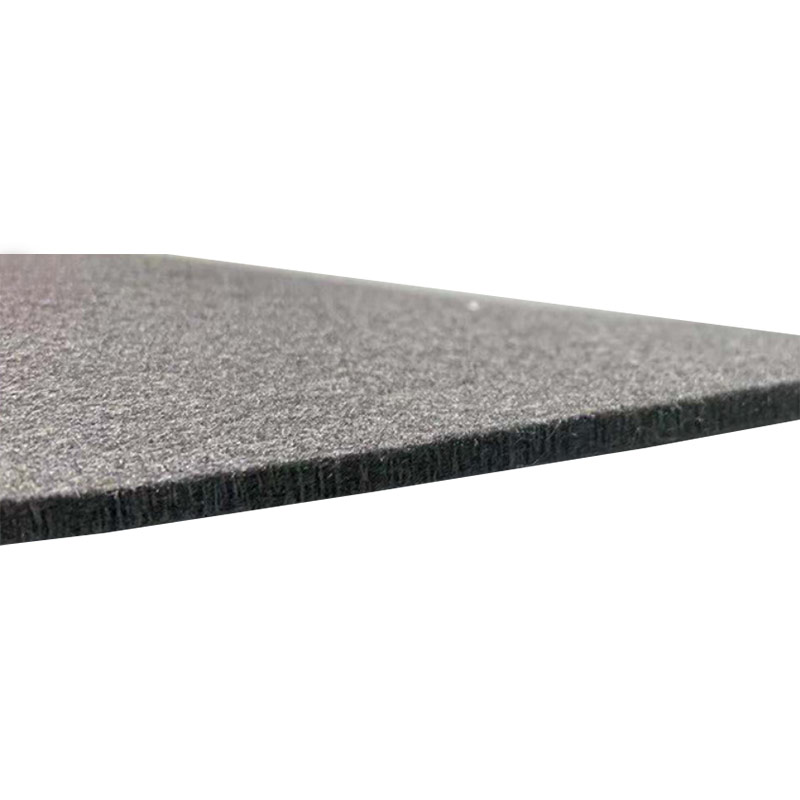 Gas-Phase CVD Electrode Felt with Grafted Hydrogen-Evolution InhibitorsThis electrode felt features carbon nanotubes grown directly on carbon fibers, providing high specific surface area and permanent hydrophilicity. The grafted pyrrole and pyridine structures help suppress side reactions, making it suitable for flow battery electrodes.View Product →
What CNT Modification Actually Changes in Electrode Felt
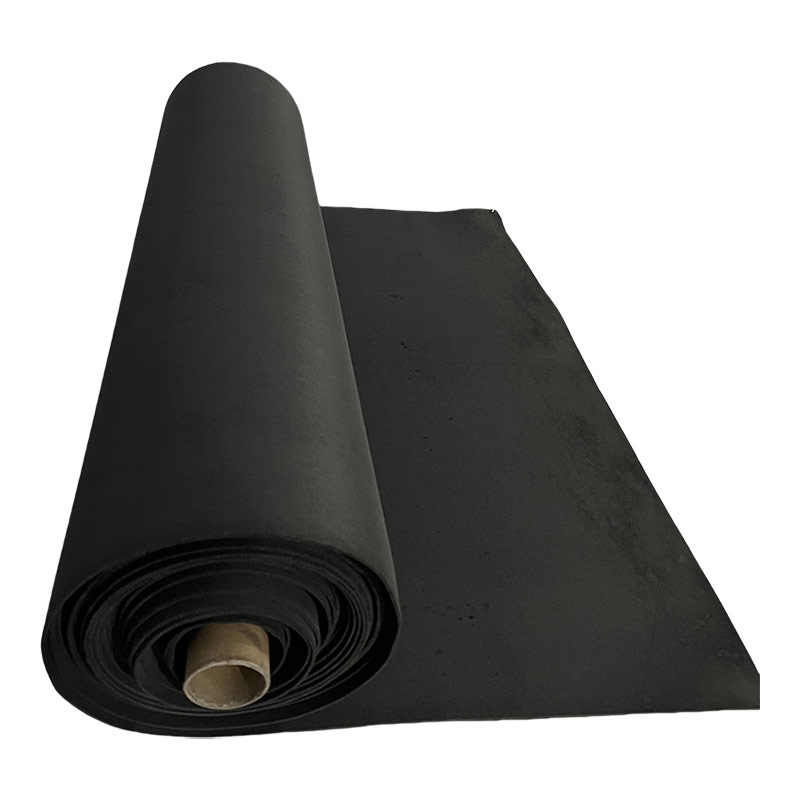
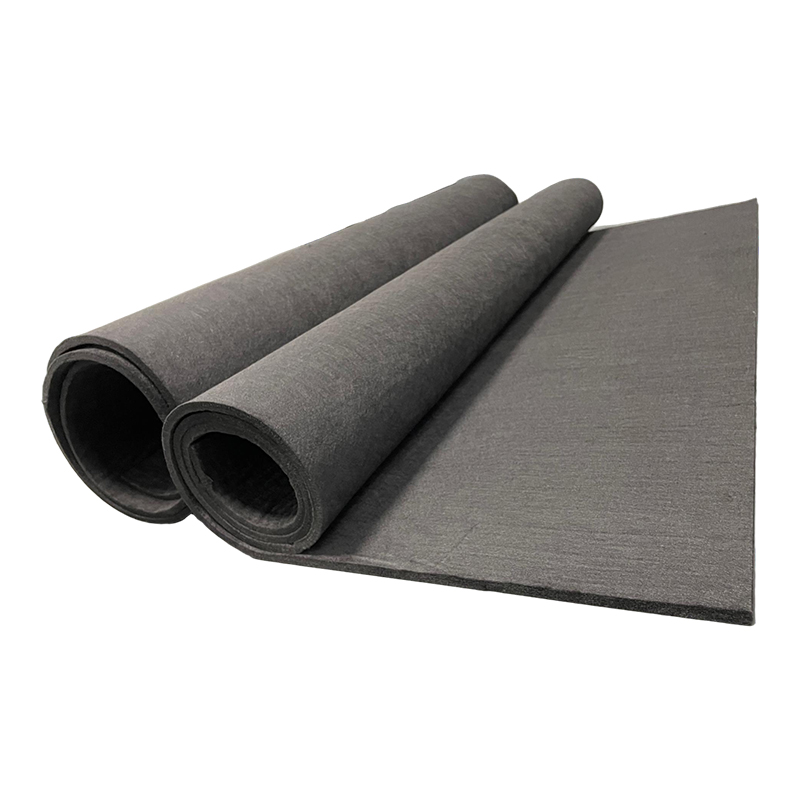
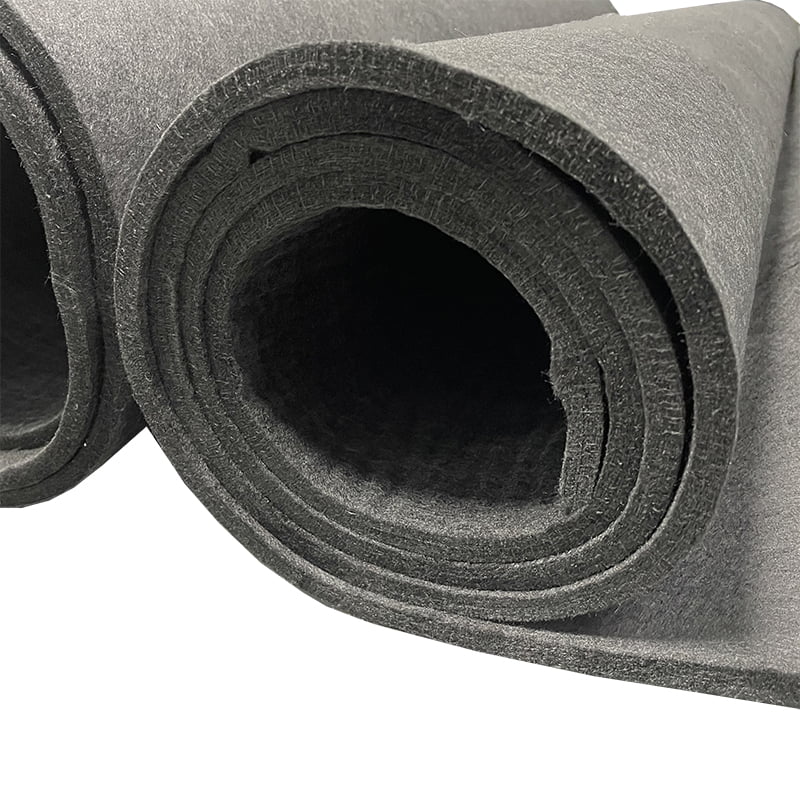
CNT-modified electrode felt is a carbon or graphite felt substrate whose individual fibers are coated with carbon nanotubes, creating a conductive nanoscale network that raises the electrochemically active surface area and lowers charge transfer resistance.
The base felt is typically a PAN-based graphite felt at 0.40-0.55 g/cm3 density and 3-5 mm thickness. Unmodified graphite felt has a specific surface area below 1 m2/g, which limits the reaction rate at the fiber surface and produces a charge transfer resistance in the range of several ohm-centimeters. When a CNT coating is applied, the felt gains two advantages at once: a several-fold increase in available surface area for redox reactions, and a dense layer of nanotube defect sites and edge planes that catalyze the vanadium and bromine reactions.
Published lab evaluations of CNT-modified graphite felt for vanadium redox flow batteries typically report round-trip energy efficiency gains of 8 to 15 percentage points at 100 to 150 mA/cm2 compared with unmodified felt under identical test conditions. That magnitude of improvement is why the material has moved from research to commercial specifications in less than five years.
Key Definition
CNT-modified electrode felt is a carbon or graphite felt with carbon nanotubes attached to the fiber surfaces by dip-coating, spray coating or chemical vapor deposition, producing a high-surface-area catalytic layer that improves reaction kinetics for flow battery, fuel cell and electrolysis applications.
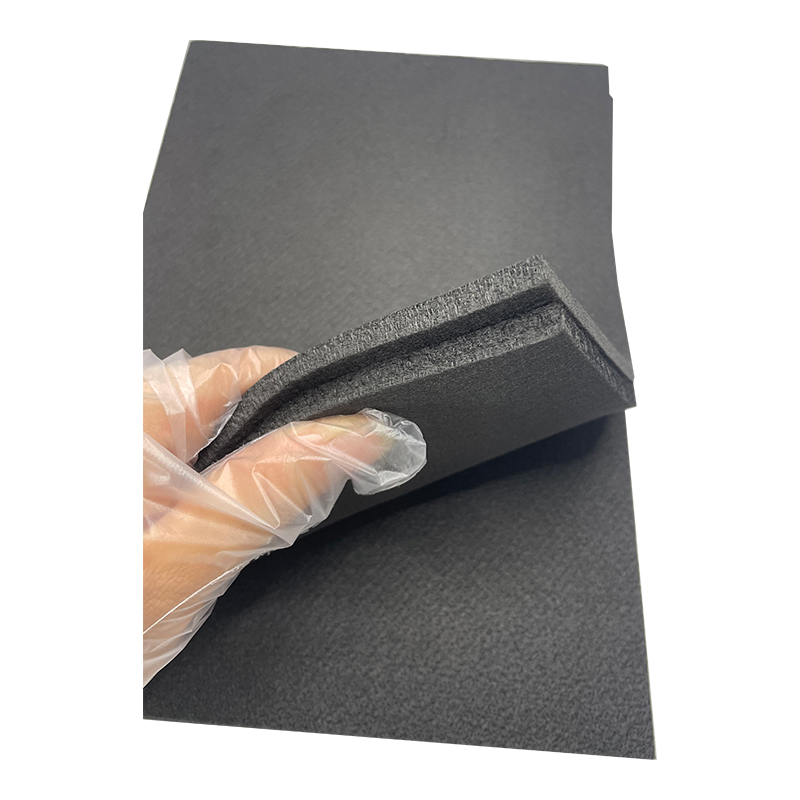 PAN-Based Graphite Felt for High-Temperature Vanadium Battery ApplicationsMade from PAN carbon felt graphitized at 2200°C, this felt offers high chemical inertness, oxidation resistance, and thermal stability up to 3200°C. Its improved conductivity and low thermal expansion are key for evaluating performance gains in VRFB systems.View Product →
Three Specifications That Separate Good from Bad CNT Electrode Felt
Evaluate a CNT-modified electrode felt manufacturer on three measurable parameters: CNT loading density, dispersion quality and coating adhesion. These three determine whether the product will perform and whether that performance will last.
Table 1 summarizes the acceptance ranges and test methods used by experienced stack integrators.
| Parameter | Acceptance Range | Test Method | What Poor Quality Looks Like |
| CNT loading density | 0.8-2.5 mg/cm2 | Gravimetric uptake or thermogravimetric analysis | Sheet-to-sheet deviation beyond 10%; visible light and dark patches |
| Dispersion uniformity | Over 90% as individual tubes or small bundles | SEM inspection at 5000x or higher | Agglomerated clusters above 20 um; bare fiber zones |
| Adhesion strength | Mass loss below 3% after 30 min of ultrasonication | Ultrasonication in deionized water, then re-drying and re-weighing | Visible CNT release during soaking; electrolyte darkening during cycling |
| Electrical resistivity | Run-to-run variance within 5% | Four-point probe | Drift above 10%; hot spots in short-stack tests |
The table values reflect requirements that emerge repeatedly in industrial stack development programs. Loading below 0.8 mg/cm2 produces negligible improvement in cell voltage; above 2.5 mg/cm2, the additional carbon nanotubes begin blocking electrolyte pathways in the felt pores. Dispersion quality is the most common failure point in low-cost manufacturing, because agglomerated CNT bundles provide a fraction of the active surface area of individual tubes. Adhesion weakness, meanwhile, often goes unnoticed until the first 200-500 cycles, when the coating begins shedding.
A 10% increase in electrode resistance can shift the round-trip efficiency of a vanadium flow battery by approximately 1.5 to 2.0 percentage points at 100 mA/cm2, according to stack-level performance models used by system integrators.
Batch Consistency: The Metric That Separates Factories from Resellers
The true capability of a CNT-modified electrode felt manufacturer is visible in the variance between production batches, not in the peak performance of a hand-selected sample.
A flow battery stack is limited by its weakest cell. When electrode resistance varies by more than 10% between batches or across a roll width, cell voltages diverge during charge and discharge, causing local overcharge, accelerated capacity fade and in some cases membrane damage. In zinc-bromine systems, uneven current distribution promotes zinc dendrite growth, which can puncture the microporous separator. The impact of electrode felt quality on zinc-bromine flow battery performance is now well documented in both field and laboratory data.
Similarly, electrode surface chemistry is a decisive variable in VRFB power density, which is why CNT modification has become a preferred surface treatment for commercial vanadium stacks. A factory that controls the substrate production and modification steps in-house can normally document batch variance within 5%. Resellers and trading companies rarely hold more than a single certificate of analysis copied from the original producer.
0.8-2.5
mg/cm2 CNT loading range
under 3%
adhesion mass loss threshold
within 5%
resistivity batch variance target
8-15
efficiency gain in percentage points
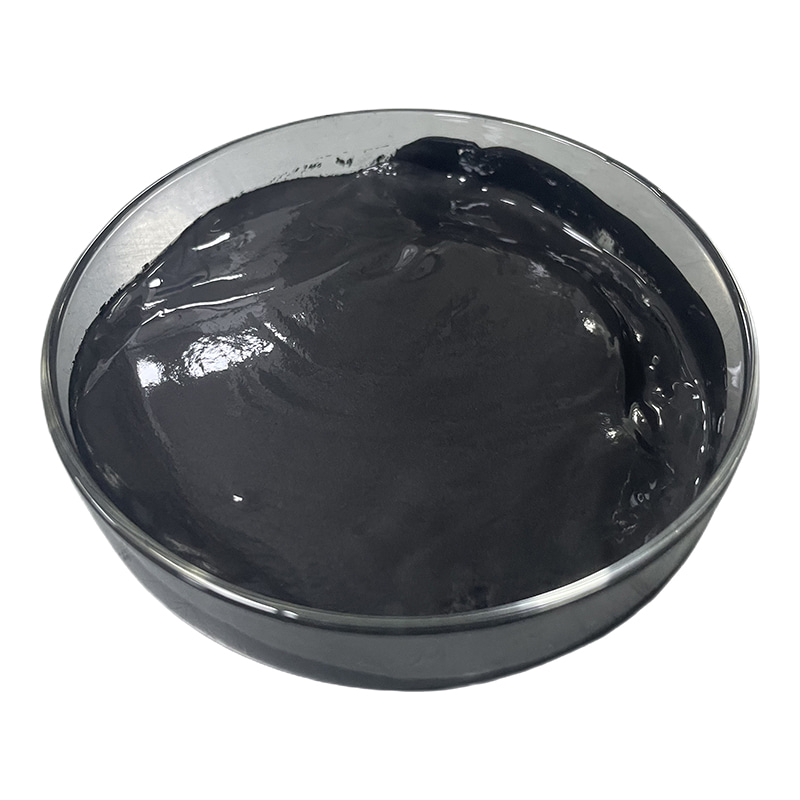
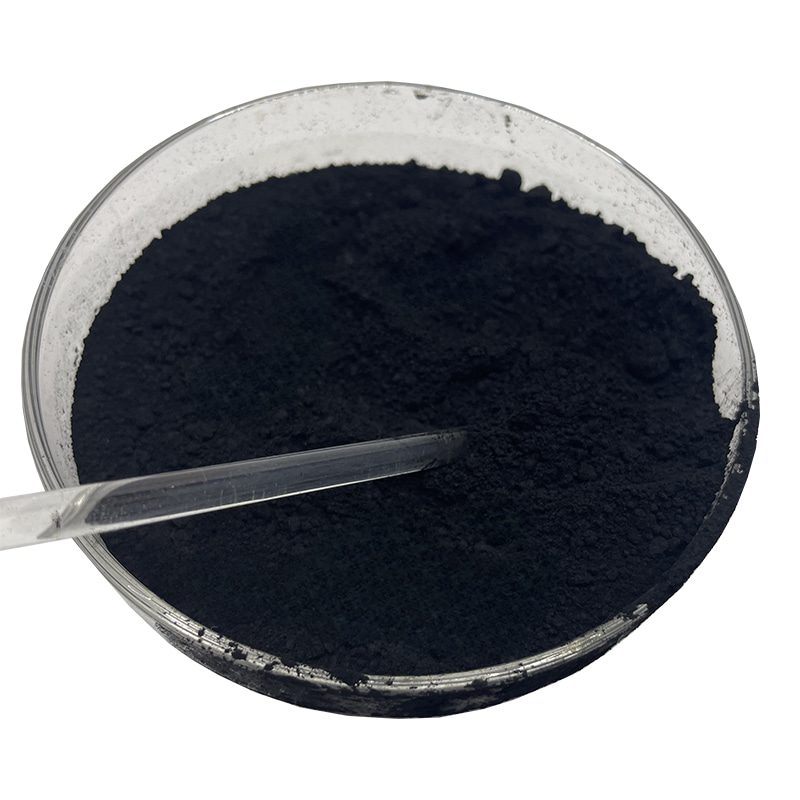 Carbon Nanotube Powder with High Conductivity and Easy DispersionThis carbon nanotube powder combines high tensile strength and metallic conductivity with a moderate aspect ratio for easy dispersion. Its properties support consistent electrode modification, which is critical when qualifying suppliers for CNT-coated felt.View Product →
How to Qualify a CNT-Modified Electrode Felt Manufacturer in Five Steps
Qualifying a CNT-modified electrode felt manufacturer takes five checks, each of which can be completed with standard laboratory equipment and the supplier's own process documentation.
- Request the modification process description. CVD-grown CNT coatings form chemical bonds with the fiber surface and are substantially more durable than dip-coated CNTs held by polymer binders. If a manufacturer cannot describe the process in specific terms, treat that as a red flag.
- Ask for three consecutive batch certificates of analysis. Each certificate should list CNT loading, areal weight, thickness, in-plane and through-plane resistivity, and a brief SEM record of dispersion quality.
- Inspect cross-section SEM images. CNTs should be distributed on interior fibers across the full felt thickness, not only on the outer surfaces, because only the internal network contributes to volumetric current generation.
- Run an independent adhesion test. Cut a 30 mm by 30 mm sample, dry it, weigh it, sonicate for 30 minutes in deionized water, re-dry and re-weigh. Accept a mass loss below 3%; reject the batch if it exceeds 5%.
- Verify thickness and compression behavior. For a 300 mm by 400 mm electrode area, thickness tolerance should stay within plus or minus 0.2 mm. Larger deviations cause uneven compression pressure, which directly translates to higher contact resistance in the affected cells.
For a CNT-modified electrode felt project, working with a factory that controls both the substrate production and the CNT coating step has a practical advantage. Jiaxing Naco New Material Co., Ltd., a custom conductive carbon products factory in Zhejiang, produces PAN-based carbon felt, graphite felt, electrode felt and carbon nanotube powder in one facility. That vertical integration lets a buyer adjust felt thickness, density, roll width and CNT loading through a single process owner, making batch-to-batch consistency easier to document and specification changes faster to implement.
CNT-Modified Electrode Felt Manufacturer FAQ
What CNT loading is optimal for vanadium redox flow batteries?
For most VRFB designs operating at 80 to 150 mA/cm2, choose a loading of 1.0 to 2.5 mg/cm2. This range usually delivers most of the surface area benefit without blocking the through-pore electrolyte transport. Loadings above 3 mg/cm2 rarely produce further voltage gains and add measurable cost.
How does CNT modification compare with thermal activation of graphite felt?
Thermal activation creates oxygen functional groups on the fiber surface at a low cost, but it does not increase surface area as dramatically as a CNT coating. The two methods are complementary; several higher-performance electrode felt products combine thermal activation with CNT deposition, and this combination is common in commercial VRFB stacks.
Can CNT-modified electrode felt be used in zinc-bromine flow batteries?
Yes. The enlarged surface area improves the kinetics of the bromide and bromine reactions and provides extra nucleation sites for zinc deposition. Adhesion strength becomes the critical parameter, because local pH shifts near the electrode surface during cycling can weaken polymer-binder CNT coatings faster than in vanadium systems.
What quality documentation should accompany each batch?
A complete certificate of analysis should cover CNT loading per unit area, areal weight, thickness, in-plane and through-plane electrical resistivity, and SEM images showing dispersion quality. A traceable batch number and the production date on the certificate tie the physical product back to the process records.