


 English
  中文简体
中文简体
Content
- 1 What an Electrode Materials Manufacturer Must Actually Control
- 2 Bipolar Plates and Flow Channel Plates: Tolerances That Change Stack Performance
- 3 How to Audit an Electrode Materials Manufacturer's Process Capability
- 4 RFQ Details That Separate a Serious Electrode Materials Manufacturer from a Trader
- 5 Quality Data You Should Demand From Every Electrode Materials Manufacturer
- 6 Electrode Materials Manufacturer FAQ
- 6.1 What is the difference between carbon felt and graphite felt?
- 6.2 How do I choose between a flexible and a hard flow channel plate?
- 6.3 What customization can an electrode materials manufacturer realistically provide?
- 6.4 How should I compare quotes from different electrode materials manufacturers?
During a routine qualification exercise for a zinc-bromine flow battery stack, three carbon suppliers submitted datasheets with nearly identical numbers, yet the actual felt samples differed by more than 40% in compressed thickness and by a factor of two in through-plane resistivity. The vendor that passed, Jiaxing Naco New Material Co., Ltd., did not rely on a flashier brochure; it documented needling, thermal conversion, and final inspection on every batch. That is the line between a carbon product distributor and a qualified electrode materials manufacturer.
What an Electrode Materials Manufacturer Must Actually Control
The first qualification question is not "what products do you sell" but "which process steps do you operate in house."
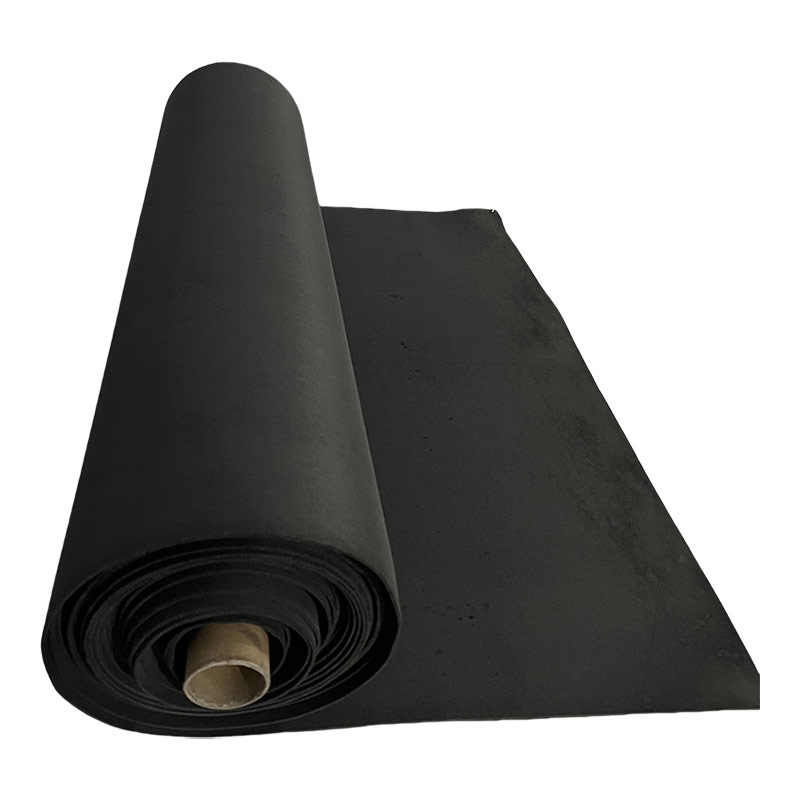
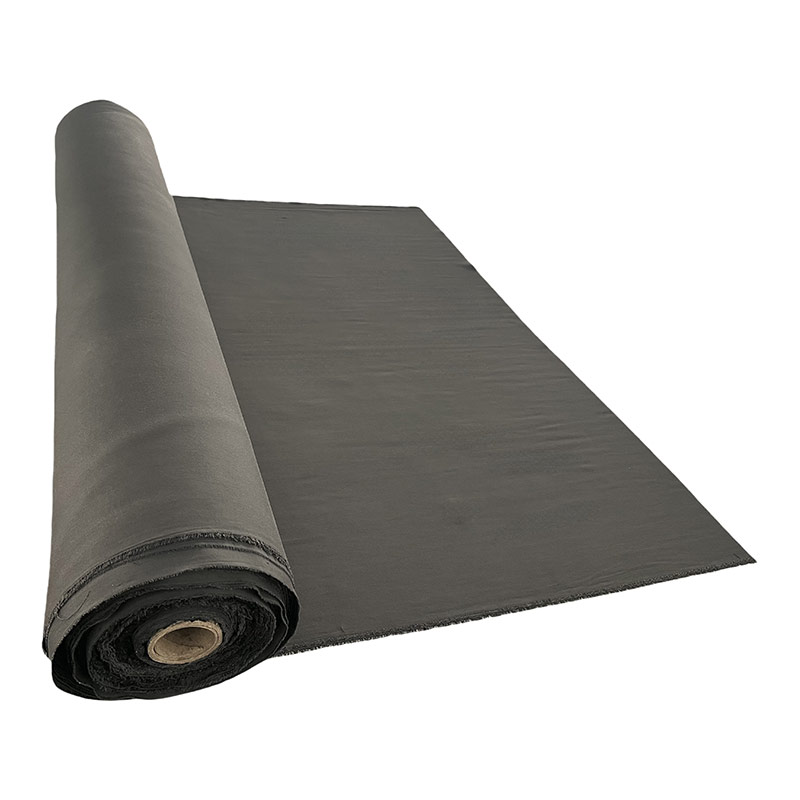
An electrode materials manufacturer that only finishes imported carbon felt cannot control the two properties that dominate flow battery and fuel cell performance: fiber architecture and surface chemistry. A factory that converts precursor fiber through carbonization and graphitization, then compresses, needle-punches, or laminates the material to a target density, has the levers to hold batch-to-batch consistency. PAN-based and viscose-based precursors behave differently: PAN yields higher carbon content and lower ash after graphitization, while viscose-derived felt compresses more softly and conforms better to flow field channels.
| Property | PAN-based graphite felt | Viscose-based graphite felt |
| Carbon content after graphitization | 98-99.5% | 96-99% |
| Through-plane resistivity | 10-30 ohm-cm | 20-50 ohm-cm |
| Compression behavior | Firmer, lower compressive set | Softer, more conformable |
| Ash content | Below 0.05% | Below 0.1% |
| Typical use | VRFB electrodes, fuel cell gas diffusion layers | Zinc-bromine cells, capacitor electrodes |
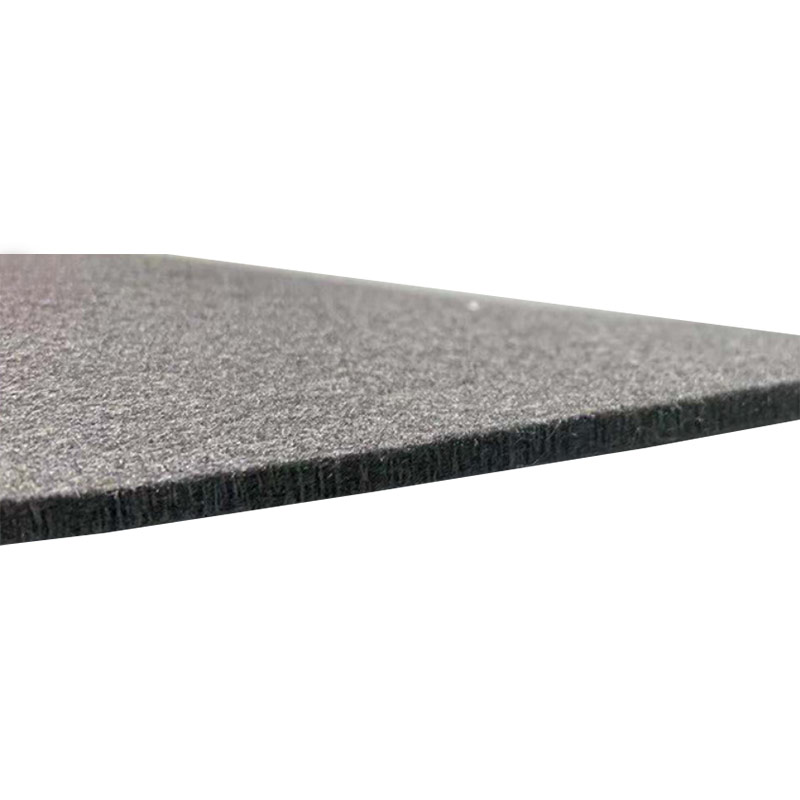 Graphite Electrode Felt for Flow Battery and Fuel Cell ApplicationsThis electrode felt is produced with controlled carbonization and graphitization, offering options like PAN-based or viscose-based precursors. Its surface chemistry and fiber architecture influence cell performance, making it relevant when verifying batch consistency and edge quality.View Product →
The same logic applies to electrode cloth and cured felts. Needle-punched density, curing temperature, and final thickness tolerance decide whether the electrode fits the stack frame without shimming. A manufacturer that controls those parameters can document them on each certificate of analysis. Ask for roll width, piece size tolerance, and cut-edge quality too; edge fuzz or variable loft at the cut line changes electrolyte flow locally and can show up as a hot spot in stack testing.
Bipolar Plates and Flow Channel Plates: Tolerances That Change Stack Performance
Flatness and channel depth tolerance on a bipolar plate affect contact resistance, electrolyte distribution, and shunt current more than the bulk conductivity of the plate material.
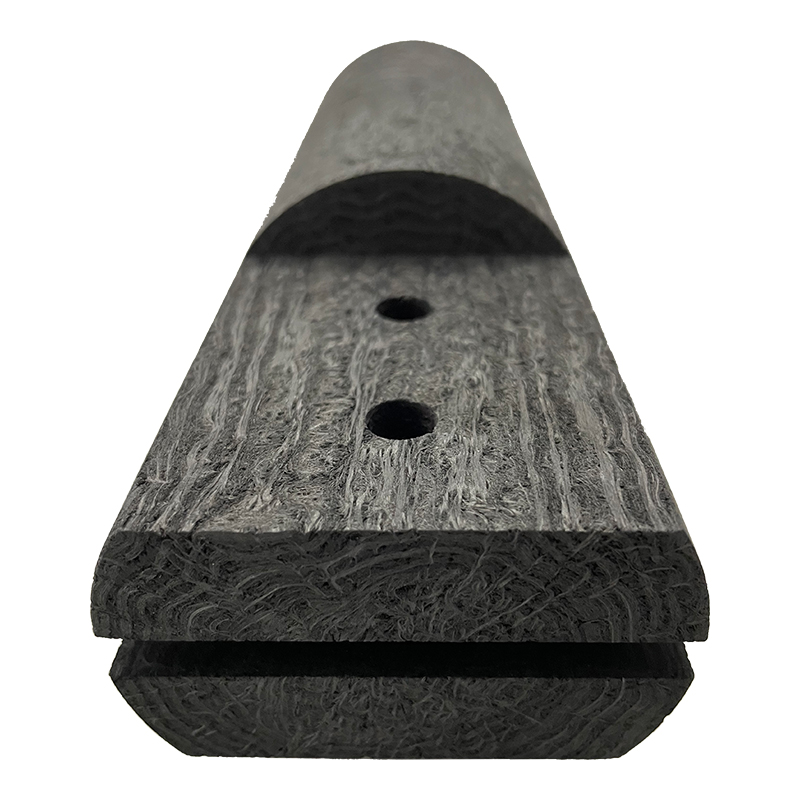
Carbon-fiber reinforced composite flexible graphite bipolar plates compress under stack clamping force to absorb surface tolerances, which protects brittle cells, but only when the plate edge is properly sealed. Welded-edge versions prevent electrolyte wicking and edge delamination, a detail often visible only after hundreds of hours of cycling. On the rigid side, hard flow channel plates hold channel geometry under pressure; a 0.1 mm flatness error across a 200 mm plate can change local compression force enough to shift the polarization curve noticeably.
0.1 mmflatness target over a 200 mm plate
+/-0.05 mmchannel depth tolerance on rigid plates
40 MPatypical flexural strength for carbon-plastic plates
Typical specification ranges used in stack design reviews.
Material selection is application-specific: flexible composite plates suit stacks that need corrosion resistance and some compression compliance; carbon-plastic rigid plates suit high-pressure operation where channel geometry must not flex. Ask a manufacturer for the flatness, channel depth tolerance, and edge seal approach before comparing prices. In high-power-density designs, the channel cross-section matters as much as the plate material, because a flexible plate that deforms under load will reduce the active wetted area.
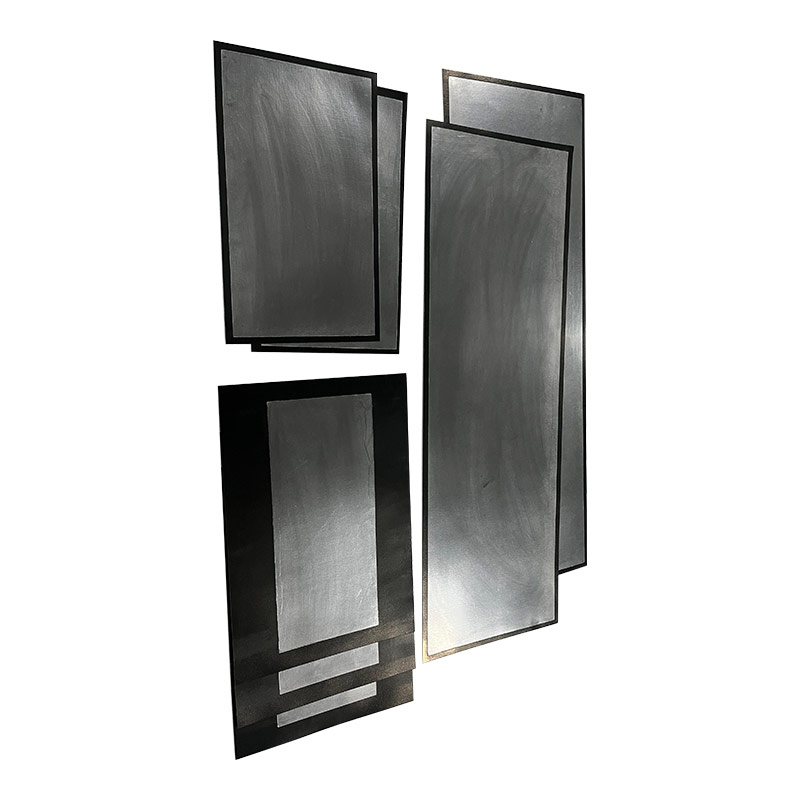 Carbon Fiber Reinforced Flexible Graphite Bipolar Plate with Welded EdgesThis plate extends carbon fiber into weldable zones around a graphite reaction area, enabling plastic edge sealing. It suits stacks needing corrosion resistance and compression compliance, and its channel geometry is critical for high-power-density designs.View Product →
 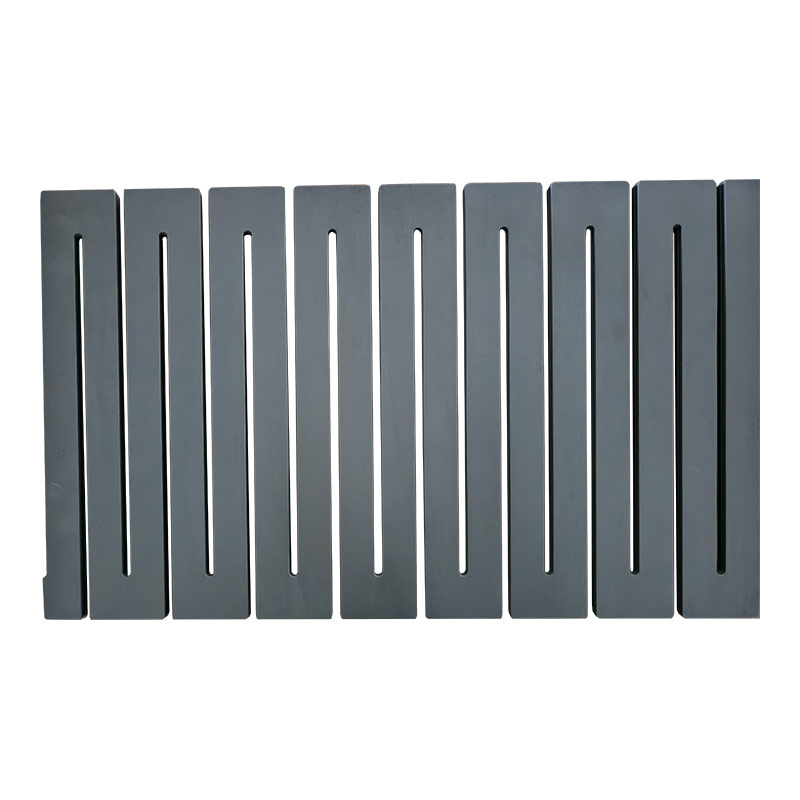 Rigid Carbon Flow Channel Plate for High-Pressure OperationMade from high-hardness pure carbon via resin bonding and graphitization, this plate provides strong mechanical strength and conductivity. It resists swelling and foaming under battery conditions, suitable for high-pressure stacks where channel shape must stay stable.View Product →
How to Audit an Electrode Materials Manufacturer's Process Capability
A factory tour tells you more than any datasheet, but a structured scorecard turns the visit into objective evidence.
Weighted scorecard for evaluating an electrode materials manufacturer
Lot-to-lot consistency30%
Customization depth25%
Quality documentation20%
Lead time reliability15%
Failure-analysis support10%
Suggested weighting; adjust by application criticality.
Lot-to-lot consistency gets the highest weight because flow battery performance math assumes stable material; a 30% spread in resistivity reads directly as a variation in stack efficiency. Customization depth matters when you need specific densities, graphitization levels, or part sizes. Quality documentation closes the traceability loop, while lead time reliability matters because electrode material is often the longest-lead item in the stack bill of materials. Failure-analysis support determines how fast a field incident gets diagnosed and resolved.
A manufacturer that can show you furnace logs, density profiles across the width of a felt roll, and the gauge repeatability of its thickness measurement is giving you evidence you can verify. One that only re-sends the catalog PDF is asking you to trust a marketing page.
RFQ Details That Separate a Serious Electrode Materials Manufacturer from a Trader
Send a request for quotation that demands ranges and test methods, and the quality of the response will quickly separate real manufacturers from resellers.
- State thickness and density as acceptance ranges, not single nominal values, and specify the gauge pressure used.
- Request graphitization temperature and the thermal profile for each lot.
- Require the test method for through-plane resistivity, including four-point probe setup and clamp pressure.
- Ask for compression set data after 24 hours at the stack clamping pressure.
- Request lot traceability codes that link precursor batch, processing date, and final QC values.
Lot traceability is the documented link between a specific output roll or plate, the precursor batch it came from, the furnace run that converted it, and every inspection value recorded along the way. Without it, a certificate of analysis describes only a sample, not the material you received.
Quality Data You Should Demand From Every Electrode Materials Manufacturer
Per-lot certificates are the minimum; the manufacturer should also explain how each value was measured.
For electrode felt, the useful values are areal weight, thickness under defined compression, density, through-plane resistivity, ash content, carbon content, and electrolyte contact angle when surface-treated. For bipolar plates and flow channel plates, the useful values are flatness, channel depth and width, plate thickness variation, flexural strength, and edge seal continuity. If a supplier returns a one-page datasheet with no test methods, no tolerances, and no batch number, treat it as an incomplete offer.
Battery performance depends on the same properties that electrode felt quality research links to zinc-bromine cell behavior, including wettability and pore structure. A manufacturer that publishes technical analysis of these variables usually has stronger internal feedback loops than one that only ships standard catalog items.
If a supplier cannot name the furnace temperature, the clamp pressure, and the batch ID from the day your material was made, the compliance statement is not worth the paper it is written on.
Qualify the process, not the price list.
Electrode Materials Manufacturer FAQ
What is the difference between carbon felt and graphite felt?
Carbon felt is heat-treated at roughly 1000-1300 degrees C, retaining more functional groups and giving higher electrical resistance. Graphite felt is processed at 2000 degrees C or higher, raising crystallinity, lowering resistivity and ash content, and improving oxidation resistance. Flow battery electrodes usually require graphite felt, while some thermal insulation applications stay with carbon felt.
How do I choose between a flexible and a hard flow channel plate?
Use flexible composite plates when the stack needs compression compliance and corrosion resistance, and when edge sealing can be solved with a welded-edge design. Use rigid carbon-plastic plates when channel geometry must stay fixed under clamping load and the stack operates at higher pressure. Verify flatness and channel depth tolerance before comparing materials.
What customization can an electrode materials manufacturer realistically provide?
Customization typically includes felt density and thickness targets, PAN or viscose precursor selection, graphitization temperature, surface treatment for wettability, cut-to-size electrode pieces, plate size and flow channel geometry, and edge sealing options. The factory should quote acceptance tolerances for every customized parameter and keep a sample archive for traceability.
How should I compare quotes from different electrode materials manufacturers?
Compare accepted tolerance ranges, test methods, lot traceability, and supply consistency terms, not just unit price. Ask for a first-article inspection report on a pilot lot and run a polarization test before committing to volume orders.