


 English
  中文简体
中文简体
Content
- 1 How Flexible vs Rigid Flow Field Plates Differ Mechanically
- 2 Contact Resistance and Current Collection
- 3 Hydraulics, Pressure Drop, and Channel Geometry
- 4 Sealing Reliability: Flexible vs Rigid Plates in Assembly
- 5 Flexible vs Rigid: Which One for Your Stack?
- 6 Cost, Tooling, and Supply Chain: Flexible vs Rigid at Scale
- 7 A Decision Checklist for Your Stack
- 8 Frequently Asked Questions
You are at the cell build review for a 30 kW vanadium flow battery. The frame is machined and the electrode felt batch measured 4.1 to 5.0 mm across 52 sheets. The last variable is the flow field plate: a flexible graphite composite that deforms under clamping, or a rigid carbon-polymer plate that holds its geometry. Choosing wrong can raise contact resistance by 18% and keep the stack below rated current density. The answer depends on frame flatness, electrode thickness tolerance, and how much pumping power you are willing to spend.
How Flexible vs Rigid Flow Field Plates Differ Mechanically
Both plate types carry current, distribute electrolyte, and support the electrode against bolt force. They differ in elastic modulus and how they respond to thickness variation.
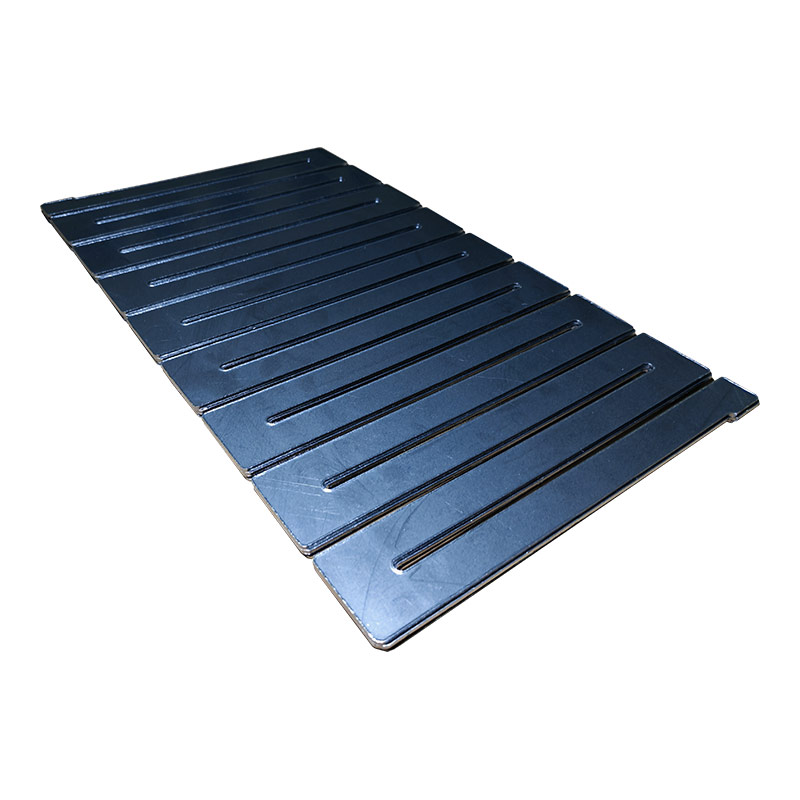
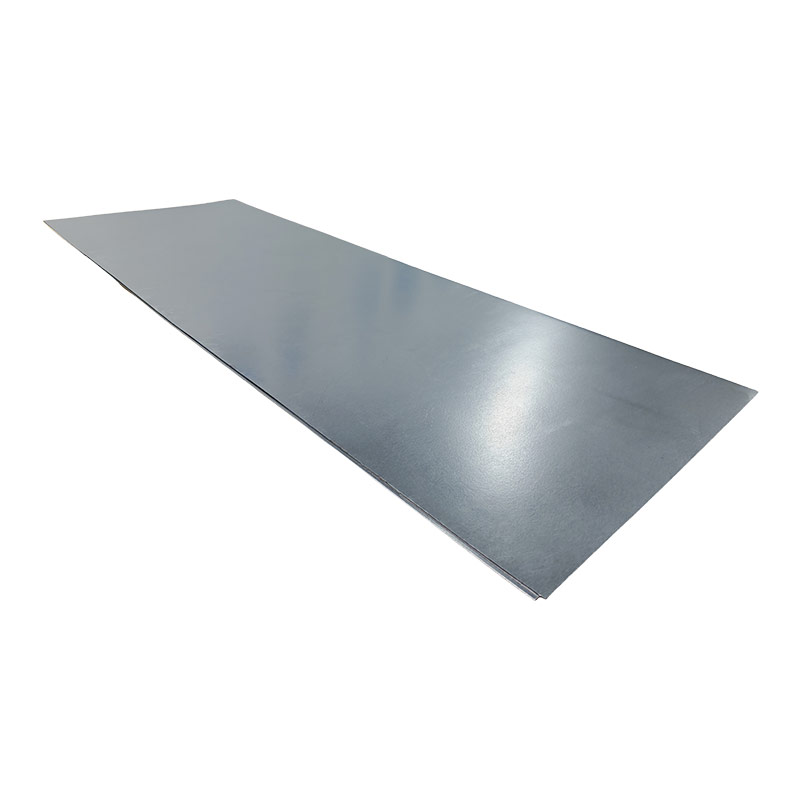
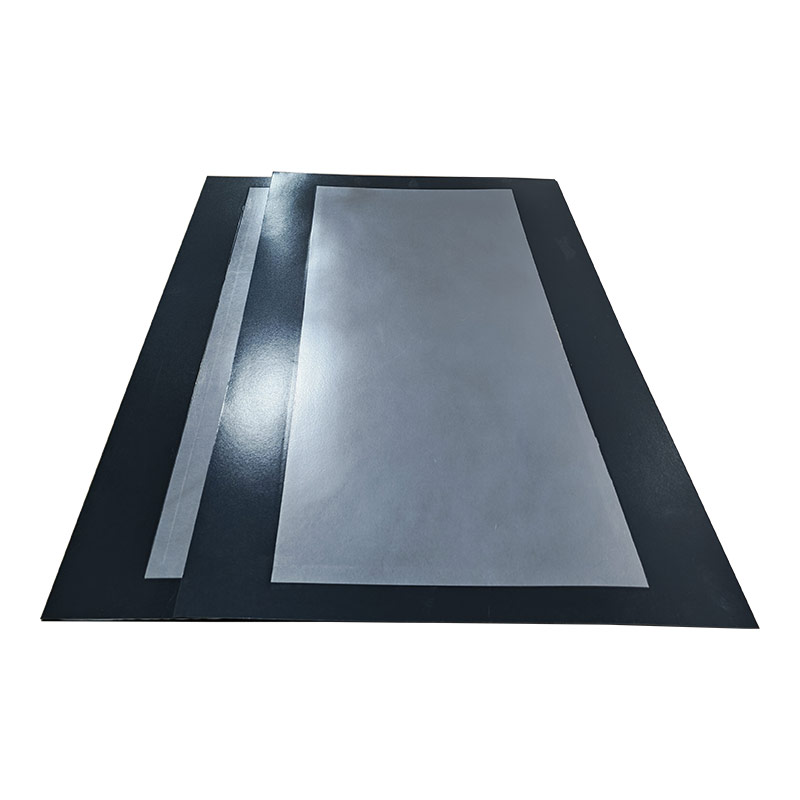
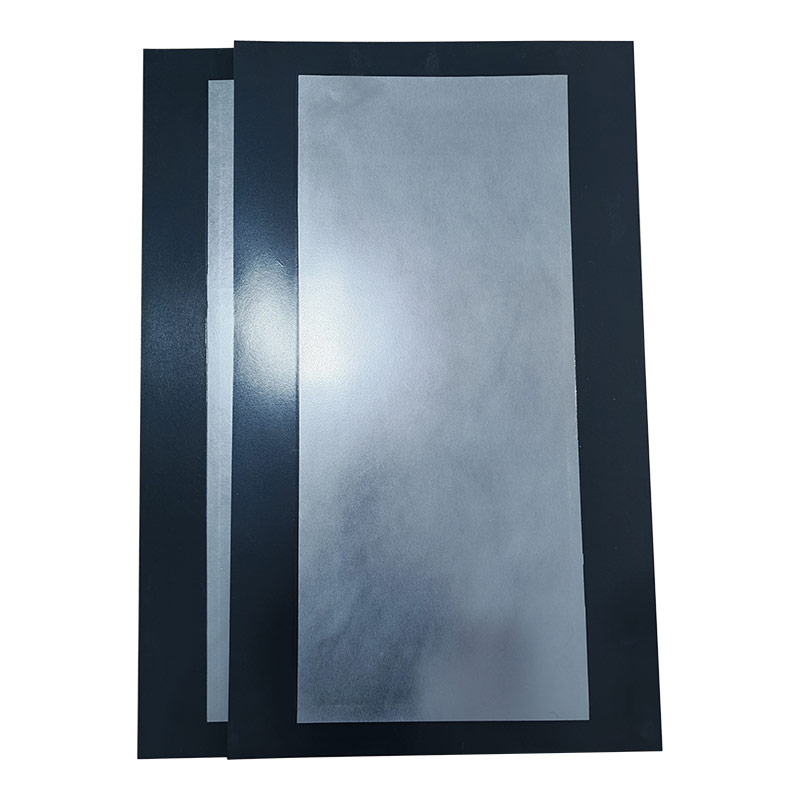
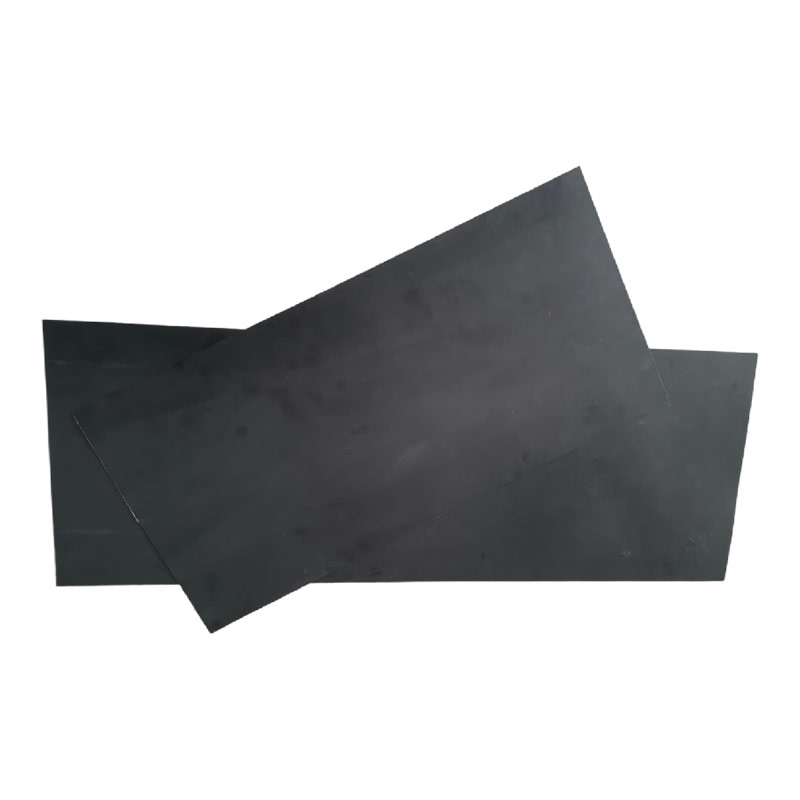
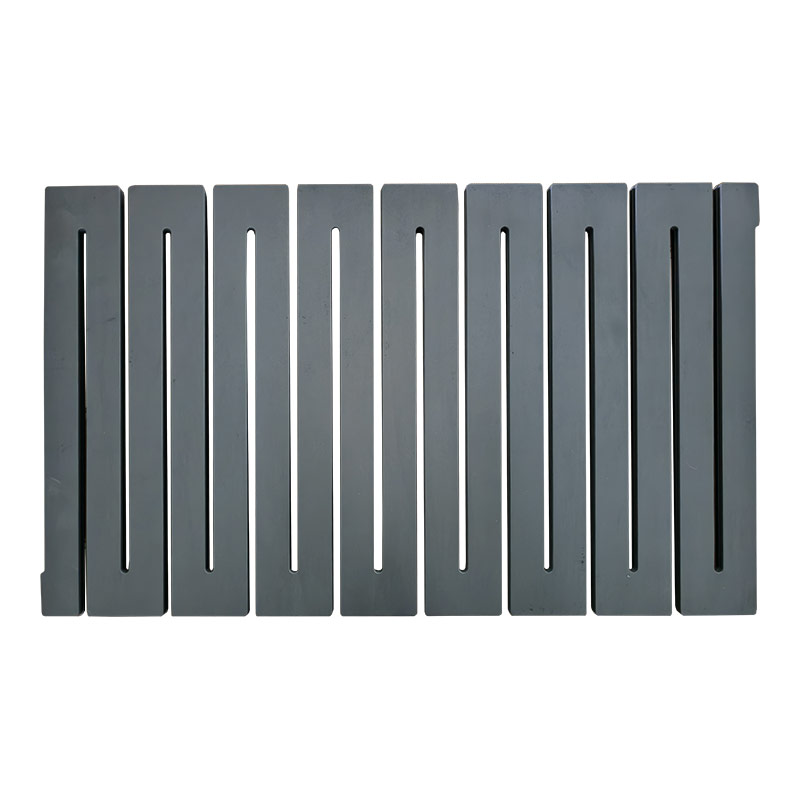
A flexible flow field plate is a compliant carbon-graphite composite sheet that deforms elastically under stack compression to accommodate electrode thickness tolerance. A rigid flow field plate is a stiff molded composite that maintains its channel geometry under the same load.
A flexible plate is usually built from oriented graphite foil with a polymer binder. Its elastic modulus is 8 to 15 GPa, so it behaves like a compressible sheet. A rigid plate is molded from carbon-fiber-reinforced resin, with an elastic modulus of 30 to 50 GPa. It behaves like a structural member.
The practical consequence: flexible plates tolerate +/-0.5 mm electrode thickness variation; rigid plates only about +/-0.1 mm. But rigid plates keep their channel cross-section from closing under compression. This one difference drives most of the remaining trade-offs. See what is a hard flow channel plate to understand the rigid variant's construction in more detail.
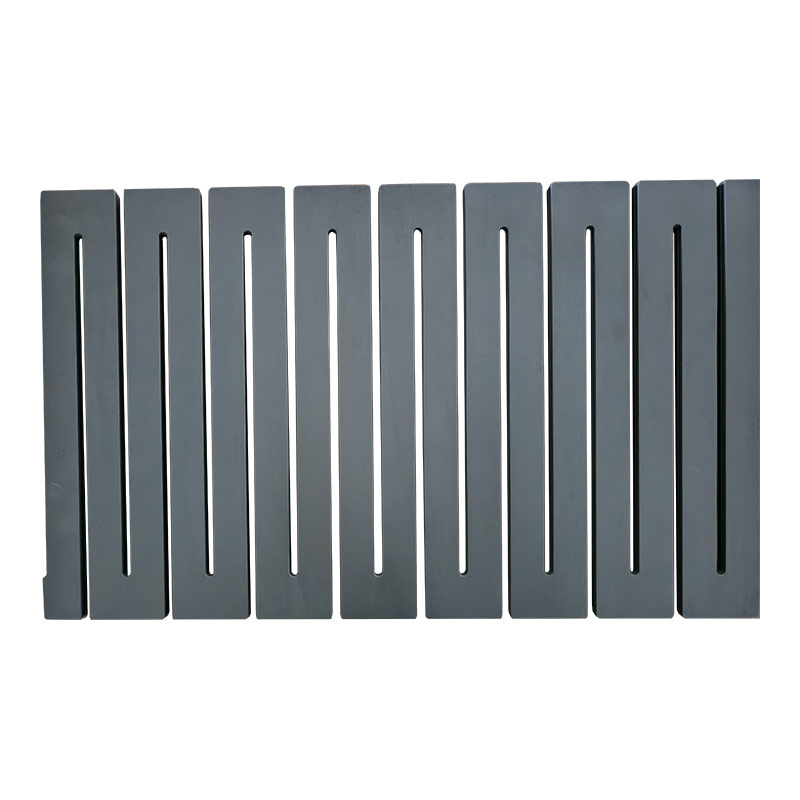 Hard Flow Channel PlateHigh-hardness pure carbon material plates are made by resin bonding, high-pressure repeated pressing, impregnation and other processes of asphalt coke and petroleum co...View Product →
Contact Resistance and Current Collection
Flexible plates give lower initial contact resistance at the same torque; rigid plates hold contact resistance more stable after thermal cycling. Contact resistance between a carbon plate and carbon felt depends on load multiplied by contact area. The flexible plate spreads the rib load over more felt strands.
In one 0.4 m^2 stack test, a flexible plate with 1.5 mm ribs achieved 28 mOhm-cm^2 at 9 N/cm^2. The rigid plate needed 2.0 mm ribs to reach 32 mOhm-cm^2. After 800 thermal cycles from 20 to 55 C, the rigid plate kept 95% of its original contact resistance; the flexible plate fell to 85%.
28 mOhm-cm^2 Flexible plate initial contact resistance at 9 N/cm^2
32 mOhm-cm^2 Rigid plate initial contact resistance with 2.0 mm ribs
95% vs 85% Contact retention after 800 thermal cycles: rigid vs flexible
Hydraulics, Pressure Drop, and Channel Geometry
Rigid plates allow deeper channels, which cuts pressure drop and pumping power. Channel depth affects pressure drop with the inverse cube in a laminar flow. In a serpentine channel 1.5 mm wide and 600 mm long, increasing depth from 1.0 to 1.5 mm cuts pressure drop by about 70%.
In a 50 kW VRFB at 90 L/min, reducing cell pressure drop by 0.4 bar saves roughly 600 W of pumping power, about 1.2% of stack output. Flexible plates are limited to shallower profiles because deeper channels reduce the rib area that clamps the electrode. They also creep into the channel over time, so effective depth shrinks. Rigid plates hold channel depth for the life of the stack.
Flow plate geometry affects power density more than most teams expect - read our analysis on how flow plate geometry can improve system power density.
Sealing Reliability: Flexible vs Rigid Plates in Assembly
Rigid plates seal more predictably with a flat frame; flexible plates are more forgiving of frame warpage. A plastic frame typically has 0.3 to 0.5 mm flatness deviation over 600 mm. The flexible plate follows this deviation, so the gasket compresses variably but stays within range. The rigid plate does not follow, so the seal surface usually needs machining or an additional soft gasket layer.
The rigid plate has a different weakness: over-torquing one bolt by 20% has almost no effect. The flexible plate thins locally at that bolt, so the rib under it can collapse or close a channel.
| Criterion | Flexible Flow Field Plate | Rigid Flow Field Plate |
| Elastic modulus | 8-15 GPa | 30-50 GPa |
| Thickness tolerance | +/-0.3 mm | +/-0.1 mm |
| Recommended clamping | 6-10 N/cm^2 | 10-14 N/cm^2 |
| Gasket hardness (Shore A) | 70-80 | 50-60 |
| Pressure drop factor | 1.0 | 0.7 |
| Thermal cycle retention | 85% after 800 cycles | 95% after 800 cycles |
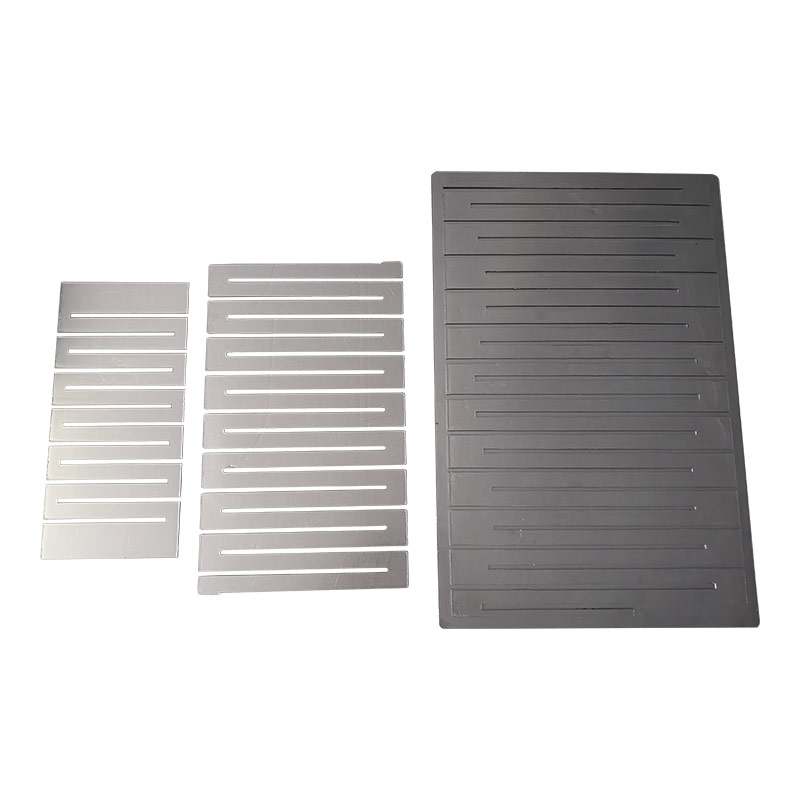 Flexible Flow Channel PlatePure carbon material plates made from expanded graphite under high pressure can be processed into various flow channel structures by die-cutting machines, engraving ma...View Product →
Flexible vs Rigid: Which One for Your Stack?
Choose flexible when frame flatness and electrode thickness vary; choose rigid when you need high power density and predictable hydraulics.
Select a flexible plate when
- Cell area is larger than 0.4 m^2 and the frame is injection molded
- Electrode felt thickness varies by more than +/-0.3 mm
- The flow path is short and pressure drop is not dominant
- Your maintenance crew can retorque the stack after formation
Select a rigid plate when
- Target power density is above 300 mW/cm^2
- The flow path is long with multiple serpentine turns
- You use welded edges or a metallic bipolar plate
- The stack will not be retorqued after commissioning
Cost, Tooling, and Supply Chain: Flexible vs Rigid at Scale
Flexible plates are cheaper at low quantities; rigid plates win beyond a few thousand units. A flexible plate is cut from rolled sheet. For a 0.4 m^2 cell, raw sheet material costs about 2.5 to 3.5 times less than a molded rigid plate's unit cost at 100 pieces, because the rigid plate carries tooling amortization. At 5,000 units, the rigid molded plate becomes cheaper on a per-unit basis because material is used more efficiently and cycle time is short.
Tooling for a rigid plate is typically a compression mold with multiple cavities. The initial investment depends on the plate size, channel count, and required flatness. If your design changes frequently, flexible plate production from sheet stock gives you more freedom to iterate without paying for a new mold.
Jiaxing Naco New Material Co., Ltd. produces both flexible flow channel plates and rigid flow channel plates, so you can evaluate the two configurations against the same production tolerance and the same quality control. When you source either plate, ask the supplier for thickness tolerance on the raw sheet or molding, because it determines whether you need a thicker felt or additional gasket compensation.
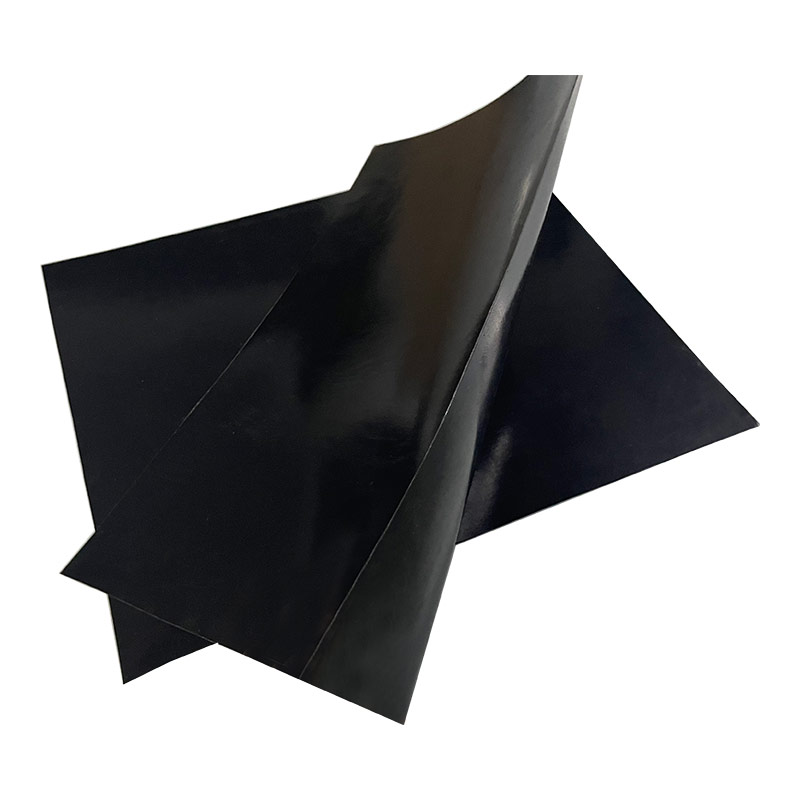 Carbon Fiber Reinforced Carbon-Plastic Bipolar PlateOur company's carbon bipolar plates are the first carbon fiber reinforced flexible graphite bipolar plates in the industry. They do not break even when bent at 360°, w...View Product →
A Decision Checklist for Your Stack
Match the plate to your stack's weakest tolerance first, then to its flow path.
- Measure electrode felt thickness across the batch. If spread is above +/-0.3 mm, start with a flexible plate.
- Check frame flatness. If it exceeds 0.3 mm over 600 mm, avoid a rigid plate unless you will machine the seal face.
- Calculate the channel pressure drop at target flow. If it exceeds your pump budget, switch to a rigid plate with a deeper channel.
- Estimate total units and change frequency below 2,000 units. Flexible plate prototyping is faster, but rigid plate tooling pays off at scale.
- Test the first stack with both plates. Measure contact resistance and leak rate after 500 thermal cycles before you approve the design.
Frequently Asked Questions
Can a flexible flow field plate be used in a vanadium redox flow battery?
Yes. The flexible composite sheet is chemically compatible with vanadium electrolyte when the polymer binder is selected correctly. The main risk is creep over time, so schedule a retorque after the first 50 to 200 hours of operation.
How does contact resistance compare between flexible and rigid plates?
Flexible plates usually show lower initial contact resistance because the compliant material conforms to the felt. Rigid plates require wider ribs to achieve comparable values, but they retain contact resistance better over thermal cycling.
Which plate type has longer service life?
Rigid plates generally last longer in high-temperature stacks because they resist creep and channel deformation. Flexible plates last longer in applications with uneven frames, because they tolerate flatness deviation without leaking.
Do flow field plates need a separate gasket?
Yes. Both types need a gasket between the plate and the frame. The gasket hardness differs - softer gaskets (50 to 60 Shore A) pair with rigid plates, harder gaskets (70 to 80 Shore A) pair with flexible plates.