


 English
  中文简体
中文简体
Content
- 1 PAN-Based Carbon Felt vs Viscose-Based: The Precursor Difference
- 2 PAN-Based vs Viscose-Based: How the Properties Compare
- 3 How to Choose PAN-Based or Viscose-Based Felt for Flow Battery Electrodes
- 4 High-Temperature Insulation and Purity-Critical Applications
- 5 Purchasing Considerations: Tolerances, Cost, and Lead Time
- 6 Frequently Asked Questions
Suppose you are shortlisting electrode materials for a 20 kW vanadium redox flow battery (VRFB). Two products dominate the conversation: PAN-based carbon felt and viscose-based carbon felt. Although both are carbon felts, their precursor fibers produce fundamentally different materials. PAN-based felt delivers higher tensile strength and better graphitization, while viscose-based felt offers lower ash content and a softer, more conformable structure.
This guide explains the measurable differences, where each felt performs best, and how to write a specification that the supply chain can actually manufacture.
Selection shortcut: if the felt will carry current in a flow battery, start with PAN-based graphite felt. If it will insulate or sit in a high-purity zone, start with viscose-based graphite felt.
PAN-Based Carbon Felt vs Viscose-Based: The Precursor Difference
The defining distinction is the precursor fiber, which controls carbon yield, graphitizability, and final ash content. PAN-based carbon felt is made from polyacrylonitrile staple fiber that is needle-punched into a nonwoven body, then carbonized at around 1,000 C. When the same body is graphitized above 2,000 C, it becomes PAN-based graphite felt.
Viscose-based carbon felt uses rayon, a regenerated cellulose fiber. Cellulose carbonizes at roughly 20 to 30 percent yield, versus about 50 percent for PAN, so viscose felts shrink more and finish with a finer, denser texture after the same heat treatment. The difference in yield is the single biggest reason viscose products cost less per kilogram but behave differently at the surface.
Definition: PAN-based carbon felt is a carbonized nonwoven felt made from polyacrylonitrile staple fibers, needle-punched to a target thickness and bulk density, and used as a battery electrode or high-temperature insulation medium.
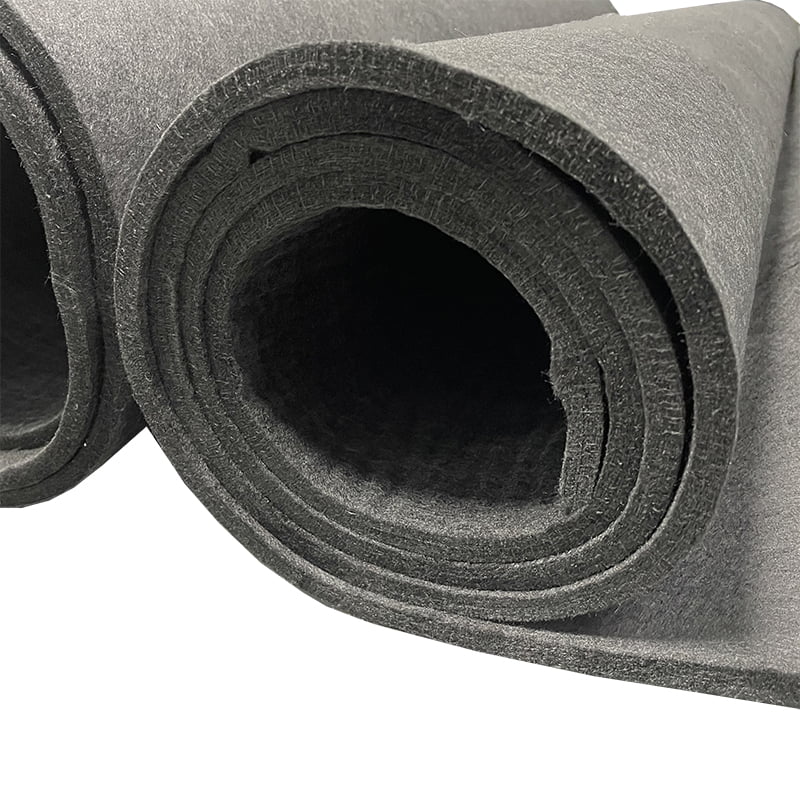
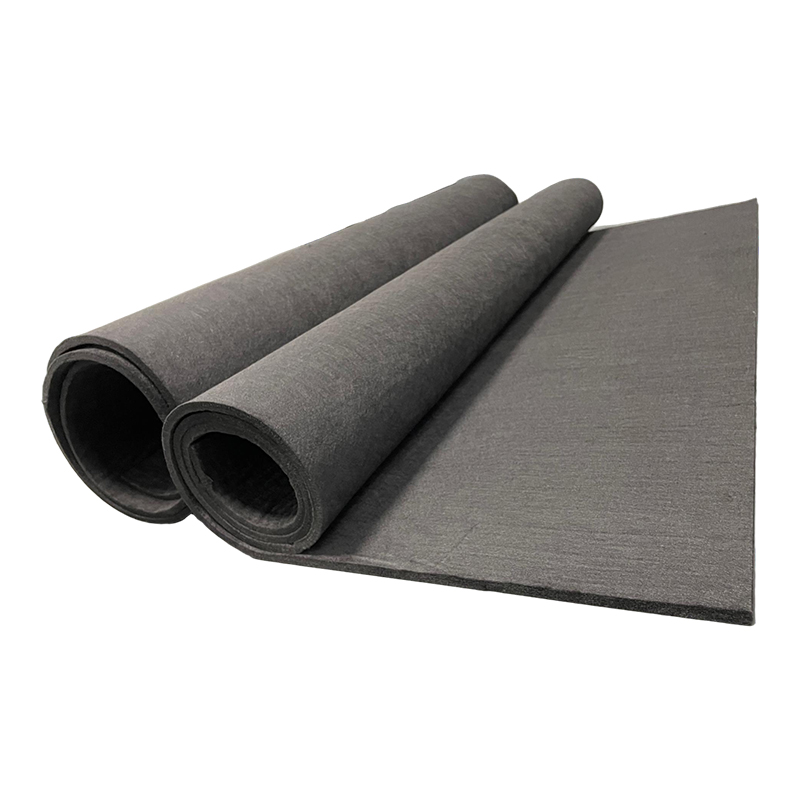
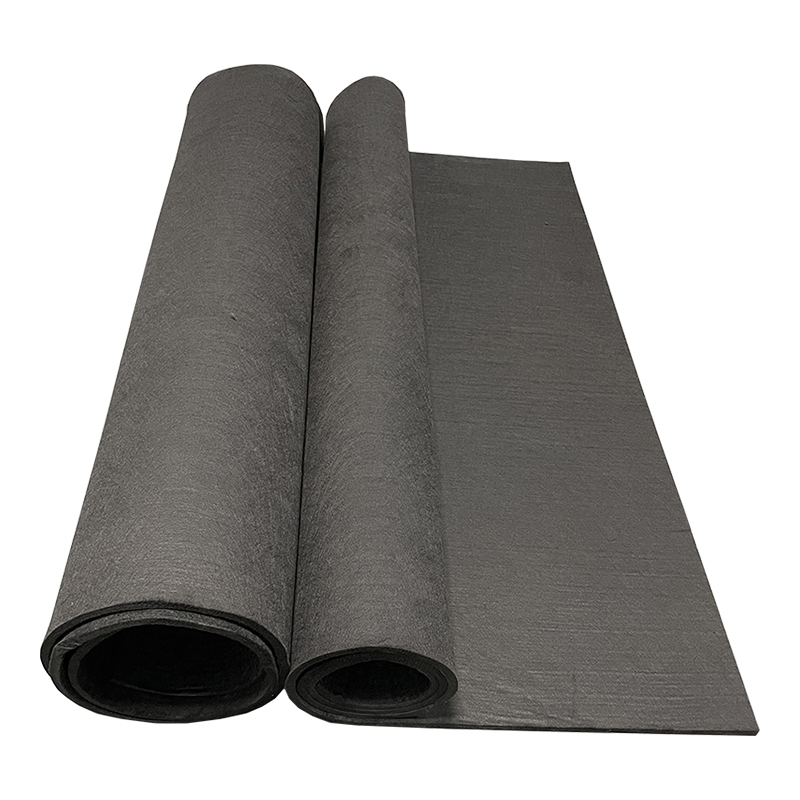 PAN-Based Carbon Felt for High-Temperature Insulation and Electrode ApplicationsThis carbon felt, derived from polyacrylonitrile and carbonized at 1200°C, offers high temperature resistance up to 1500°C and excellent electrical conductivity, making it suitable for insulation and electrode use in demanding environments.View Product →
- Carbon yield: about 50 percent for PAN, 20 to 30 percent for viscose
- Graphitization: PAN forms more ordered graphite layers, lowering resistivity
- Ash content: high-purity viscose grades reach lower ash after washing
- Needle-punch control: PAN staple fibers punch more uniformly at low densities
PAN-Based vs Viscose-Based: How the Properties Compare
At equal thickness and bulk density, PAN-based graphite felt outperforms viscose-based graphite felt in tensile strength, while viscose-based felt shows lower ash content and better flexibility. The practical consequences are easy to measure in a stack.
In a VRFB, in-plane resistivity of the electrode directly affects ohmic losses. Graphitized PAN felt can sit at 3 to 6 mOhm-cm, while viscose grades typically rest at 5 to 10 mOhm-cm. For high-temperature insulation, thermal conductivity matters more; PAN graphite felt conducts heat better, so it is a weaker insulator. Electrode surface chemistry has a measurable effect on VRFB power density, which is why the felt finishing step matters as much as the precursor.
| Property | PAN-based carbon felt | PAN-based graphite felt | Viscose-based graphite felt |
| Typical thickness (mm) | 3-8 | 3-6 | 4-10 |
| Bulk density (g/cm3) | 0.12-0.22 | 0.12-0.20 | 0.15-0.25 |
| Tensile strength (MPa) | 1.5-3.0 | 2.0-4.0 | 1.0-2.0 |
| In-plane resistivity (mOhm-cm) | 45-80 | 3-6 | 5-10 |
| Thermal conductivity (W/mK) | 5-8 | 30-80 | 20-50 |
| Ash content (ppm) | max 500 | max 100 | max 80 |
Normalized comparison (PAN = 100)
Tensile strength
Electrical conductivity
Carbonization yield
Purity (low ash)
Typical values for carbonized felts; actual figures depend on grade and finishing.
Key number: a graphitized PAN felt reaches the 100 percent benchmark for tensile strength in this comparison, while a viscose-based graphite felt averages only 52 percent.
How to Choose PAN-Based or Viscose-Based Felt for Flow Battery Electrodes
For vanadium redox flow batteries, PAN-based graphite felt is the workhorse electrode because it provides the highest accessible surface area per gram and the strongest cycling stability.
Electrode felt quality and electrode surface chemistry dominate system power density. A felt with uneven thickness or high ash content creates local hotspots and capacity fade. Before ordering, ask the factory for a measured thickness map, a bulk density range, and a plot of in-plane resistivity.
Electrode felt quality can shift zinc-bromine battery performance by several points, which is why the felt supplier should share process control data for every batch.
+20%
power density from optimized felt and flow field pairing
3-6 mm
typical electrode thickness in VRFB stacks
50 mV
cell resistance contributed by each felt interface
5,000+
charge and discharge cycles reported in lab testing
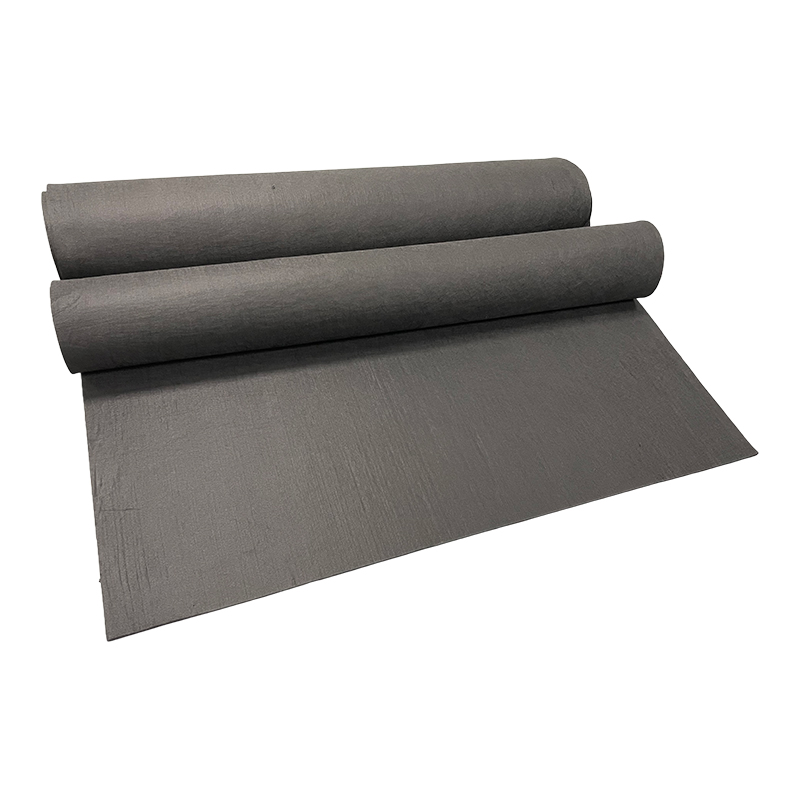
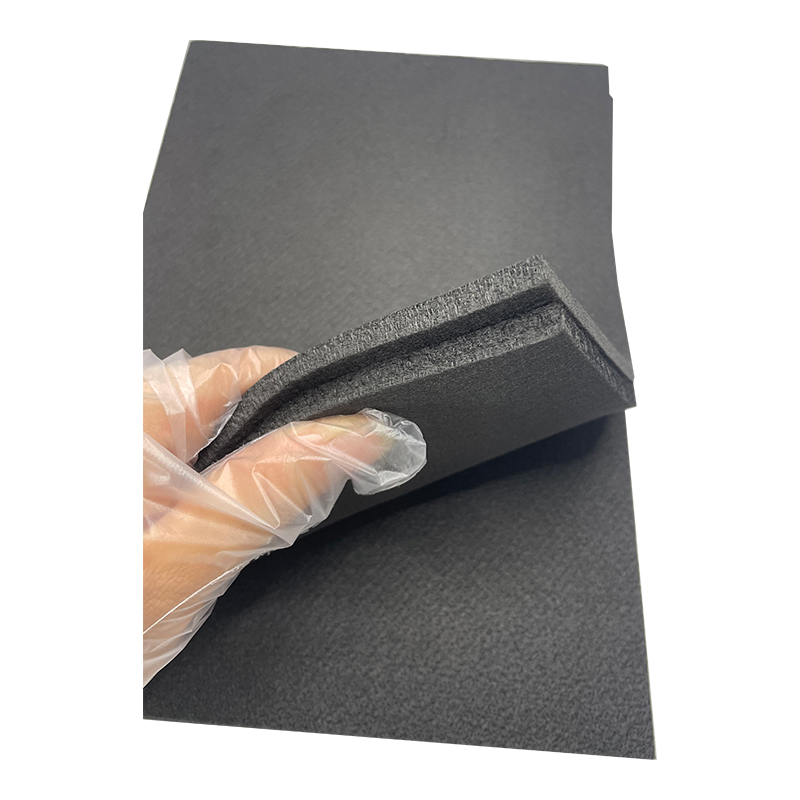 PAN-Based Graphite Felt for Extreme High-Temperature and Electrochemical UseGraphitized at 2200°C, this PAN-based felt withstands temperatures up to 3200°C, providing superior conductivity and chemical inertness for high-performance insulation and electrode applications.View Product →
PAN-based best for
Flow battery electrodes, high-current density applications, structural integrity under cycling, and lower electrical resistance.
Viscose-based best for
High-purity furnace insulation, soft gasketing and sealing, low-ash retorts, and applications that need conformability.
High-Temperature Insulation and Purity-Critical Applications
If the felt must stay in a high-purity furnace or retort, viscose-based graphite felt is the safer choice because its rayon-derived texture sheds less fiber and holds lower ash.
Viscose-based graphite felt is a staple in vacuum furnace insulation, rare-earth melting, and semiconductor-grade thermal zones. The rayon precursor yields a fine, closed surface that resists fiber shedding, which matters when particulate contamination can ruin a melt. PAN-based felt is preferred when the insulation layer also needs to carry current or resist mechanical wear.
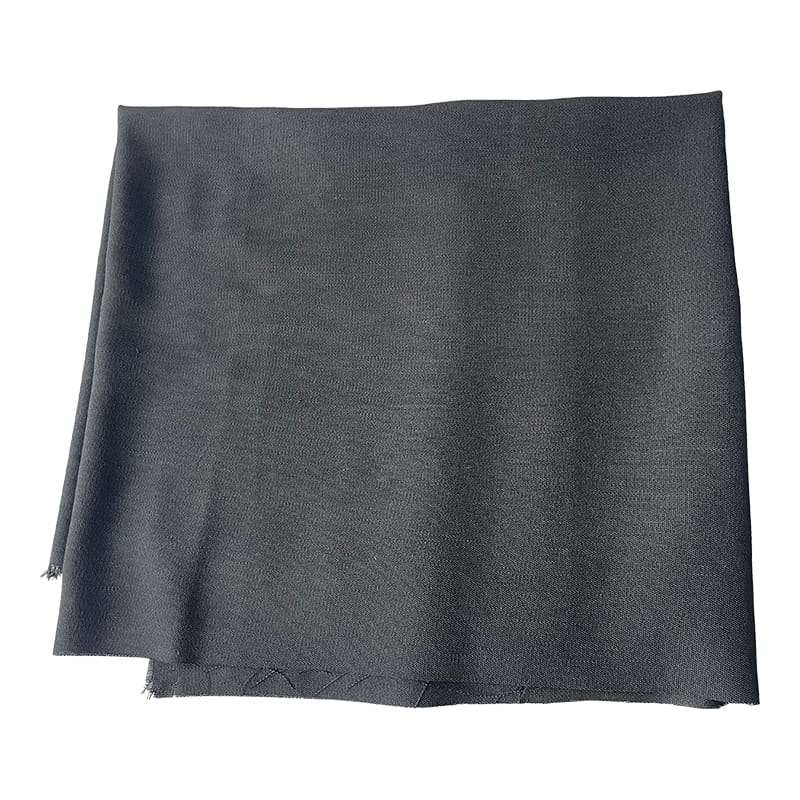
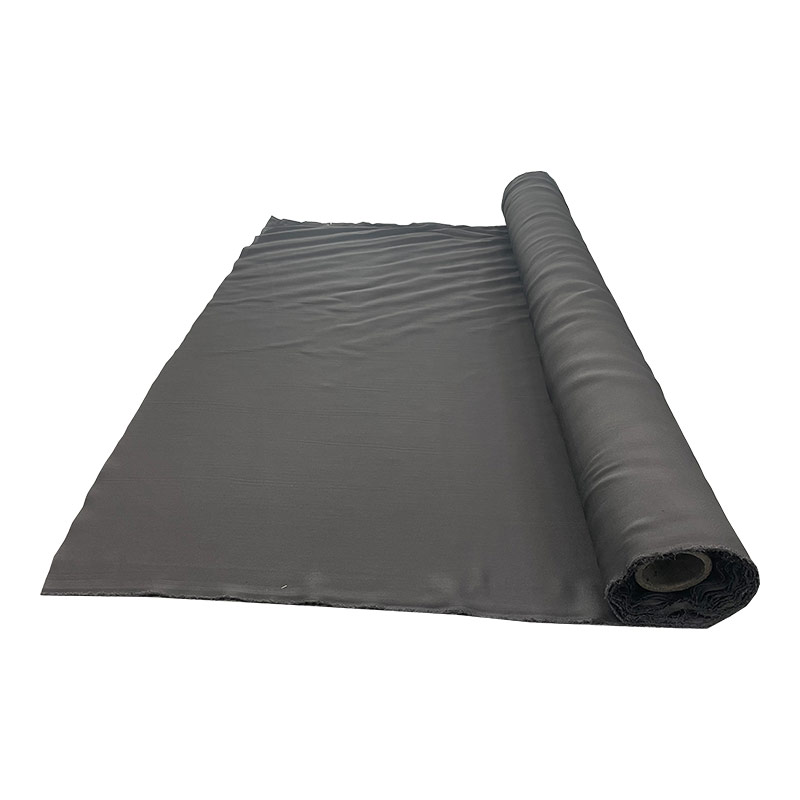
 Viscose-Based Graphite Felt for Low Thermal Conductivity and InsulationMade from viscose rayon, this graphite felt features low density and thermal conductivity (≤0.2W/m·k), ideal for furnace insulation and ablation-resistant materials in semiconductor and high-temperature processes.View Product →
- Vacuum furnace hot-zone insulation
- Rare-earth and superalloy melting furnaces
- Semiconductor crystal-growth insulation
- Flexible sealing and packing in high-temperature equipment
Purchasing Considerations: Tolerances, Cost, and Lead Time
The final choice usually comes down to thickness tolerance, ash specification, and price per square meter, not to which felt is universally better.
PAN-based felt costs more per square meter because the precursor price is higher and graphitization takes more energy. Viscose-based graphite felt becomes cost-competitive at thicknesses above 5 mm. When you issue an RFQ to Jiaxing Naco New Material Co., Ltd., state the felt type, thickness tolerance, bulk density target, and a maximum ash limit; the factory can adjust needle-punching and graphitization temperature to meet those targets.
- State the felt type: PAN-based, viscose-based, carbonized, or graphitized
- Give thickness tolerance, such as +/- 0.5 mm, and bulk density range
- Set an ash limit, for example max 100 ppm for high-purity grades
- Specify width and whether you need slitting or die-cut shapes
Frequently Asked Questions
Can I use viscose-based felt as a vanadium flow battery electrode?
Yes, but it will not deliver the same performance. PAN-based graphite felt offers lower in-plane resistivity and better cycling stability in vanadium and zinc-bromine systems. Use viscose-based felt only when low ash content or soft conformability matters more than electrode kinetics.
What is the difference between PAN-based carbon felt and PAN-based graphite felt?
Carbon felt is carbonized at roughly 1,000 C and remains a good thermal insulator with moderate conductivity. Graphite felt is processed above 2,000 C, which lowers resistivity from tens of mOhm-cm to single digits and improves thermal stability.
Does felt thickness affect flow battery performance?
It matters a lot. Thickness between 3 and 6 mm balances active surface area against ohmic resistance. Thicker felt adds resistance; thinner felt reduces the area available for the vanadium redox reactions.
Should I specify carbon felt or graphite felt for furnace insulation?
Below 1,000 C in an oxygen-free atmosphere, carbon felt is enough. Above 1,000 C, specify graphite felt to keep mechanical strength and avoid dimensional change. For low-ash retorts, choose viscose-based graphite felt.