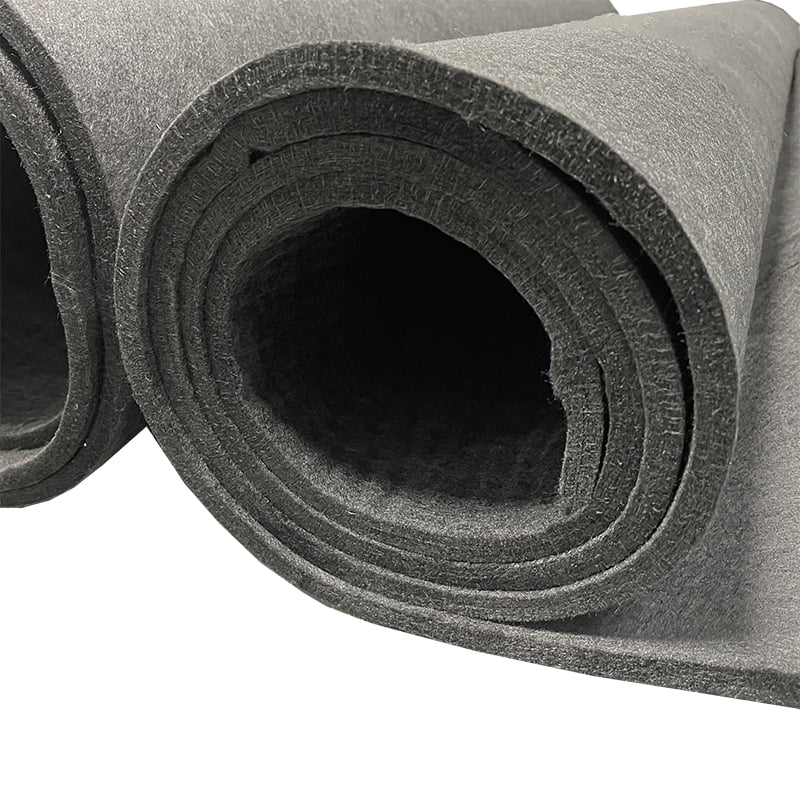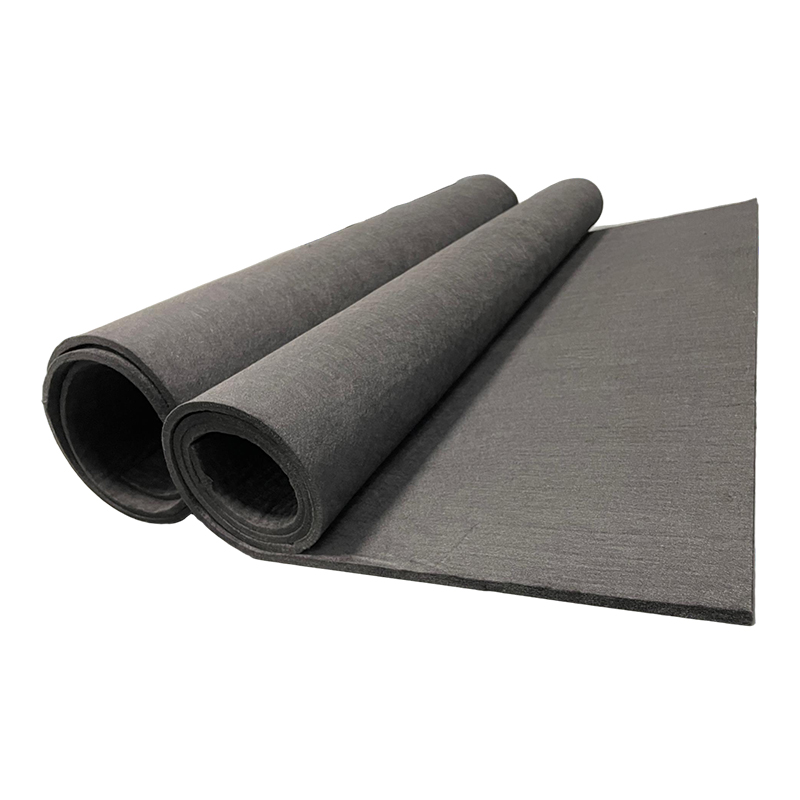



 English
 中文简体
Content
- 1 What an Electrode Felt Manufacturer Controls From Fiber to Felt
- 2 Five Measurable Properties That Define Battery-Grade Electrode Felt
- 3 Why Batch Consistency Determines Stack Yield More Than Peak Performance
- 4 Customization Options Beyond Standard Rolls
- 5 Supplier Checklist Before You Commit to an Electrode Felt Manufacturer
- 6 Electrode Felt Manufacturer FAQ
When a flow battery stack integrator sends a request for quotation to three electrode felt manufacturers, the responses rarely look the same. One supplier returns a single-page datasheet with one resistivity value and a 30-day lead time. Another attaches thickness tolerances, compression data, and an ash content certificate, then asks for the cell active area so the felt can be trimmed to match it. That second response tells you more about the supplier's manufacturing depth than any marketing page.
Electrode felt is not merely a spacer that holds electrolyte in a vanadium redox flow battery (VRFB) or a zinc-bromine cell; it is the electrode itself. It must distribute electrolyte uniformly, conduct current across the active area, and survive thousands of charge-discharge cycles in a corrosive medium. The manufacturer's process decisions, from fiber precursor to carbonization temperature to needling density, determine how well the felt performs in each role.
What an Electrode Felt Manufacturer Controls From Fiber to Felt
A specialized electrode felt manufacturer controls the full conversion chain, precursor selection, needling, carbonization, graphitization, and post-treatment, and that vertical control is what separates their product from generic cut-to-size carbon mat.
The production route starts with fiber. PAN-based felt uses polyacrylonitrile fiber, which carbonizes with higher yield and graphitizes to a more ordered structure. Viscose-based felt is softer and more conformable, so it is often chosen for less demanding electrode geometries. The manufacturer's needling process sets the three-dimensional structure: fiber orientation, density distribution, and open porosity. Needle punching density directly correlates with felt compaction and through-plane resistance.
Carbonization stabilizes the fiber structure at about 1000 to 1500 degrees C; graphitization at temperatures above 2000 degrees C converts the disordered carbon into a more graphitic lattice. That single temperature decision changes electrical resistivity, thermal stability, and corrosion resistance inside a hot vanadium electrolyte.
| Property | PAN Carbon Felt | PAN Graphite Felt | Design Impact |
| Heat treatment | 1000-1500 degrees C | Above 2000 degrees C | Sets conductivity and surface chemistry |
| Electrical resistivity | Higher | Lower by roughly 30-60 percent | Reduces ohmic loss in the cell |
| Porosity | 85-95 percent | 85-95 percent | Controls electrolyte permeability |
| Surface functional groups | More abundant | Fewer, more inert | Affects vanadium redox kinetics |
| Typical use | Insulation, carbon paper precursor | VRFB and zinc-bromine electrodes | Determines match to cell chemistry |
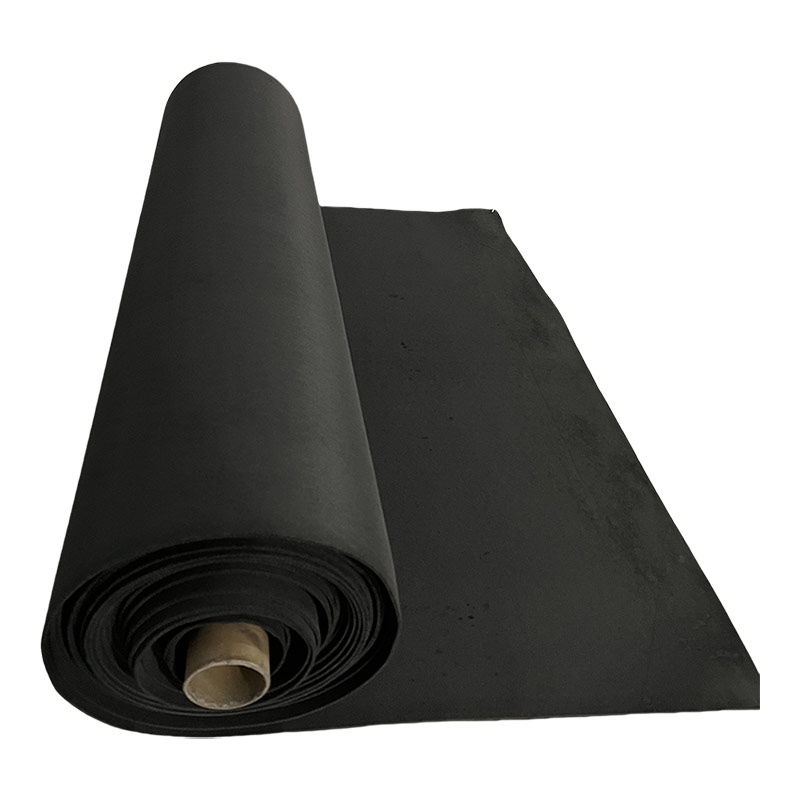
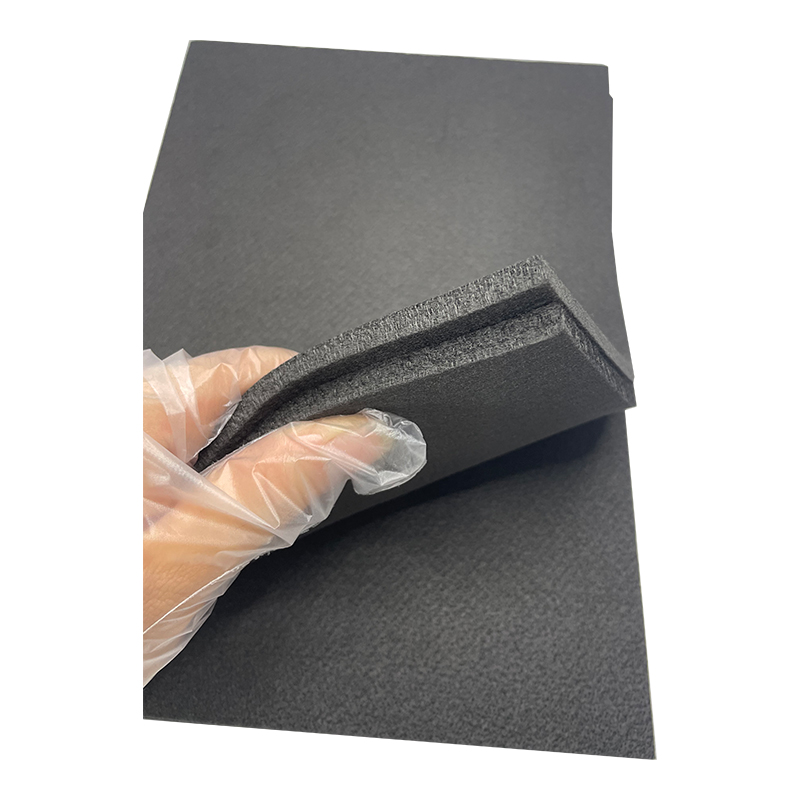 PAN-Based Graphite Felt for High-Temperature VRFB ElectrodesThis polyacrylonitrile-based graphite felt is treated at 2200°C, offering high chemical inertness and oxidation resistance. Its thermal conductivity and stability make it a suitable electrode material for vanadium flow batteries operating in hot electrolyte conditions.View Product →
Graphitization temperature is the single process variable that defines whether a felt behaves as an insulator-grade carbon product or as a load-bearing electrode for a VRFB stack.
Five Measurable Properties That Define Battery-Grade Electrode Felt
Five properties, areal weight, thickness uniformity, porosity, ash content, and electrical resistivity, separate battery-grade electrode felt from commodity material, and every one of them can be checked against a numeric specification before you place a production order.
- Areal weight. Most VRFB electrodes use felt in the 300-500 g/m2 range; a qualified manufacturer holds roll-to-roll variation within plus or minus 5 percent.
- Thickness tolerance. Under stack compression, a variation of 0.15-0.2 mm translates into measurable cell resistance differences. Ask for compressed thickness at a stated pressure, not just the free-loft value.
- Porosity. Battery electrode felt should be 85-95 percent open; below that range, electrolyte throughput drops and pump losses climb.
- Ash content. Battery-grade felt stays below 500 ppm, with higher-performance grades under 100 ppm, because trace metals can contaminate vanadium electrolyte and accelerate capacity fade.
- Resistivity. Through-plane and in-plane resistivity both matter. A supplier that provides only surface resistance is either hiding anisotropy or measuring a single direction.
+/-5%Roll-to-roll tolerance for battery-grade areal weight
85-95%Required open porosity for flow battery electrodes
<500 ppmAcceptable ash content in most VRFB specifications
0.15-0.2 mmTypical compressed thickness tolerance that affects each cell
Bulk properties are not the whole story. In VRFB electrodes, electrode surface chemistry directly affects power density, because vanadium redox reactions occur at surface functional sites. A felt with excellent conductivity but the wrong surface treatment will underperform in a working stack.
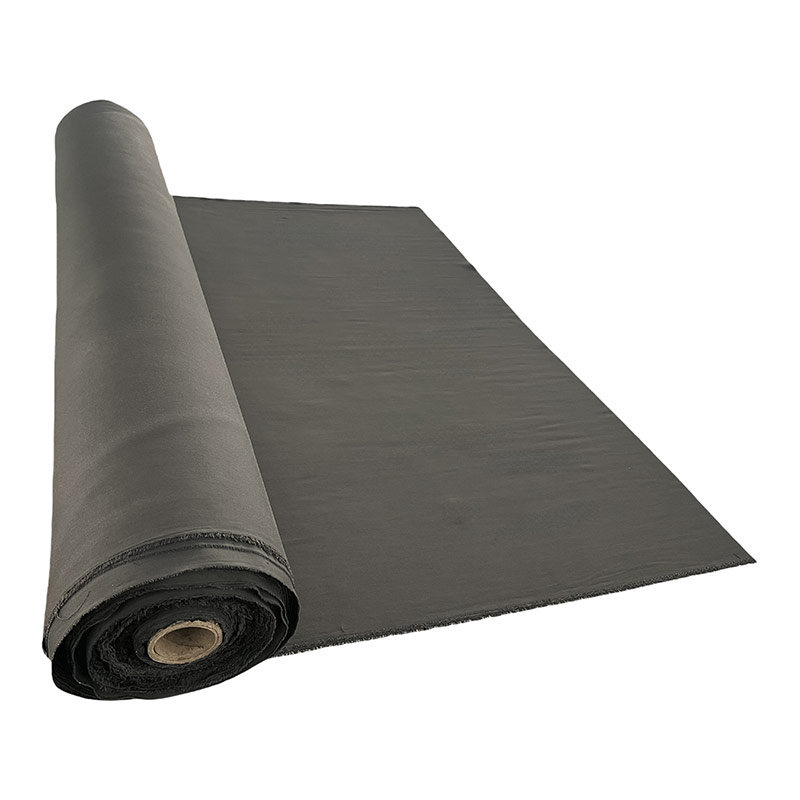
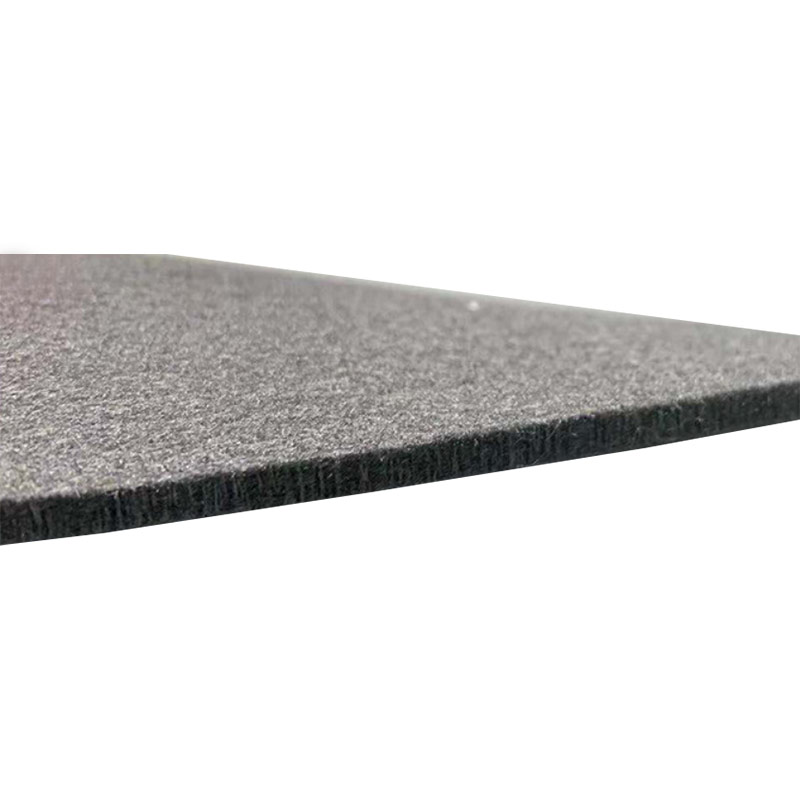 Electrode Felt with Enhanced Surface Chemistry for Flow BatteriesThis electrode felt features gas-phase deposition or hydrophobic treatments that increase specific surface area and introduce functional groups. These surface modifications influence reactivity and side reactions, making the felt’s surface chemistry a critical factor for power density in vanadium redox flow batteries.View Product →
Why Batch Consistency Determines Stack Yield More Than Peak Performance
Batch-to-batch consistency from an electrode felt manufacturer has a larger effect on stack yield than the absolute performance values on a datasheet, because every cell in a stack inherits the variation of the felt it receives.
When you assemble a 40-cell stack, the felt in each cell must compress to the same working thickness at the same stack torque. If incoming rolls vary in loft or thickness, some cells end up compressed beyond design, restricting electrolyte flow and driving up pressure drop. Other cells remain too loose, creating electrolyte bypass and uneven current distribution. During commissioning, that spread appears as differing cell voltages, and the balancing system must pull the entire stack down to the weakest cell.
The Rule in Practice
A stack fails on its worst cell, not on its average. A 5 percent thickness variation between production rolls can widen per-cell voltage spread by 20-30 mV, which directly cuts usable capacity after balancing.
Consistent graphitization temperatures, stable needling parameters, and accurate slitting tolerances are what make repeatable performance possible. When you evaluate a supplier, ask for test certificates from several production batches, not just the one hand-cut sample that arrives in your lab. Data from multiple batches gives you the distribution of properties; a single sample gives you only a wish.
Customization Options Beyond Standard Rolls
A genuine electrode felt manufacturer, rather than a reseller, can modify width, thickness, edge finishing, and post-treatment to match a specific battery design, and these options are usually unavailable from carbon mat distributors.
- Slit width and roll format. Rolls trimmed to match the stack frame eliminate secondary cutting and reduce fiber shedding at your production line.
- Compressed thickness tuning. Needling density and heat treatment can be adjusted to hit a target thickness under the stack compression pressure.
- Felt rigidity. Needlepunched cured felt and laminated cured felt versions provide dimensional stability for flow-field and structural electrode applications.
- Edge treatment. Welded or sealed edges stop fiber migration into the electrolyte loop and simplify handling during lamination.
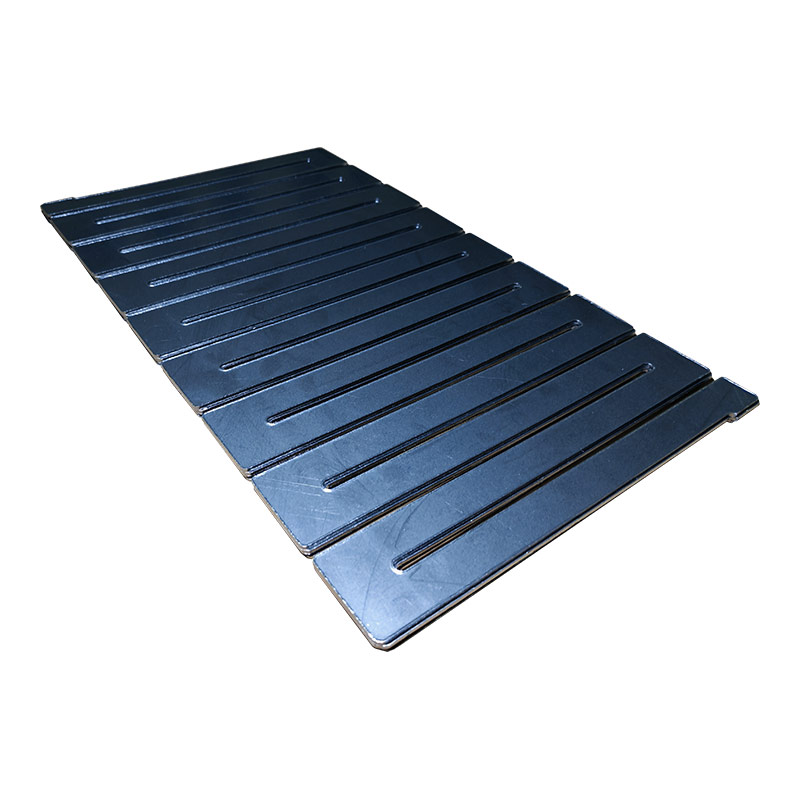
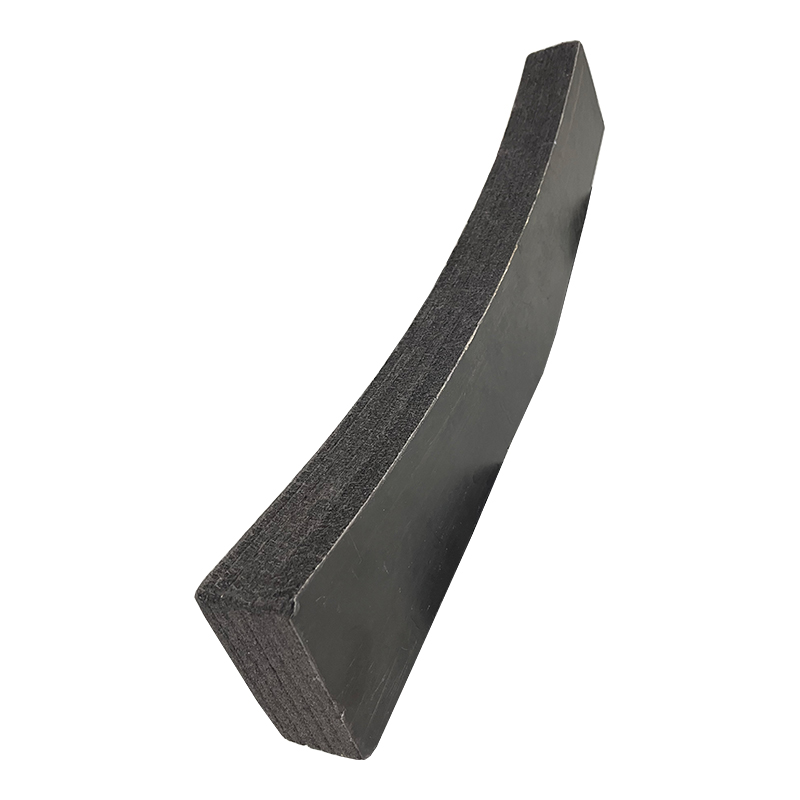 Integral Needle-Punched Cured Felt for Thermal InsulationA rigid, self-supporting insulation felt made from high-strength carbon fibers, needled and resin-cured before graphitization above 1800°C. Its low thermal conductivity and dimensional stability suit furnace applications, though its relevance to electrode manufacturing depends on integrated production capabilities.View Product →
Some electrode felt manufacturers operate adjacent production lines for bipolar plates and runner plates. Jiaxing Naco New Material Co., Ltd., for example, positions itself as a custom conductive carbon products factory, producing electrode felt, graphite felt, and composite bipolar plates under one roof. That integration matters because felt compression tolerance and plate flatness have to be designed together.
Electrode felt quality is especially visible in zinc-bromine systems, where zinc deposition and stripping depend on uniform current distribution across the felt surface; electrode felt quality directly impacts zinc-bromine flow battery performance. A simple thickness deviation in that chemistry can cause uneven zinc plating and shorten cycle life.
Standard Product Roll
- Fixed roll width and length
- Generic thickness range
- No compressed-thickness data
- Limited packaging options
Custom Specification
- Trimmed to active area width
- Compressed thickness controlled
- Documented surface post-treatment
- Clean-room packaging on request
Supplier Checklist Before You Commit to an Electrode Felt Manufacturer
A credible electrode felt manufacturer can show raw material traceability, furnace temperature logs, per-batch test certificates, and a working sampling policy; if a supplier cannot provide these, treat that as a red flag regardless of how competitive the price looks.
- Request the raw material declaration: precursor type, fiber denier, and country of origin.
- Review process records: carbonization and graphitization curves must cover the production batch you will receive, not a laboratory sample.
- Verify dimensional tolerances: width, uncompressed thickness, and cut tolerance in writing.
- Inspect test certificates: resistivity, ash content, areal weight, and porosity values per batch.
- Evaluate the sampling policy: samples must come from current production, cut from the same roll line that will ship.
Red Flags No ash data, thickness tolerance wider than plus or minus 0.5 mm, no temperature records, and a refusal to cut samples from a full production roll all indicate a trader, not a manufacturer.
When you are ready to move forward, start with a small trial order. Measure thickness at several points, verify resistivity on your own equipment, and run the felt through the same compression cycle used in your stack assembly. A reliable electrode felt manufacturer will welcome the audit; a supplier that hesitates is giving you the answer you need.
Electrode Felt Manufacturer FAQ
What Is the Difference Between Carbon Felt and Graphite Felt?
Carbon felt is heat-treated at about 1000-1500 degrees C and retains more surface functional groups, while graphite felt is treated above 2000 degrees C and gains lower electrical resistivity and better corrosion resistance. Flow battery electrode manufacturers usually choose graphite felt; carbon felt is common in insulation, fuel cell gas diffusion layers, and high-temperature applications.
How Do I Verify an Electrode Felt Manufacturer's Quality?
Ask for batch-level test certificates, furnace temperature logs, a raw material declaration, and a production sample cut from the same roll that will be shipped. Then run your own thickness, compression, and resistivity measurements before committing to a full order.
Can Electrode Felt Be Customized for Specific Battery Dimensions?
Yes. A factory-based electrode felt manufacturer can adjust needling density, integrated curing, slitting width, and edge treatment. Custom production is typically quoted with a minimum order quantity, an agreed compressed thickness, and a defined packaging specification.
What Lead Time Should I Expect for Custom Electrode Felt Orders?
Standard electrode felt products commonly ship in two to four weeks. Custom specifications typically require four to eight weeks, including prototyping, sample approval, and production. Confirm lead time directly with the manufacturer, because it depends on batch size and precursor stock availability.