


 English
 中文简体
Content
- 1 What an Electrolyzer Electrode Felt Supplier Must Control
- 2 Five Specification Benchmarks for Electrolyzer Electrode Felt Supplier Evaluation
- 3 Why Batch Consistency Separates Reliable Electrode Felt Suppliers
- 4 Customization, Lead Times, and Volume Commitments from an Electrode Felt Supplier
- 5 Frequently Asked Questions About Electrolyzer Electrode Felt Suppliers
In stack qualification reviews, electrode felt repeatedly shows up as the component most likely to cause cell-level failures: engineers frequently report that felt accounts for two to three of the top five rejected-component issues in the first production year. That pattern is not a coincidence. The felt is the site of the charge-transfer reaction, the distributor of electrolyte across the active area, and the mechanical cushion between bipolar plates, so any variation in its structure propagates directly into stack performance. Choosing an electrolyzer electrode felt supplier is therefore a material-engineering decision, and the suppliers that pass audit are those who control precursor grade, graphitization temperature, needling density, and thickness tolerance within narrow, verifiable windows.
What an Electrolyzer Electrode Felt Supplier Must Control
A qualified electrolyzer electrode felt supplier has to control four process variables before any roll is cut: precursor fiber selection, the carbonization and graphitization profile, needling density, and final mechanical tolerance. Miss any one of them, and the felt can pass a datasheet review while failing once it is compressed inside a stack.
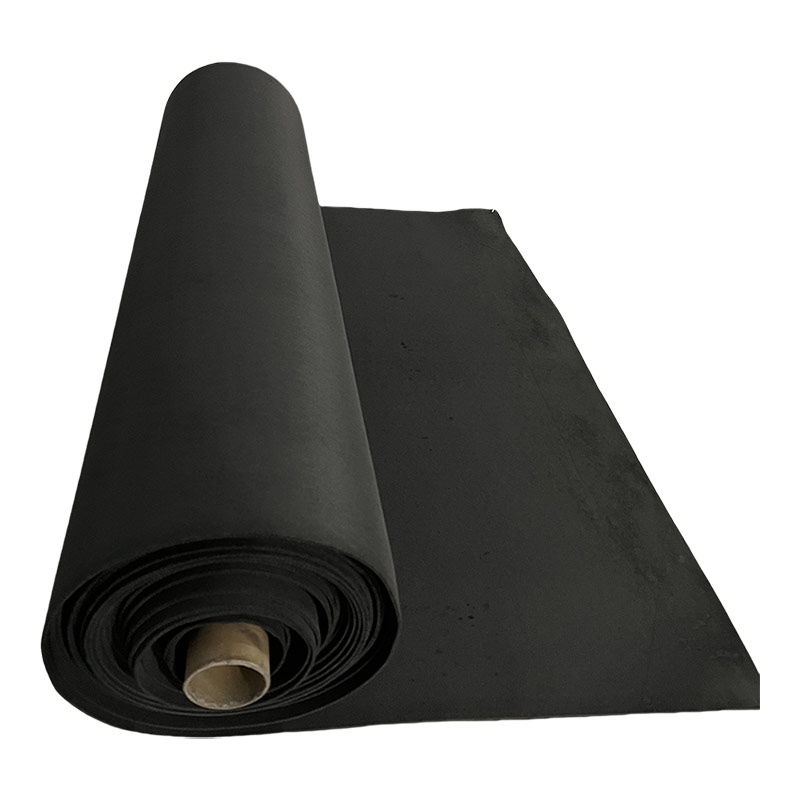
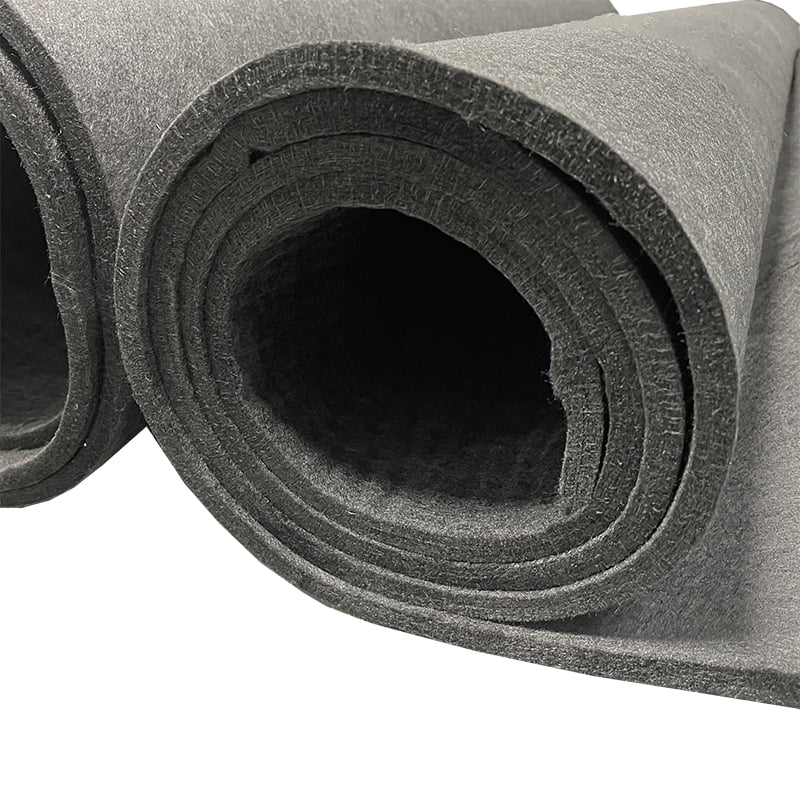
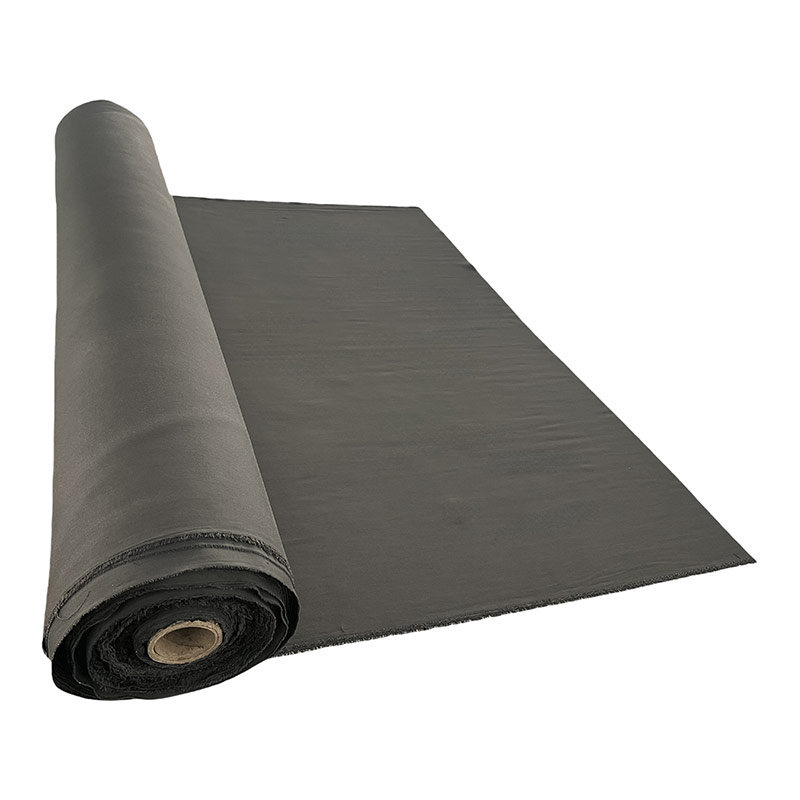
Electrode felt is a porous carbon or graphite fiber textile that acts simultaneously as the reaction site, the electrolyte distribution layer, and the compression buffer inside an electrolyzer or flow-battery cell.
- Precursor grade PAN-based fibers deliver higher carbon yield, cleaner surfaces, and lower trace metal content than viscose-based equivalents, which makes them the default for high-efficiency stacks.
- Graphitization profile Heat treatment above 2,000 degrees Celsius lowers specific resistance by an order of magnitude compared with carbonized felt; the gain appears directly in reduced ohmic overpotential during operation.
- Needling and density Needle punch depth and density set porosity and compressibility. Felt that is too dense restricts electrolyte flow; felt that is too open loses electrical contact under compression.
- Thickness tolerance In a 300-cell stack, a 0.3 mm thickness variation across cells creates uneven clamping pressure and uneven current distribution, which is why qualified suppliers hold rolled felt to +/-0.3-0.5 mm with full-width measurement records.
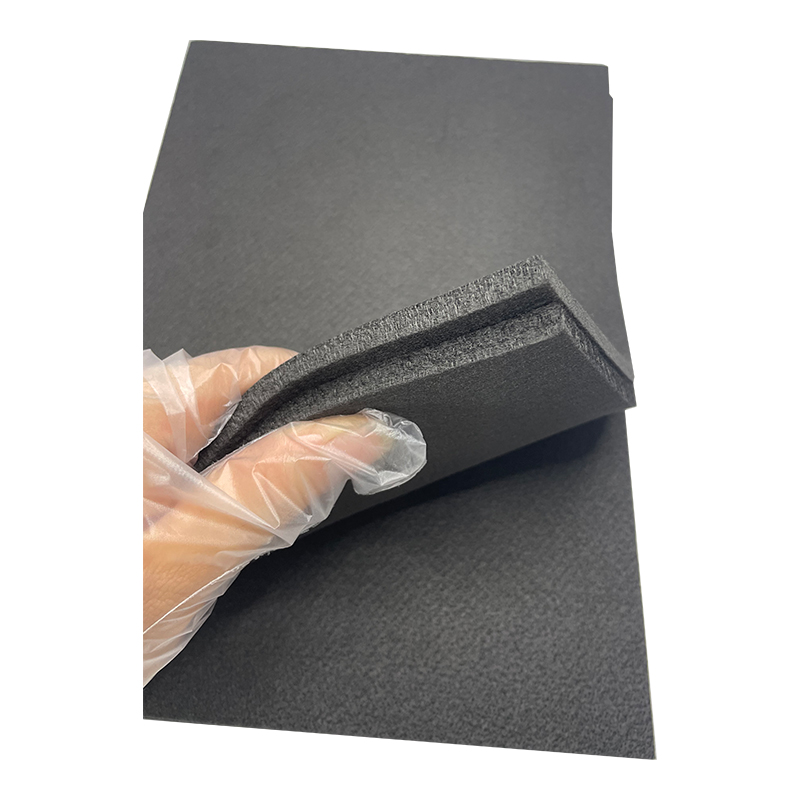 High-Temperature PAN-Based Graphite Felt for Flow Battery ElectrodesThis felt is graphitized at 2200°C and withstands long-term use up to 3200°C, with low thermal conductivity. It suits electrode applications where thermal stability and chemical inertness are critical, making it worth evaluating during supplier qualification.View Product →
A graphitized PAN felt can deliver more than 10 times lower electrical resistance than a non-graphitized carbon felt with the same fiber architecture, which is why grade selection is the first lever a stack designer pulls.
Five Specification Benchmarks for Electrolyzer Electrode Felt Supplier Evaluation
Start a supplier evaluation with five datasheet numbers: thickness, basis weight, porosity, area resistance, and carbon purity. These five parameters predict most of the in-stack behavior that matters, and each one can be independently verified during incoming inspection.
| Parameter | Typical acceptance range | Why it matters |
| Thickness | 2-6 mm, tolerance +/-0.3-0.5 mm | Controls compression uniformity and cell-to-cell consistency |
| Basis weight | 200-600 g/m2 | Sets available electroactive surface and mechanical feel |
| Porosity | 85-95% | Balances electrolyte flow against electrical connectivity |
| Area resistance | Below 5 ohm-cm2 for graphitized grades | Direct contributor to ohmic overpotential and system efficiency |
| Carbon purity | Above 99% carbon, below 0.1% ash | Prevents transition-metal contaminants from poisoning electrodes |
85-95%porosity target
Below 5ohm-cm2 resistance
Above 99%carbon purity
+/-0.3 mmthickness tolerance
During the first audit, ask for the measurement protocol behind each number. A supplier that cannot explain how thickness was measured across the roll width usually cannot hold the tolerance in production, and the resulting drift becomes your scrap rate.
Representative compressed area resistance by felt grade
PAN graphite felt1-4
Viscose graphite felt3-7
PAN carbon felt10-18
Values in ohm-cm2, 3 mm nominal thickness, compressed to 70% of original volume. Ranges are indicative across commercial datasheets.
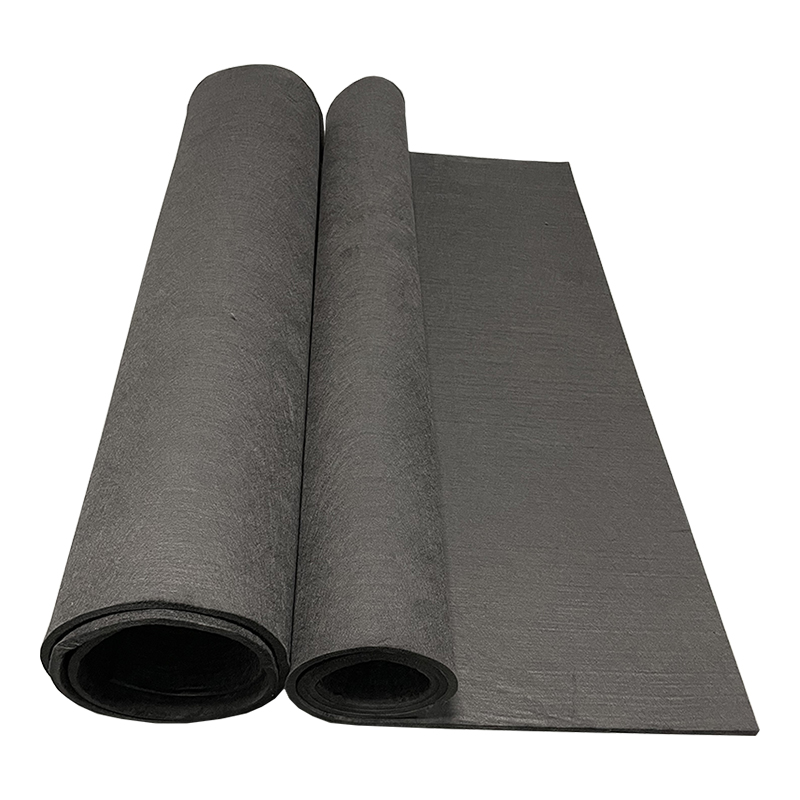 PAN-Based Carbon Felt with Consistent Batch-to-Batch MeasurementCarbonized at 1200°C, this felt offers high purity and stable performance. Its datasheet parameters can be verified across rolls, helping you detect drift and maintain consistent stack behavior in production.View Product →
Why Batch Consistency Separates Reliable Electrode Felt Suppliers
Batch-to-batch drift, not the initial sample, is the main cost risk in an electrode felt supply relationship. The first sample always looks acceptable; the real question is whether production roll 47 matches qualifying roll 3.
Engineers who inspect 100% of incoming felt batches cut electrode-related cell rejections by a wide margin, because a thickness deviation of 0.4 mm across a 200-cell stack changes clamping pressure and local current density in ways that become visible only after stack assembly. Demand a certificate of analysis with every lot, covering thickness profile, basis weight, and area resistance, and re-test one sample from each roll on arrival. The same principle applies in zinc-bromine systems, where electrode felt quality has a direct effect on cycle life and capacity retention.
Carbon felt
Carbonized around 1,000-1,500 C; higher resistance, more residual surface groups, lower cost. Suited to prototyping and to cells where pressure drop weighs more than efficiency.
Graphite felt
Graphitized above 2,000 C; lower resistance, higher purity, stronger corrosion resistance. The preferred default for commercial electrolyzer and flow-battery stacks.
Trace-metal audits matter. One lot with elevated iron or copper content can accelerate electrolyte degradation and void months of stack validation, so set contaminant limits in the purchase agreement, not only in the datasheet.
Customization, Lead Times, and Volume Commitments from an Electrode Felt Supplier
A catalog-only supplier forces your stack geometry to fit its standard roll sizes; a custom-capable supplier adapts thickness, slit width, edge treatment, and lot traceability to your bill of materials.
- Cut and slit widths matched to your cell frame active area, reducing die waste and edge fraying.
- Welded edges or integrated runner plates for bipolar plate assemblies, shortening stack assembly time.
- Surface treatments that improve hydrophilicity and electrolyte wetting during initial fill.
- Full-length unrolled inspection records and lot-level integrity for BOM traceability.
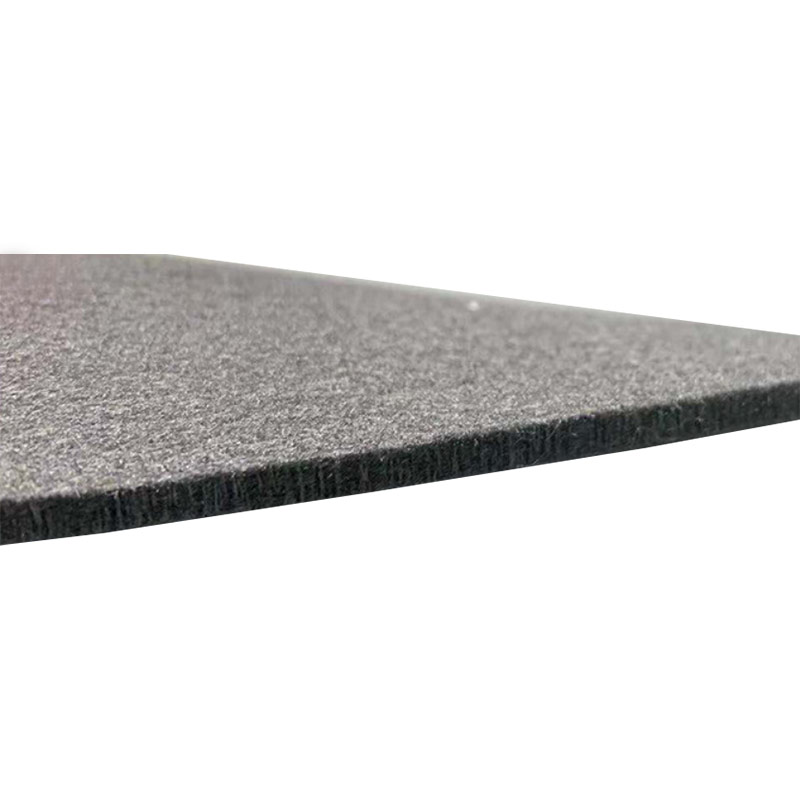 Customizable Electrode Felt with High Surface Area and Tailored LotsFeaturing up to 100 m²/g specific surface area via CVD and options for hydrophobic or hydrophilic types, this felt supports custom thickness, slit width, and lot traceability—important for aligning with your bill of materials and lead time planning.View Product →
Lead times and minimum order quantities deserve the same attention as price. A graphitization production run is planned in weekly increments, and a custom thickness or basis weight specification extends the window further. Confirm that the supplier holds buffer capacity for repeat orders and can commit to a certificate of analysis on every shipped lot.
Jiaxing Naco New Material Co., Ltd., a custom conductive carbon products factory, supplies electrode felts in PAN-based and viscose-based grades. Its customized formats sit under the electrode felt product line, where thickness, density, and surface properties can be aligned with a stack design.
Before issuing a purchase order, ask the supplier to run a pilot lot at the exact thickness and basis weight in your BOM, hold it for seven days, and re-measure. Pilot-lot retention is the strongest predictor of production consistency.
Frequently Asked Questions About Electrolyzer Electrode Felt Suppliers
What is the difference between carbon felt and graphite felt for electrolyzers?
Carbon felt is carbonized at roughly 1,000-1,500 degrees Celsius and carries higher electrical resistance plus residual surface functional groups. Graphite felt is heat-treated above 2,000 degrees Celsius, which cuts resistance by an order of magnitude and improves corrosion resistance. Graphite felt is the safer default for commercial stacks.
What thickness tolerance should I specify for electrode felt?
Specify +/-0.3 mm for stacks above 50 cells and +/-0.5 mm for smaller builds. Require measurements at nine points across the roll width rather than a single center-line reading, because edge-to-center variation is what creates compression non-uniformity.
How do I audit an electrode felt supplier before ordering?
Request certificates of analysis for three recent production lots, review graphitization temperature logs, and run incoming tests on thickness profile and area resistance. A supplier that declines any of these steps is carrying hidden variation that will become your rejection rate.
Can electrode felt be customized for a specific stack design?
Yes. Thickness, basis weight, porosity, slit width, and surface treatment can all be adjusted, and some suppliers offer welded edges or integrated runner plates. Customization extends lead times, so align the pilot run with your stack validation schedule.