


 English
 中文简体
Content
- 1 What a Conductive Fabric Supplier Must Prove in a Sample Run
- 2 PAN-Based vs. Viscose-Based Conductive Fabrics: Choose the Right Grade
- 3 Surface Engineering: The Hidden Variable in Electrode Fabric Performance
- 4 How to Qualify a Conductive Fabric Supplier in Four Steps
- 5 Factory Direct vs. Trading Company: Why the Supplier Model Matters
- 6 FAQ: Conductive Fabric Supplier Questions Buyers Ask
When a sample shipment of carbon cloth arrives 0.2 mm thicker than the datasheet, the entire stack pressure calculation changes. For engineers building vanadium redox flow batteries on pilot production lines, that single deviation can reduce power density by an estimated 8-12 percent before the unit passes its first charge-discharge cycle. That is why the selection of a conductive fabric supplier is a qualification process, not a purchasing transaction.
A qualified conductive fabric supplier controls carbonization temperature, fabric uniformity, and post-treatment chemistry across every batch. The factory has to demonstrate that its process can hold the specifications that matter to electrochemical performance, not just the dimensions that are easy to measure.
What a Conductive Fabric Supplier Must Prove in a Sample Run
A reliable conductive fabric supplier proves three things in a sample run: dimensional stability, uniform in-plane resistance, and reproducible lot-to-lot properties. If any of these fail, even a perfect carbonization curve will not translate into a usable electrode material.
+/-0.05 mm
<=5%
<=2%
For battery applications, the supplier should also document areal weight, porosity, and through-plane resistance. Ask how these parameters are tested and whether the test positions are mapped across the full roll width. A supplier that cannot answer these questions will struggle to deliver consistent electrode felt or carbon cloth for a multi-cell stack.
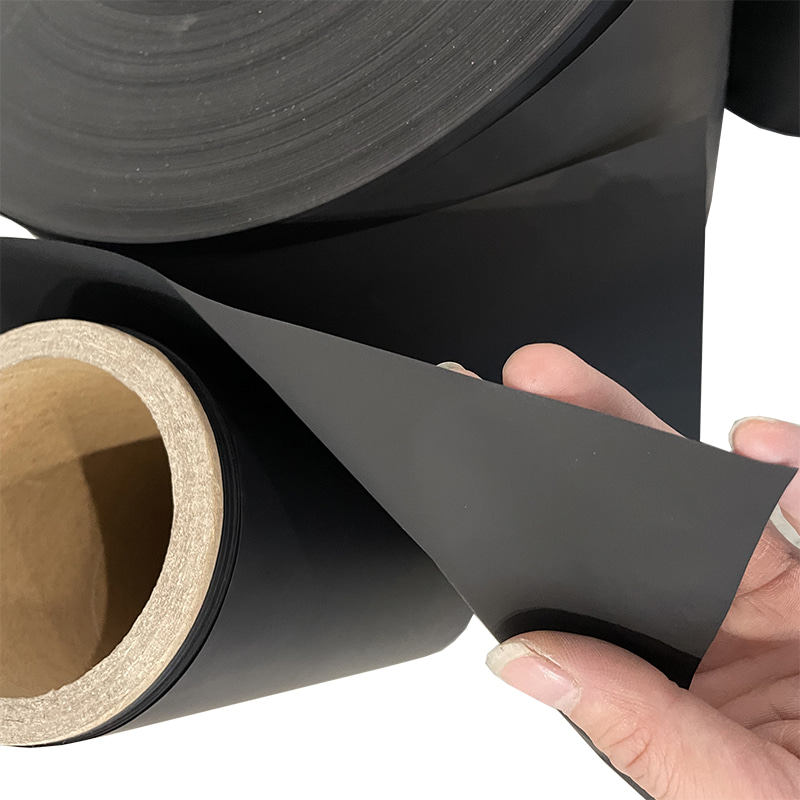
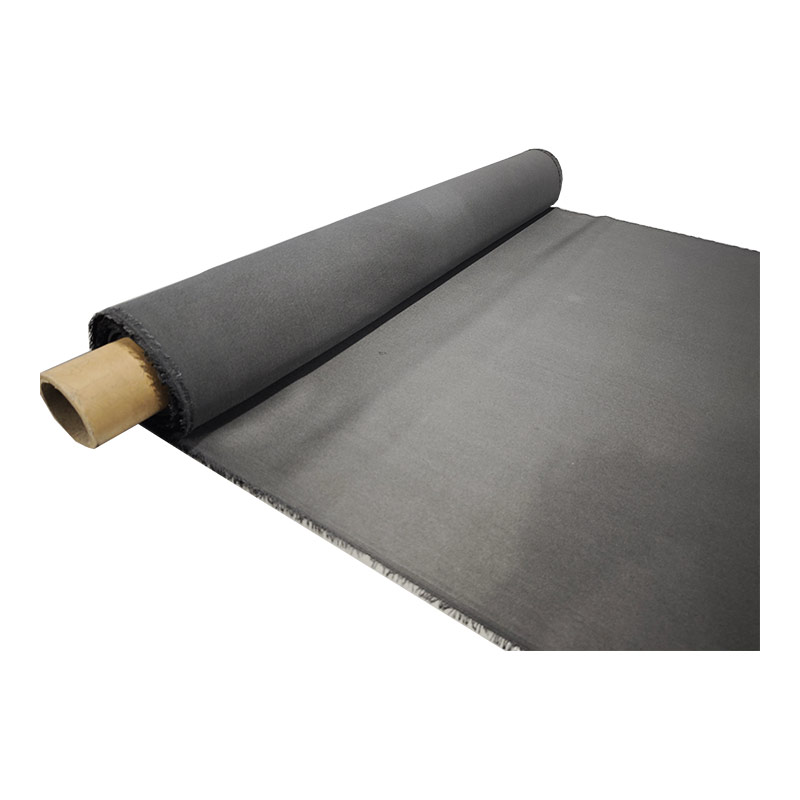
Conductive fabric is a woven, knitted, or nonwoven substrate that has been carbonized or coated to deliver controlled electrical conductivity, enabling current collection, distribution, or shielding inside an electrochemical cell.
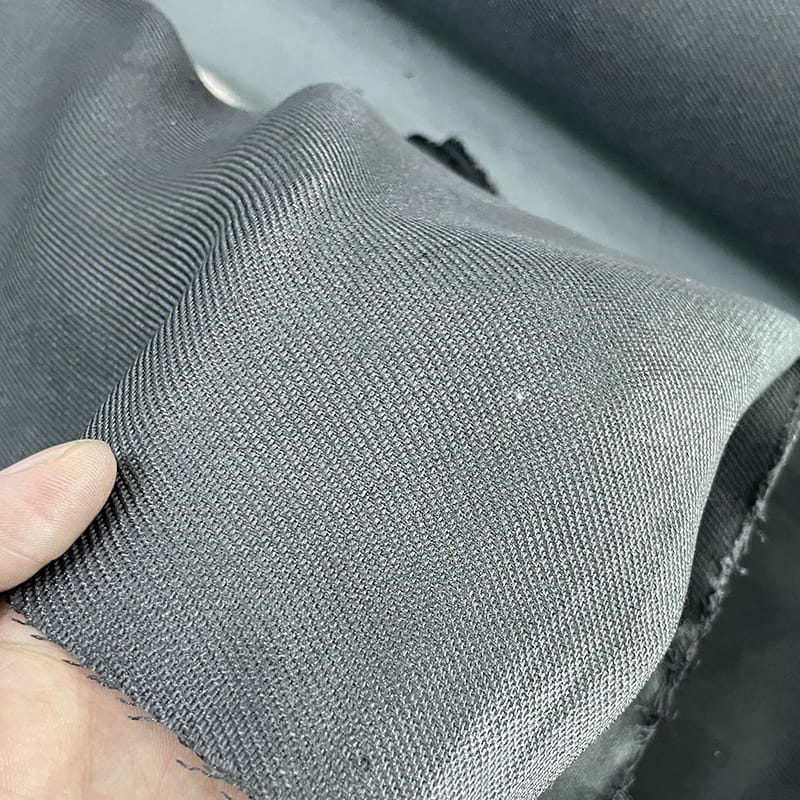 PAN-Based Carbon Cloth with High Conductivity and Temperature ResistanceThis carbonized fiber cloth offers carbon content up to 99.8% after graphitization and low square resistance, making it a reliable choice for battery electrodes that require consistent conductivity and mechanical strength.View Product →
PAN-Based vs. Viscose-Based Conductive Fabrics: Choose the Right Grade
Selection starts with the precursor. PAN-based conductive fabrics deliver higher carbon content and tensile strength, making them the default for gas diffusion layers and structural electrodes. Viscose-based fabrics are more flexible and easier to handle in three-dimensional electrode geometries, but they typically have lower mechanical strength and a slightly different pore structure.
PAN-Based
- Carbon content above 95%
- High tensile strength
- Uniform micro-pore morphology
- Best for fuel cell gas diffusion layers
Viscose-Based
- Higher flexibility
- Softer hand for complex electrode shapes
- Lower mechanical strength
- Common in flow battery electrode felts
The decision is not always obvious. A VRFB electrode often benefits from the higher porosity of viscose-derived graphite felt, while a PEM fuel cell gas diffusion layer needs the uniform morphology of PAN-based carbon cloth. The supplier should be able to switch between grades without changing the contact resistance guarantees.
Typical In-Plane Electrical Resistivity by Conductive Fabric Grade
PAN Carbon Cloth 0.10-0.30 ohm/sq
Electrode Felt 0.20-0.60 ohm/sq
Viscose Graphite Cloth 0.50-1.50 ohm/sq
| Property | PAN Carbon Cloth | Viscose Graphite Felt | Electrode Felt |
| Carbon content | >95% | >95% after graphitization | 90-95% |
| Thickness range | 0.10-0.40 mm | 0.50-2.00 mm | 0.20-1.00 mm |
| Tensile strength | High | Medium | Medium |
| Typical application | Gas diffusion layer | Flow battery electrode | Flow battery or electrolyzer electrode |
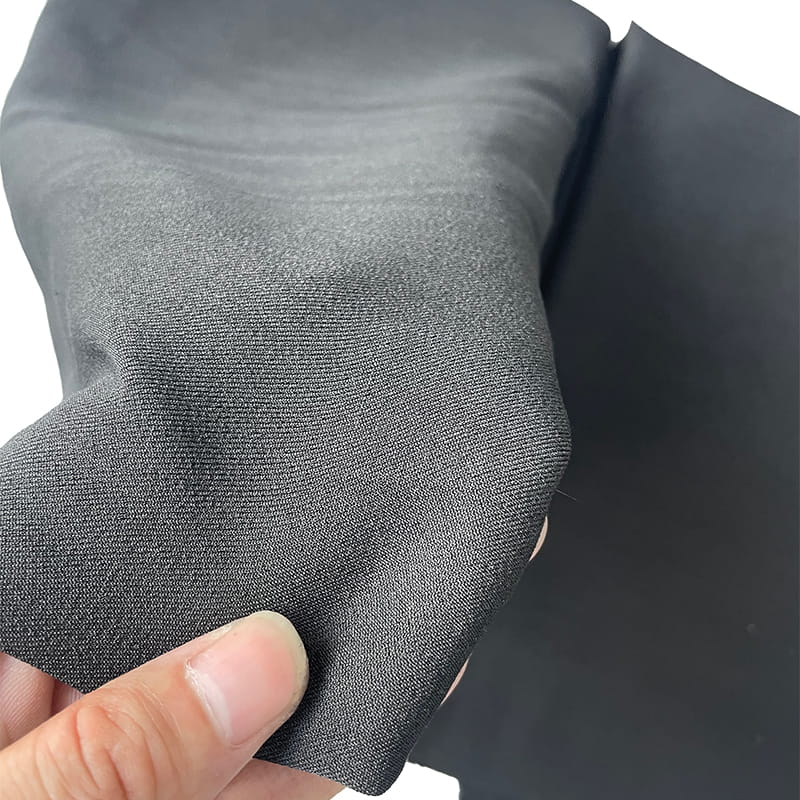 Viscose-Based Carbon Cloth for Flexible Electrode ApplicationsMade from viscose fibers, this cloth provides high biocompatibility and adsorption, suiting medical or specialized uses while offering flexibility for three-dimensional electrode geometries in electrochemical systems.View Product →
Surface Engineering: The Hidden Variable in Electrode Fabric Performance
Surface chemistry, not just bulk conductivity, determines how a conductive fabric performs in flow batteries and fuel cells. In vanadium redox flow batteries, oxygen functional groups on the carbon surface catalyze vanadium redox reactions, so the same fabric can yield 30 percent higher power density after an optimized oxidation treatment.
When evaluating a supplier, ask for X-ray photoelectron spectroscopy (XPS) or contact angle data on the treated surface. A factory-based supplier can adjust the oxidation process to match your specific electrolyte system; a trading company simply resells whatever the production line makes.
Independent studies repeatedly show that electrode surface chemistry affects reaction kinetics and charge transfer resistance more than raw conductivity values do. That hidden variable separates suppliers who can help you hit a power density target from those who can only sell you a fixed product. Our technical analysis of VRFB power density explains these mechanisms in more detail.
Surface treatment capacity is the hidden factory behind electrode performance. Evaluate the process, not just the product.
 CVD-Modified Electrode Cloth with Enhanced Surface AreaFeaturing gas-phase deposited carbon nanotubes and permanent hydrophilicity or hydrophobicity, this electrode cloth achieves high specific surface area and tailored chemistry for reducing side reactions in fuel cells and electrolyzers.View Product →
How to Qualify a Conductive Fabric Supplier in Four Steps
Qualification should take four steps: request a material file, run a pilot sample, audit inline quality checks, and measure lot-to-lot variation. Each step removes a layer of procurement risk.
- Request a material file that includes carbon content, areal weight, thickness, density, and resistance maps. Verify testing standards for each parameter.
- Run a pilot sample on your own stack assembly line. Measure the fabric’s behavior under your compression load, not just on a probe table.
- Audit inline quality checks. Ask for control charts from the carbonization and surface treatment lines to see how variation is managed during production.
- Measure lot-to-lot variation across at least three production batches. The coefficient of variation for in-plane resistance should be below 2% for a mature process.
Most of the risk lives in the fourth step. A supplier that controls carbonization and surface treatment in-house can keep lot-to-lot resistance variability below 2 percent. A supplier that outsources these steps will typically report a coefficient of variation above 5 percent.
Red flags: a supplier that refuses to share in-house test data, quotes lead times that depend on market prices, or cannot name the testing standard for areal weight.
Factory Direct vs. Trading Company: Why the Supplier Model Matters
A factory-based conductive fabric supplier can control carbonization parameters, surface treatment, and custom slitting in ways a trading company cannot. When the electrode stack calls for a custom width, a specific fiber areal weight, or a welded-edge finish on a bipolar plate, the factory can change process settings rather than searching for a new distributor.
Jiaxing Naco New Material Co., Ltd. operates as a custom conductive carbon products factory in Jiaxing, Zhejiang, with product lines spanning carbon fiber materials, electrode materials, and conductive slurries. This structure allows the same technical team to coordinate carbon felt, electrode cloth, and composite bipolar plate development against one specification set.
Custom carbon products require a direct line to production. That is why factory-based suppliers can deliver tighter tolerances and faster adjustments.
FAQ: Conductive Fabric Supplier Questions Buyers Ask
What is the typical lead time for custom conductive fabric orders?
Standard grades usually ship 2-3 weeks after sample approval; custom surface treatment adds 5-7 days. A factory-based supplier can confirm exact dates because it controls the production schedule.
How do I verify the electrical resistance of a conductive fabric?
Request a four-point probe measurement with test positions mapped across the roll width. The supplier should report average, maximum, and standard deviation, not a single spot value.
Can a conductive fabric supplier handle small pilot quantities?
Most custom factories accept pilot rolls of 10-50 linear meters to validate process settings before full production. Confirm whether the pilot run uses the same production line as the final order.
What certifications matter for conductive fabrics?
ISO 9001 covers quality management; any industry-specific test reports for carbon content, areal weight, and thickness add confidence. The supplier should provide a material certificate for every batch.
Bottom line: qualify the process, not just the price. A conductive fabric supplier with in-house production and surface chemistry control is more likely to meet your stack performance targets.